
The Atlantic Ocean is behind us, and we are now sailing along the Iberian peninsula, soon to be in the Mediterranean Sea. And our first stop today was in Lisbon.
It was a little before eight this morning as we sailed into Portugal’s capital city. We sailed underneath a bridge that reminded us both of one we had seen in California
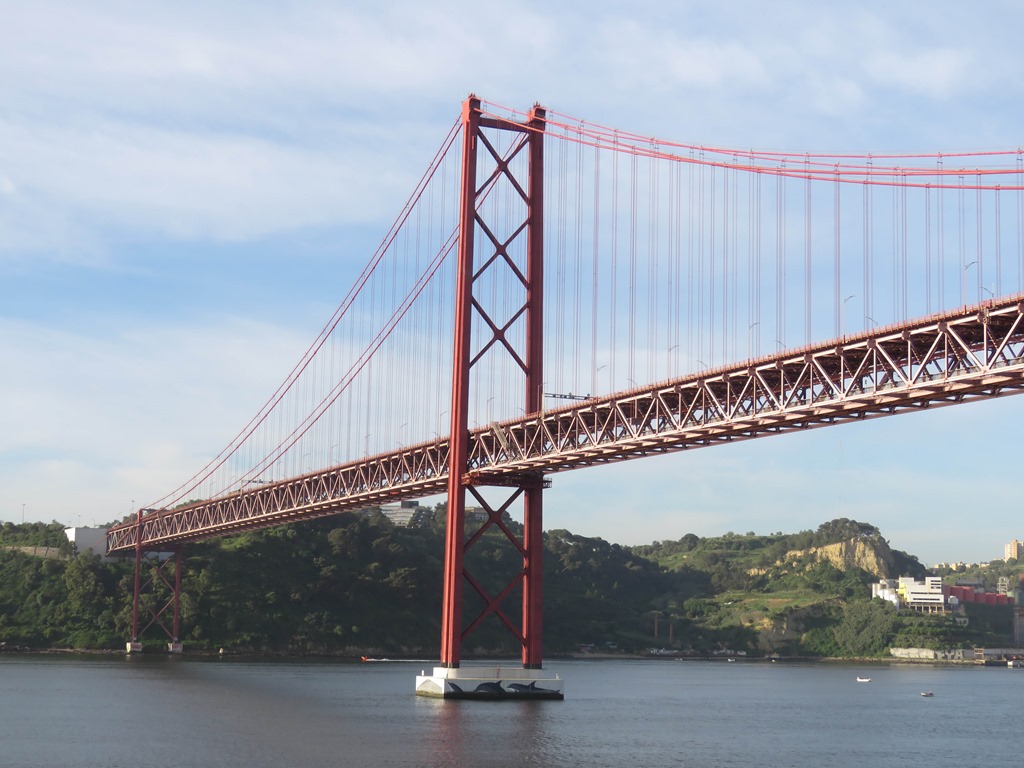
and we also passed a statue of Christ that look a lot like one we had seen in Brazil.

We docked right in the downtown area. From our stateroom balcony we could see the old city
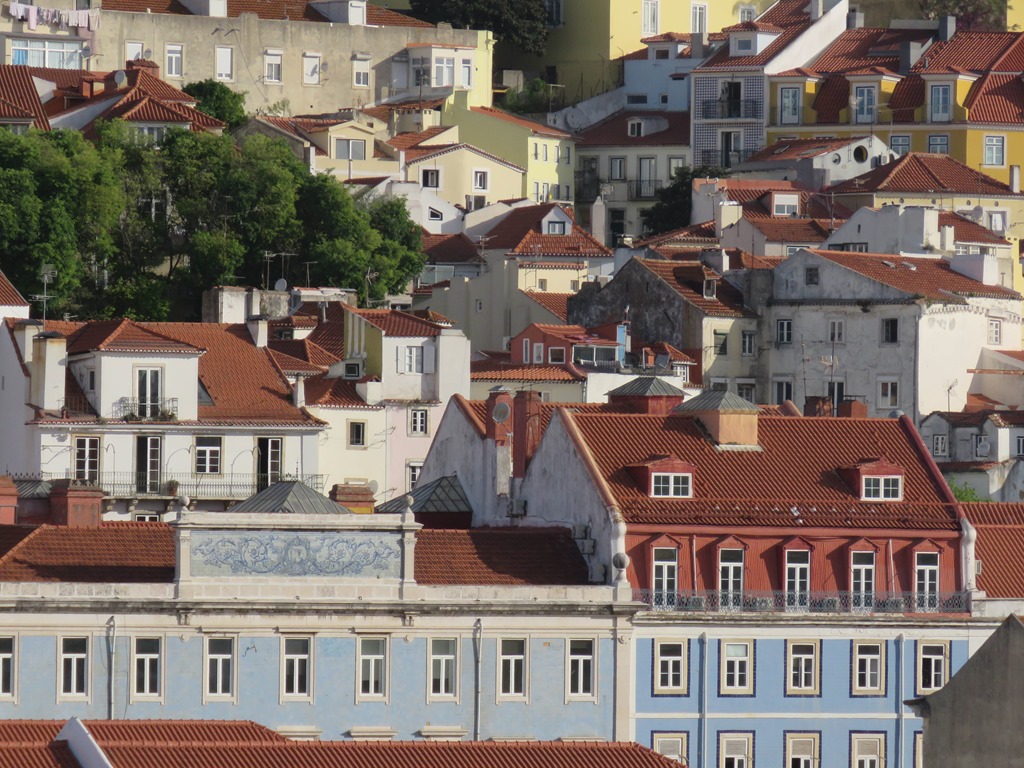
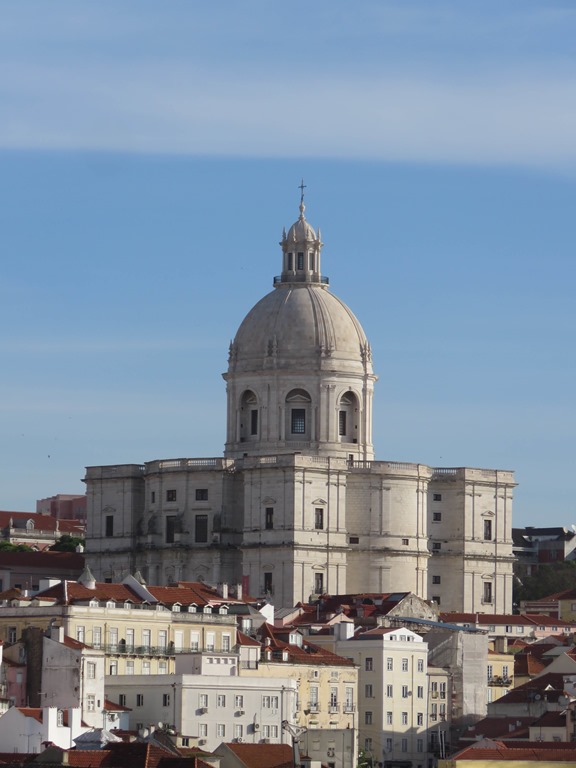
and some famous buildings.
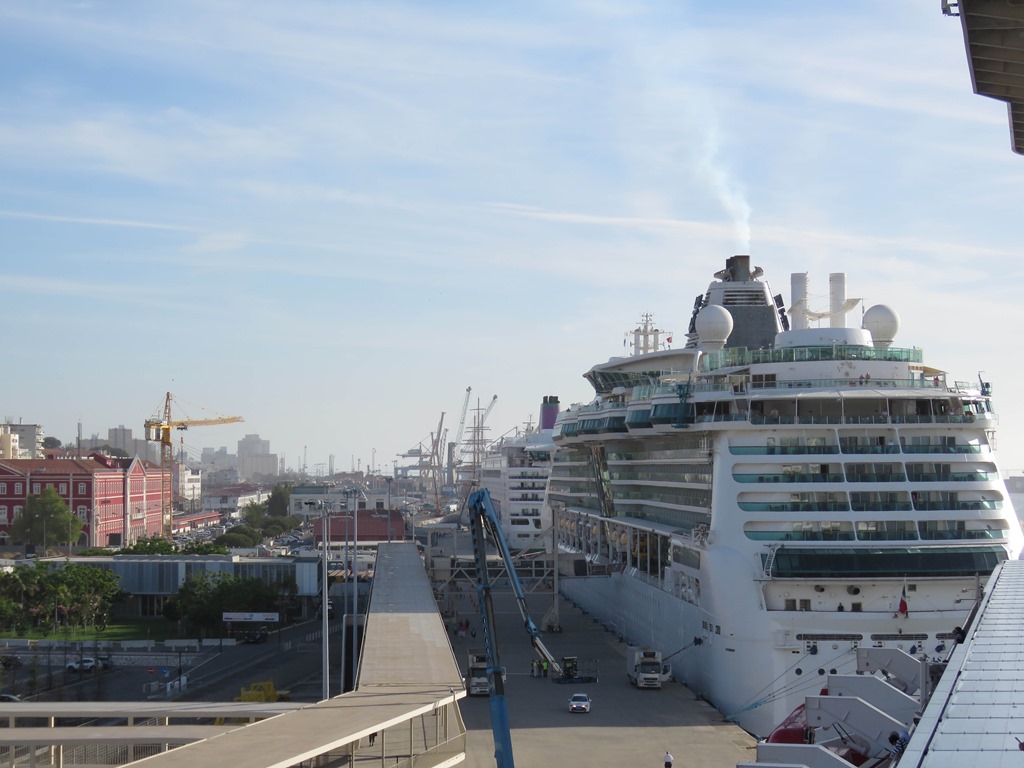
I could also see that we did not have this town to ourselves. There were two other ships, apparently just as mammoth as this one, lined up behind us on the quay.
We will be coming back to Lisbon later this month after our cruise is over. This whole adventure started when John talked about how much he really wanted to see Portugal. And when we return we will rent a car and drive all over the country. I asked John what he wanted to do for this short initial visit. He said that just wanted some kind of overview of the town. So I search around on the Internet and decided that a tuk tuk tour would be just the thing.
Tuk tuk is a Sinhalese term for a auto rickshaw, that is, a rickshaw not pulled by a runner or a cyclist but by a gas or electric motor. How the Sri Lankan term became nearly universal throughout the world is a little unclear to me, but everybody calls them tuk tuks. And they are almost as ubiquitous in Lisbon as they are in Bali. I somehow never took a good picture of our tuk tuk, so here is a stock photo of one.
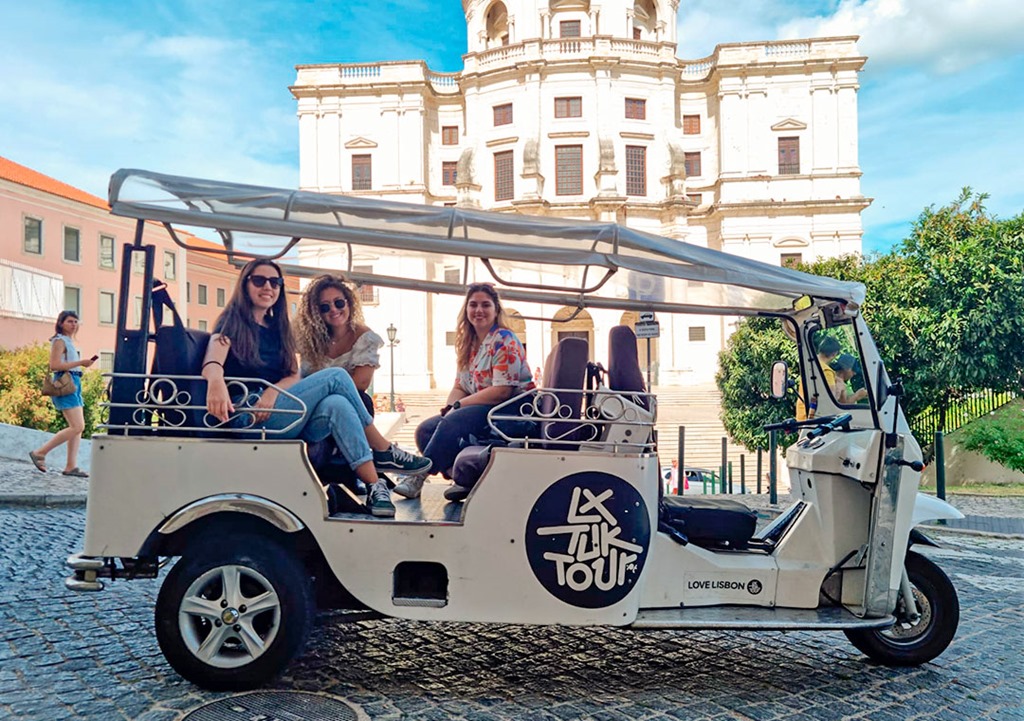
Notice that it has three wheels, not four, and that it can seat up to 6 people, though four is much more comfortable.
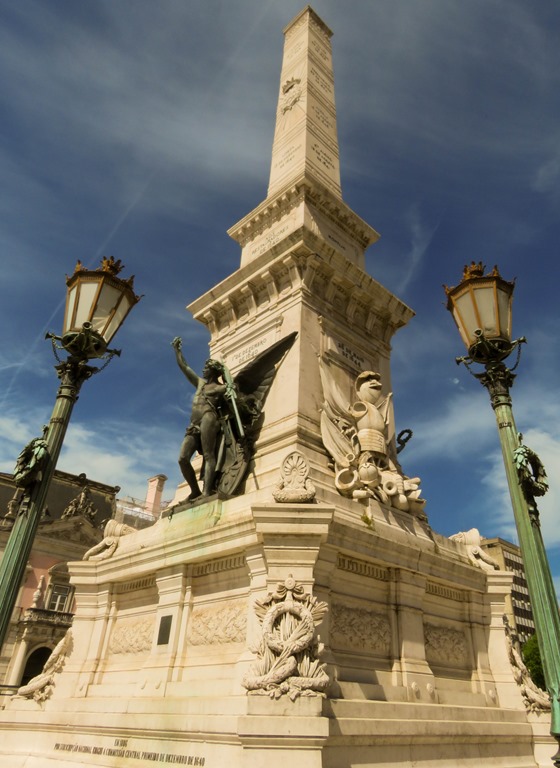
We took an Uber from the cruise port to Avenida da Liberdade, the grand boulevard of Lisbon. We arrived a little early, so we walked around. There are many beautiful art nouveau and art deco buildings on this famous street, but I did not have much luck taking photographs of them. The best of my efforts was this 1879 memorial. I think it celebrated the expulsion of the Moors.
At noon, we met with with Francisco, our driver. He was personable, helpful, and spoke superb English. He took wonderful care of John.

We cruised down Avenida da Liberdade, and up to King Edward VII Park at its far end. This is named for the British monarch. The English and the Portuguese have a long history of amicable relations, probably based on a common hatred of the Spanish. It looks nice, but it is clearly not intended as place for picnics or football games.

There is a starkly ugly modern fountain at the far end of it. It would not be attractive even if the water was running, but with the water off it looked even more hideous.
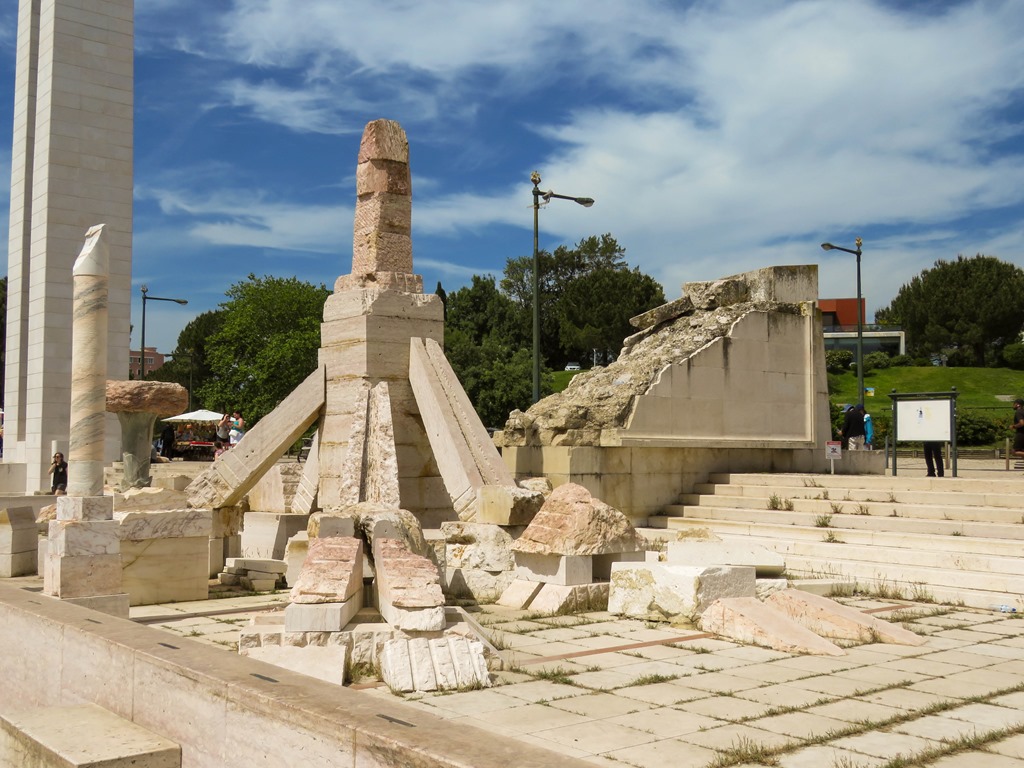
The fountain was erected to celebrate the end of the military dictatorship in April, 1974. I fail to see how this conveys any joy or love of freedom.
We went on through Bairro Alto, the “upper town.” This neighborhood was for decades considered kind of the Rive Gauche of Lisbon, the bohemian district of bars and brothels, artists and intellectuals. It is now probably some of the priciest real estate in Lisbon.
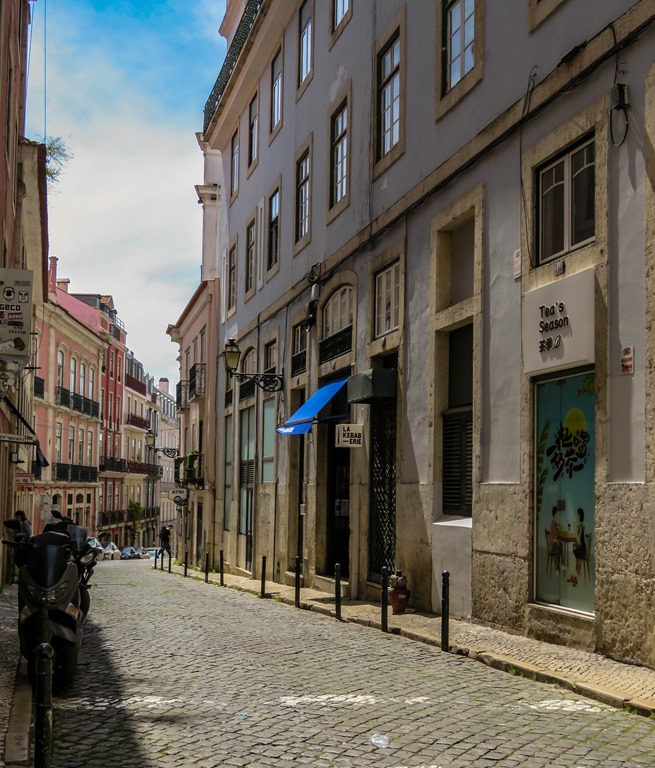
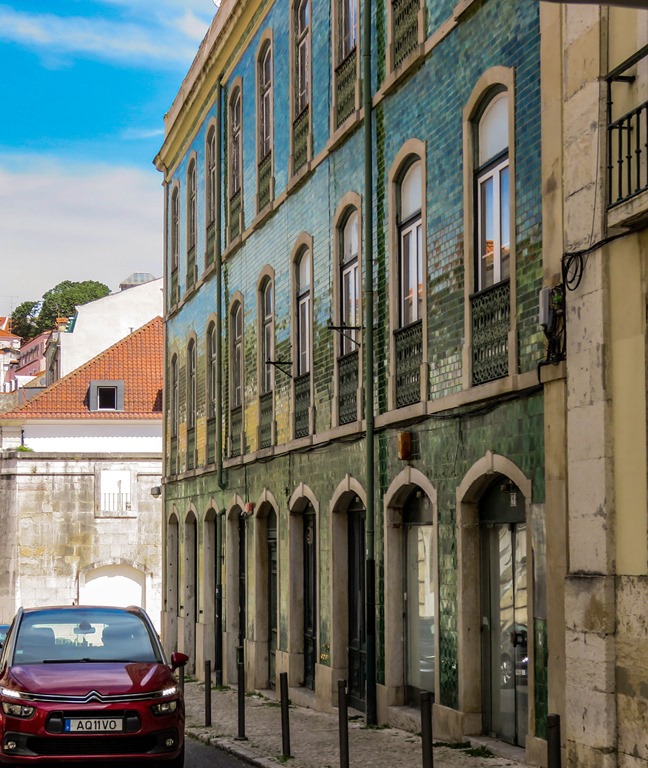
You can also see classic Portuguese love of tile on many of the buildings here.
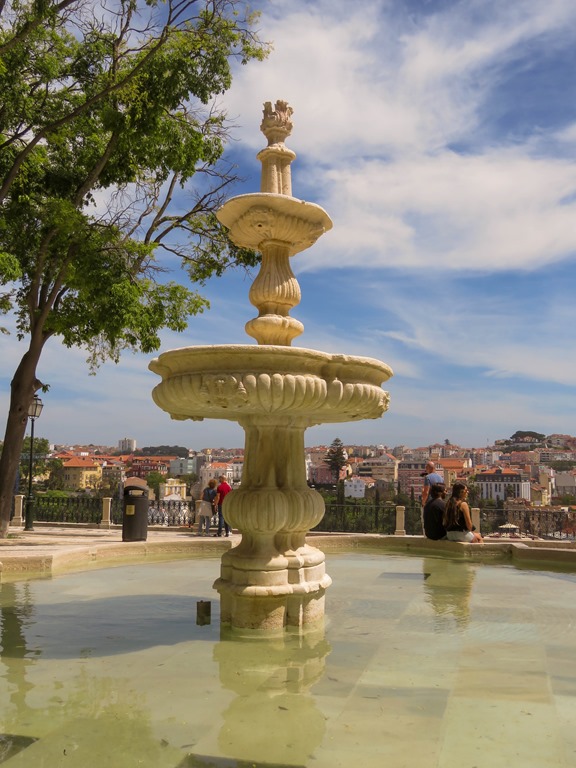
We stopped at the Miradouro de Sao Pedro de Alcântara. This is a small park with a magnificent view of the Liberdade neighborhood and the Bairro Baixa, the “lower town.”
There is a lovely fountain in the middle, though it too seemed to be having some mechanical issues.
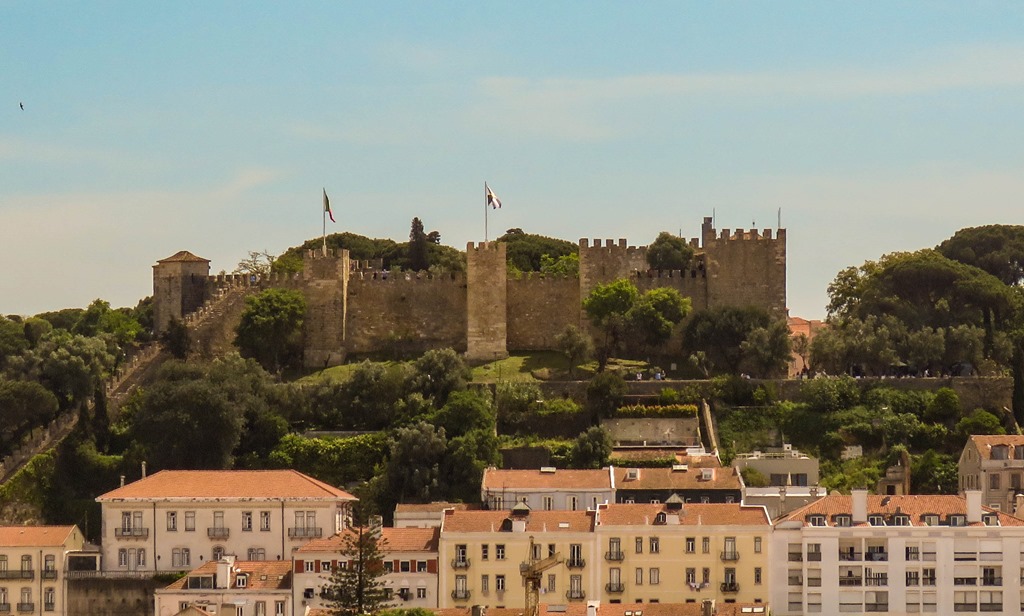
From here you can also see some of most famous sights of Lisbon including Castelo de São Jorge, Saint George’s Castle on the hill high above the rest of the city.
Lisbon’s ancient cathedral is also partly visible from here.

The cathedral was one of only a handful of buildings to survive the 1755 earthquake that destroyed most of the city on Easter Sunday morning. It’s a building I definitely plan to visit when we return.
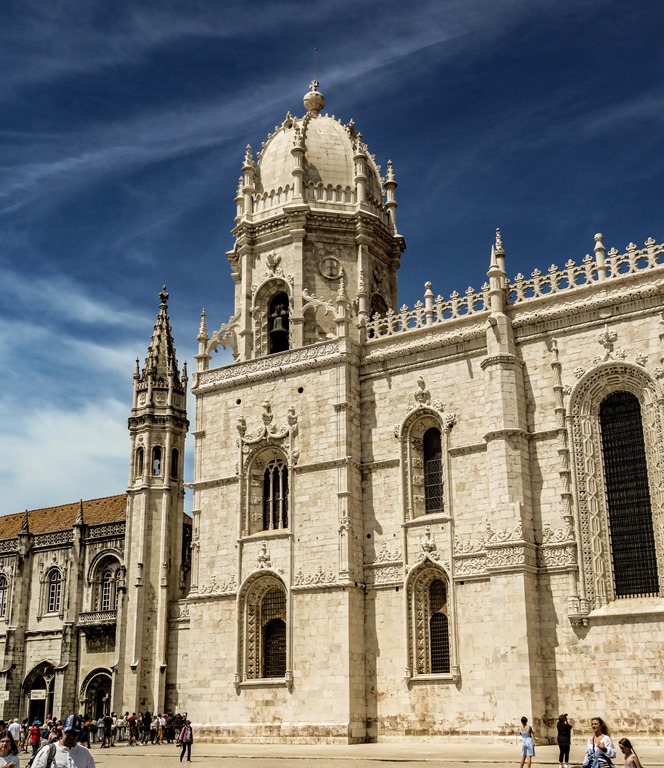
Our final stop was in Belém. This area was the summer home of the Portuguese monarchs. The former royal palace is now the residence of the president of the republic. That building is impressive, but it is not the main reason people visit here. The real draw is the Jeronimos Monastery.
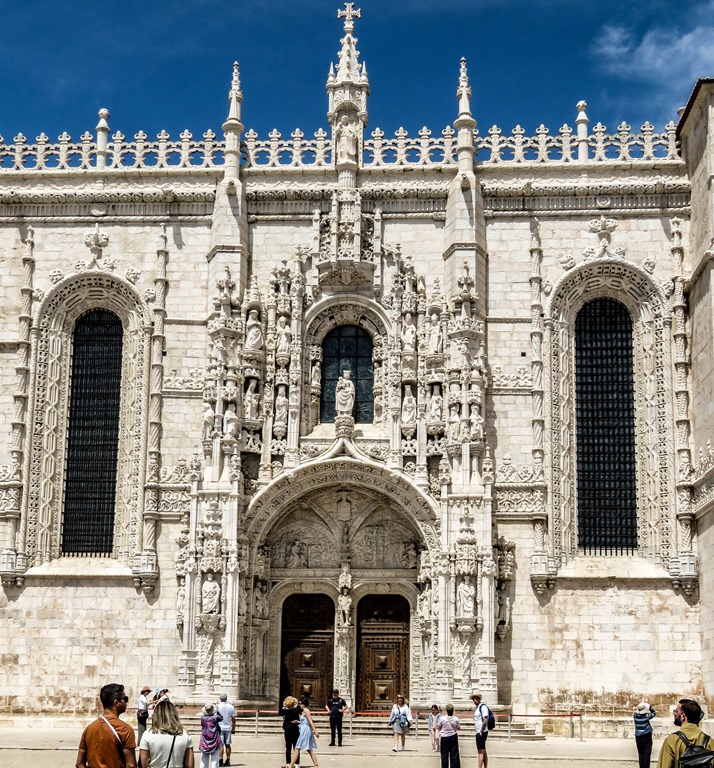
King Manuel I built it in 1502 on the site of a hermitage founded by Prince Henry the Navigator, where Vasco da Gama and his crew spent their last night in Portugal in prayer before leaving for India. It was built to commemorate Vasco Da Gama’s voyage and to give thanks to the Virgin Mary for its success. The building is the finest example of late Gothic architecture in Portugal, a distinctive highly decorated style called Manueline.
Another famous building in the neighborhood is the Belém Tower. This was placed at the mouth of the Tagus River to repel invaders attacking Lisbon.

All these grand building are worth visiting, but the lines were excruciatingly long and we only had three hours with our tuk tuk driver. So instead we went to a bakery and sampled some of Portugal’s famous pastries.
After about two and a half hours, John was exhausted. We were supposed to go up by the castle, but he just asked to be taken back to the ship. We passed a new monument on our way there.

It was erected as part of some kind of World’s Fair in the 1950s. Famous Portuguese sailors like Vasco da Gama are carved on the side.
We sail out of Portugal tonight and tomorrow morning we will be in Spain.
 Traveling Johns