
It never fails to amaze me how fast they can empty out a cruise ship. It takes hours to get everyone on board and all their luggage delivered to their rooms. It takes less than two hours to completely reverse that process.
Unfortunately for the passengers, there is a lot of chaos and wasted time in that process. Unless you have arranged a flight through the cruise line, always one the priciest options, the luggage is dumped into a cavernous room arranged by tag color. With some difficulty I found ours and then looked at the huge line to get out and wondered how I could push John and also three large pieces of luggage. Just then a man came by with a cart. He loaded it up with our luggage and almost mowed over half of the passengers waiting in line. Paying him was the best 20 euros I may have spent on this trip. We had to wait about another hour before our shuttle came to take us to our hotel.
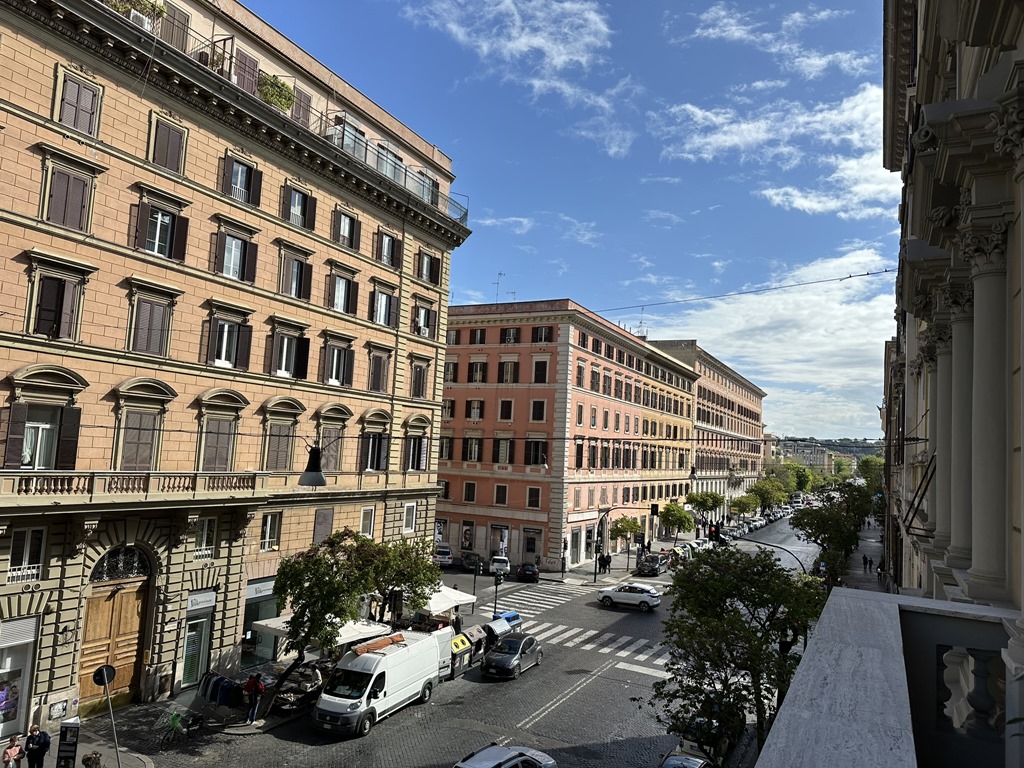
We are staying in Prati, the district of Rome between the Vatican and the Tiber. Once a marshy grassland—“prati”means meadow in Italian—it was developed in the early twentieth century to serve as a an elegant quarter for the offices of the nearly established Kingdom of Italy and as a place for civil servants to live. Modeled in part on Haussmann’s Paris, it had wide streets arranged on a rectangular pattern. We are on the Via de Cola di Rienza. The Castel Sant’Angelo is at the end of the street. This is the view from our balcony.

After settling in, John was ready to do something. He wanted to go to the Borghese Gallery, but I discovered that it was closed for renovations. Some of the best works have been moved temporarily to the Palazzo Barberini, one of the two sites of Italy’s National Gallery. We had never been there, so I ordered a cab and off we went.
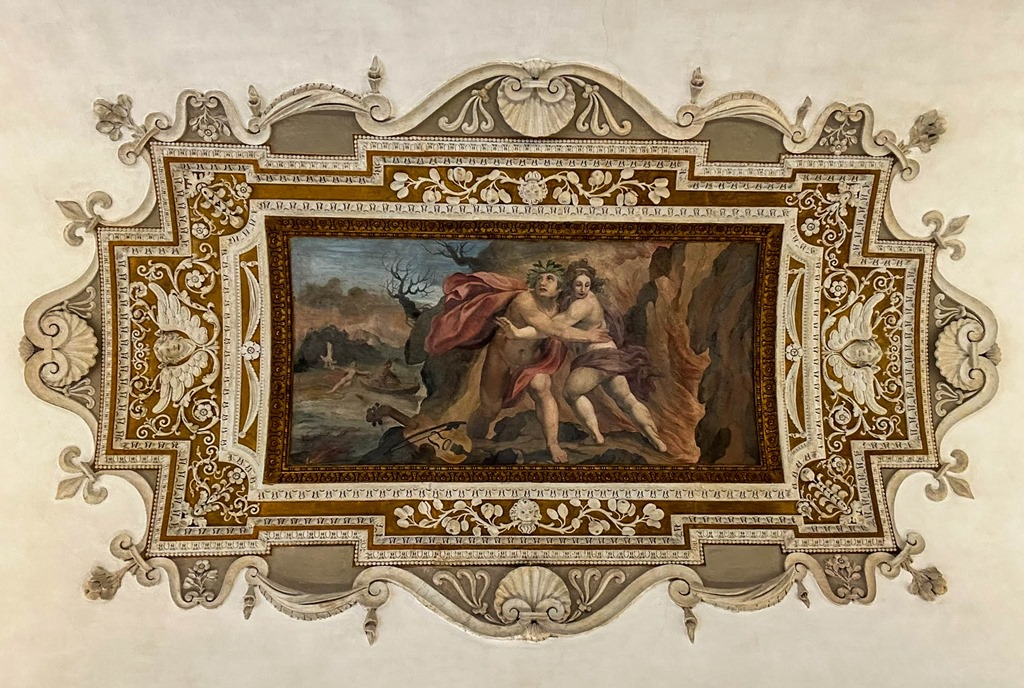
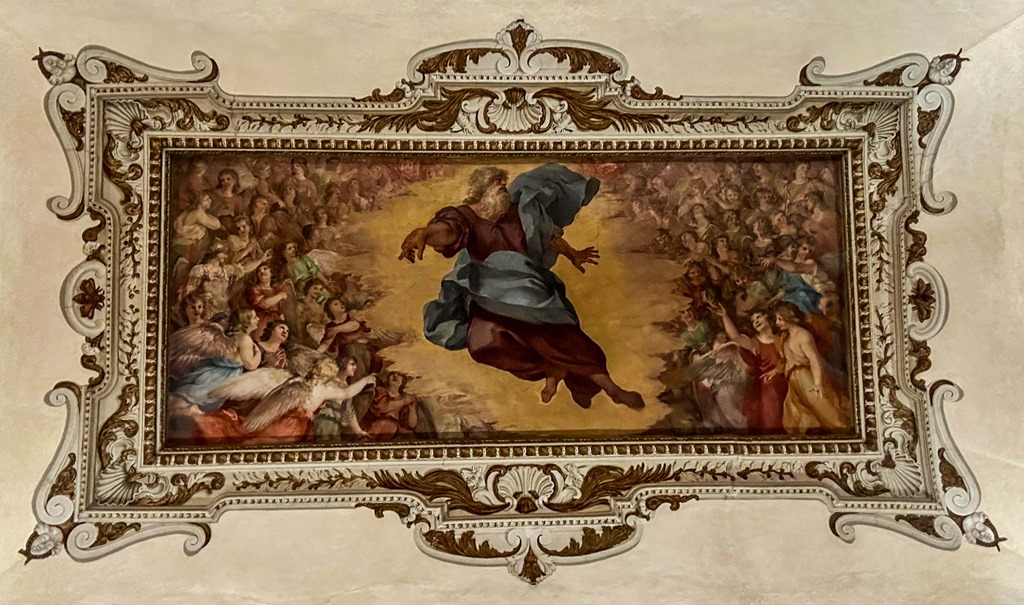
John loves art museums where the building is as interesting as the paintings, so the Barberini was just the ticket. Almost every room has a gloriously painted ceiling.
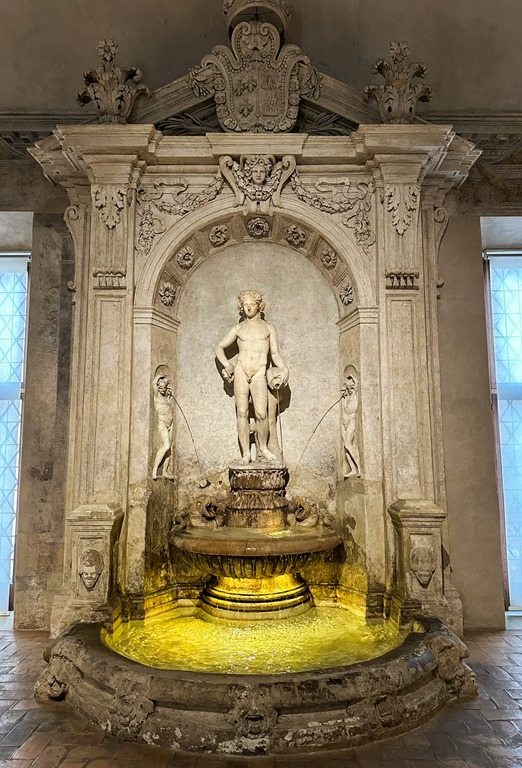
There are some of the original details left including this fountain.
The art is, of course, quite good. Some pieces were familiar such as Holbein’s portrait of Henry VIII.

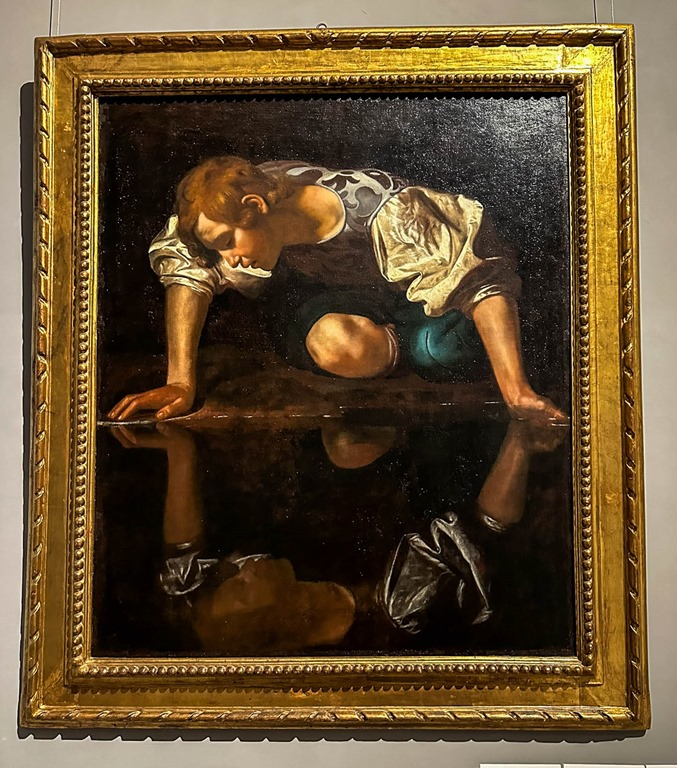
Others were works I did not know by artists I knew well. This is Narcissus by Caravaggio—though some dispute that.
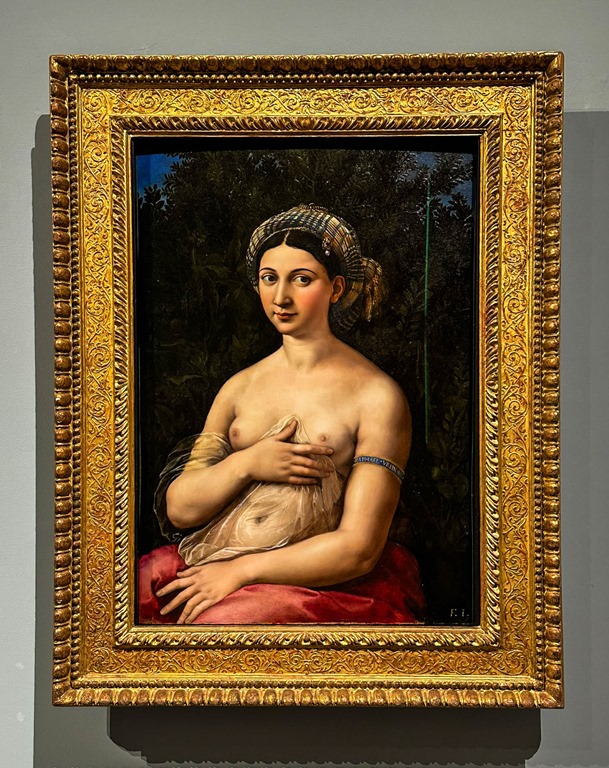
Here is Rafael’s La Fornarina, one of the most famous pieces in the collection.
And another famous picture here in the Woman with a Turban. Goethe said that this was the most haunting face he had ever seen in a painting. It is supposedly the portrait of Beatrice Cenci, a young woman who shocked Rome when he murdered her father. The portrait was possibly done just before her execution.

After this we went to a nearby restaurant for a well-deserved dinner.
 Traveling Johns