
There is no city on earth that I think I love as much as Rome. It is not heaven on earth. There is dirt and decay; there is no lack of petty crime; and the traffic is absolutely insane. And yet it is heaven on earth. Matthew Arnold spoke of Oxford’s “dreamy spires,” but these seem like minor reveries compared with the towers and domes effortlessly floating above the Tiber’s early morning mists. There is a profound sense of the sacred here—Christian, of course, but also faint traces of the the Roman and Etruscan pantheons.
Ah, but back to the travelogue. John and I had breakfast at a small bar on the Via Cola di Rienza near our Roman residence. As I wrote before, we are in an apartment building that was built only a century ago, so it is a new edifice by Roman standards. And yet everything about it—the chipped tile, the faded frescoes, the heavy wooden doors—seems to belong to a time even earlier than its construction. And wonderful elevator in its iron cage seems even more antique than it is.
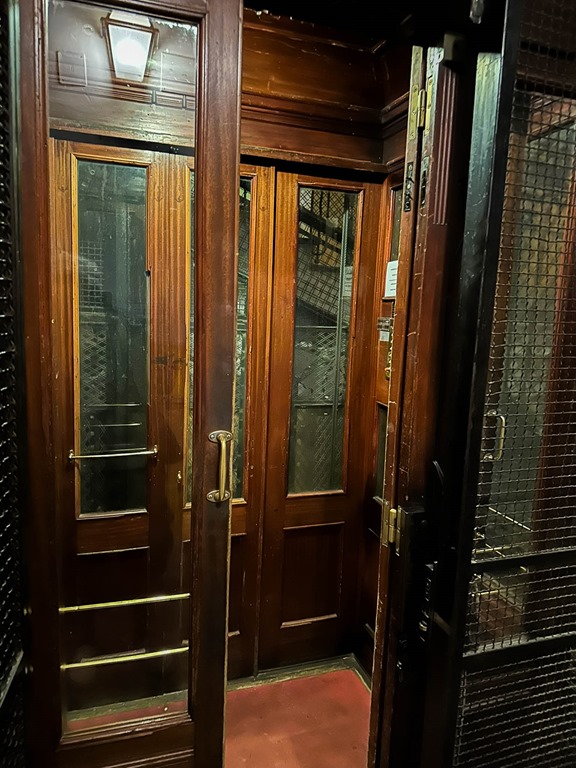
Our “collazione”—oh, how the Italian seems more elegant that the English “breakfast”—was a croissant, a cappuccino, and a glass of freshly squeezed juice of blood oranges. After that, we called for a cab and headed for our first adventure of the day.
I wanted to see the Galleria Doria Pamphilj. This is considered a minor Roman museum as there are no famous paintings in this old mansion of a Roman aristocratic family. But I knew that the apartments were still splendidly furnished, and John loves arts displayed the way it was meant to be seen. Alas, when we arrived we discovered that the elevator at the Gallery was not working, and John was not willing to attempt a long flight of marble stairs without a bannister. There was a set of rooms on the first floor, though, and John and I were able to see these. These date largely from the late nineteenth century and were the residence of one of the last Pamphiljs to live in the house. He shocked Rome and his parents by marrying an English girl, no doubt a Protestant, but I suspect the dowry helped them with their misgivings. There is a strange reception room with a fountain.

The less formal family sitting room seemed more English than Italian.

Since we had spent less time at the Doria Pamphilj than I planned, I searched the map for attractions nearby. A few yards away was the church of San Marcello. I learned from the plaque outside that a church dedicated to Saint Marcellus, an early Roman martyr, had been on this site since the fifth century. But it caught fire in the early sixteenth century, and nothing was saved from it but the altar crucifix. It is now displayed in one of the side chapels.
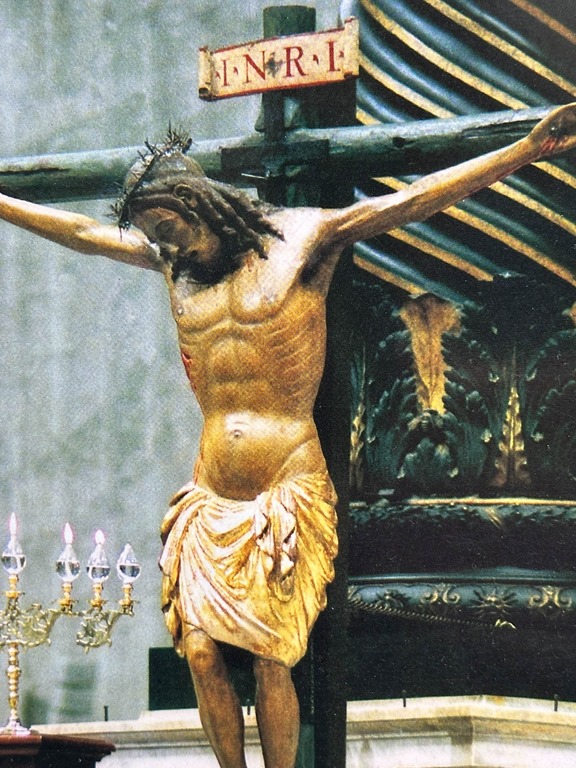
The new church, commissioned, I believe, by Pope Julius, is a masterpiece of baroque art. Sadly, subsequent generations have not been content to leave it alone, and there are a number of hideous pieces like this plaster pieta.

John liked it, but he always had more of an appreciation for kitsch than I do.
We headed out again, and looking for an famous Art Nouveau galleria, not an art gallery like the Barberini galleria, but a shopping galleria, like the famous one in Milan. Sadly, it was closed and we could only glimpse through the iron gates. John was feeling tired now, and asked to be taken back to our rooms in Prati.
After quite a long nap, he was feeling better. It was nearly five by this time, and most of the main attractions were closing. I knew that the various branches of the National Gallery would be open until seven today. The building devoted to nineteenth and twentieth century art was closest, so I directed the cab to go there.
My heart sank when we arrived. I remembered that April 25 is some kind of minor holiday in Italy, the kind that gives a day off to students and civil servants but to no one else. But museums are free on holidays, and the lines waiting to get in were absurdly long. Worse still, there appeared to be no handicapped access at all. I pulled out my phone and used the translation app to come up with a rough Italian equivalent of handicapped entrance. It turned out that there was one, though John still had to climb a flight of stairs to get to it.
Once inside the museum, we wandered about looking at the collection. The museum weirdly mixes pieces from different periods together in the same room. Interpretive material is limited mostly to the name of the piece. Most of the work was by Italians, but I failed to get any sense of how and why Italian art developed in the late nineteenth and early-to-mid twentieth centuries. There were some interesting pieces like this Standing Woman.
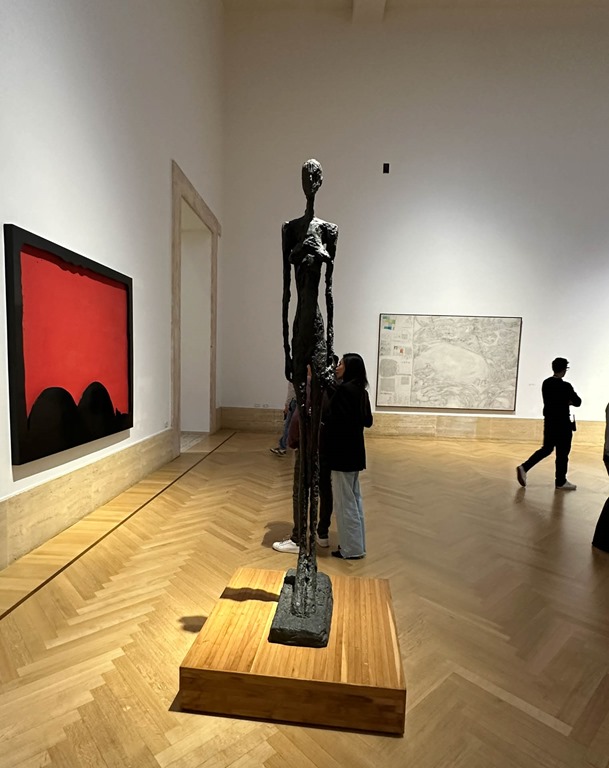
There were a few fun pieces like this one.
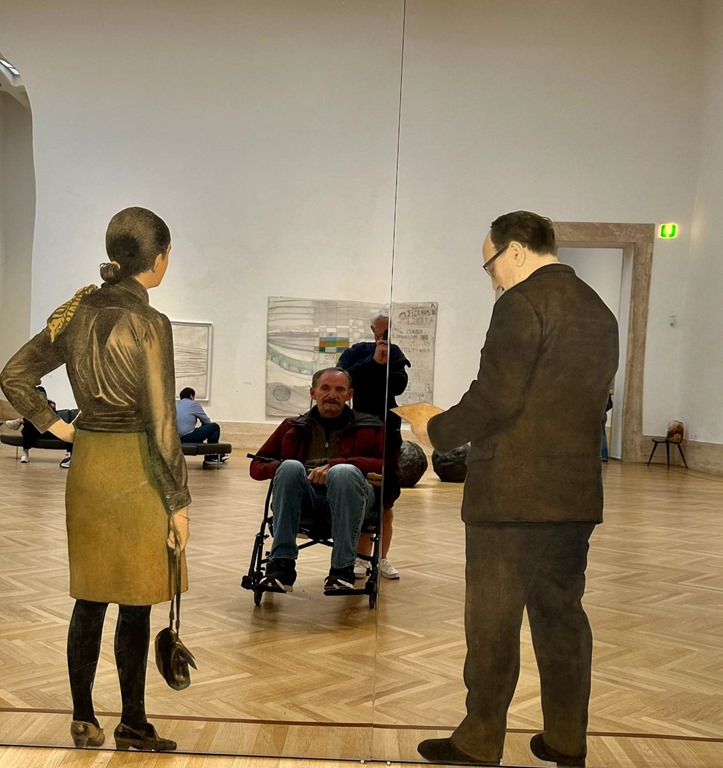
The man and the woman are simply painted on the mirror. John and I, obviously, are not.
I only saw a few things I had seen before like this portrait of Giuseppe Verdi.
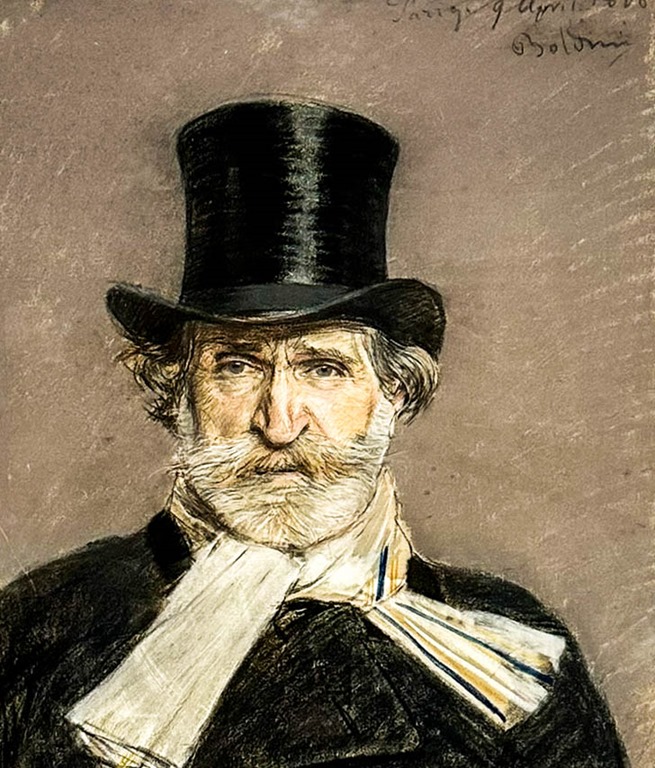
John kept trying to get me to do silly poses with the art. Most of them did not work out. This was the best of them.
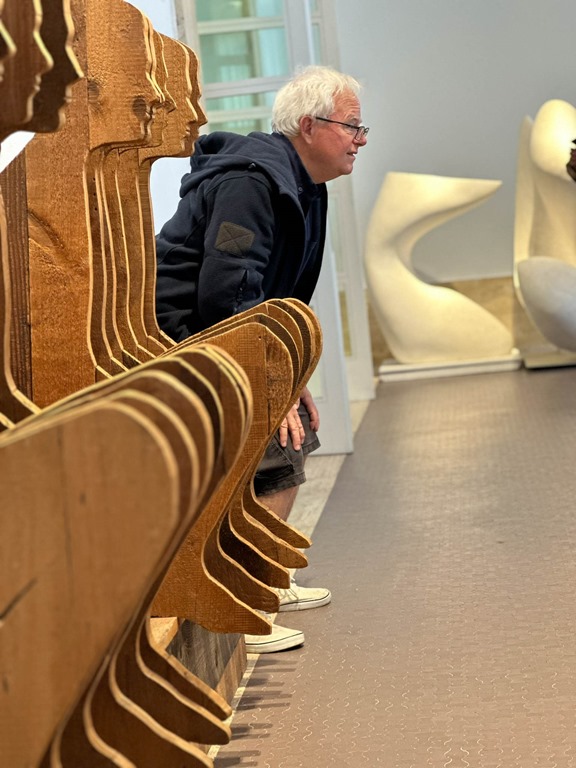
A was really surprised by Eulalia Christiana—it must have been a shocking piece when first unveiled in the early 1880s.
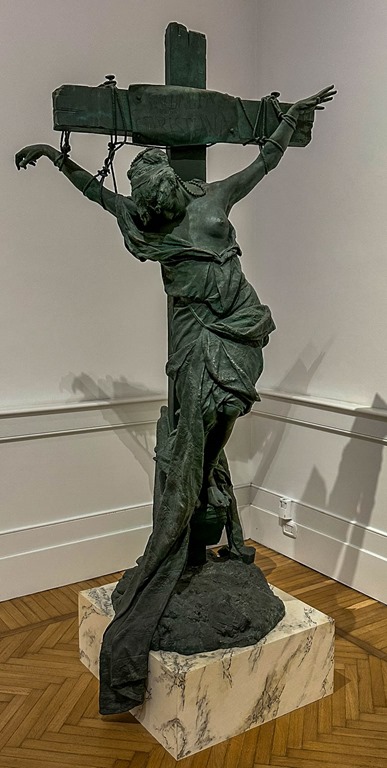
John and I both loved the enormous room on the ground floor where paintings were apparently just randomly placed on the wall to create a decorative effect.
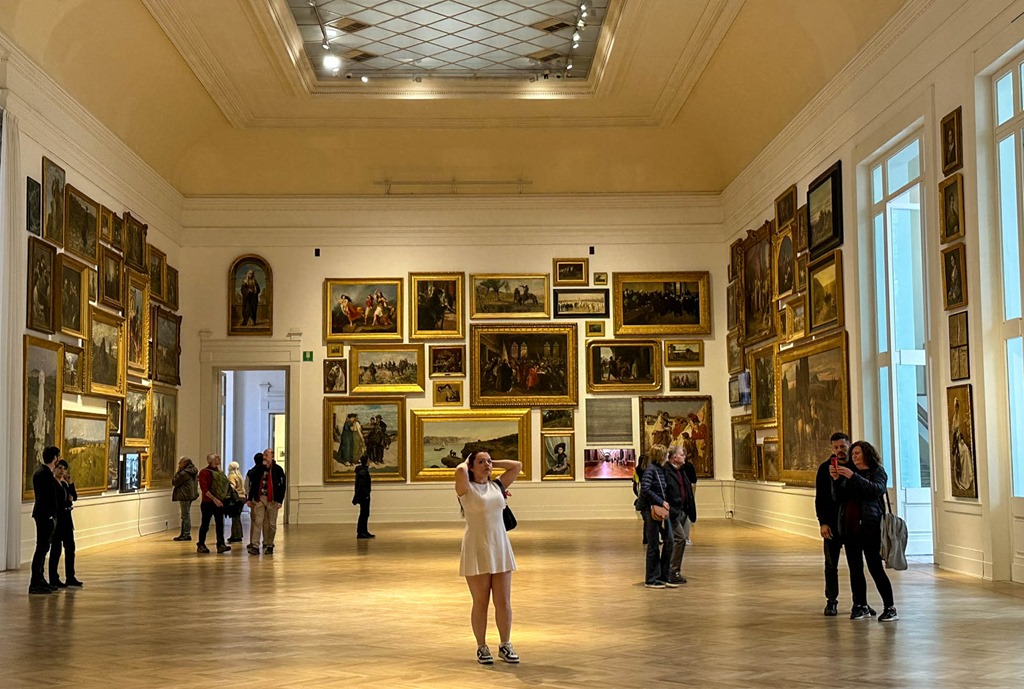
We both agreed that was what we wanted our hallway to look like one day.
About a half hour before official closing time, they started to herd us all out of the museum. I called for a cab. Uber is officially banned in Rome, but the Uber model of an app based system for arranging rides has triumphed. Everyone uses FreeNow. I never saw anybody try to hail a cab in Rome. No Uber, but iPhone uber alles.
Back in peaceful Prati, we had dim sum for dinner. Chinese food does not seem Italian, but when you think about Marco Polo and all that, it is the most Italian food of all.
Tomorrow we are off to Lisbon.
 Traveling Johns