
After leaving Évora, we went straight to Nazaré. Our itinerary, adapted from one we found in one of the guidebooks, balances cultural destinations with those that involve less sightseeing and more relaxation. Our two days in Nazaré was mostly just enjoying ourselves.
Nazaré is a beach town. It is one of Europe’s premiere surfing destinations. Yes, Californians—there are a few of them! In the winter, the waves are particularly intense, and many people come there just to see enormous waves crash against the cliff. That was not happening while we were there, but here is a picture, swiped from some website or other, of what it can look like.

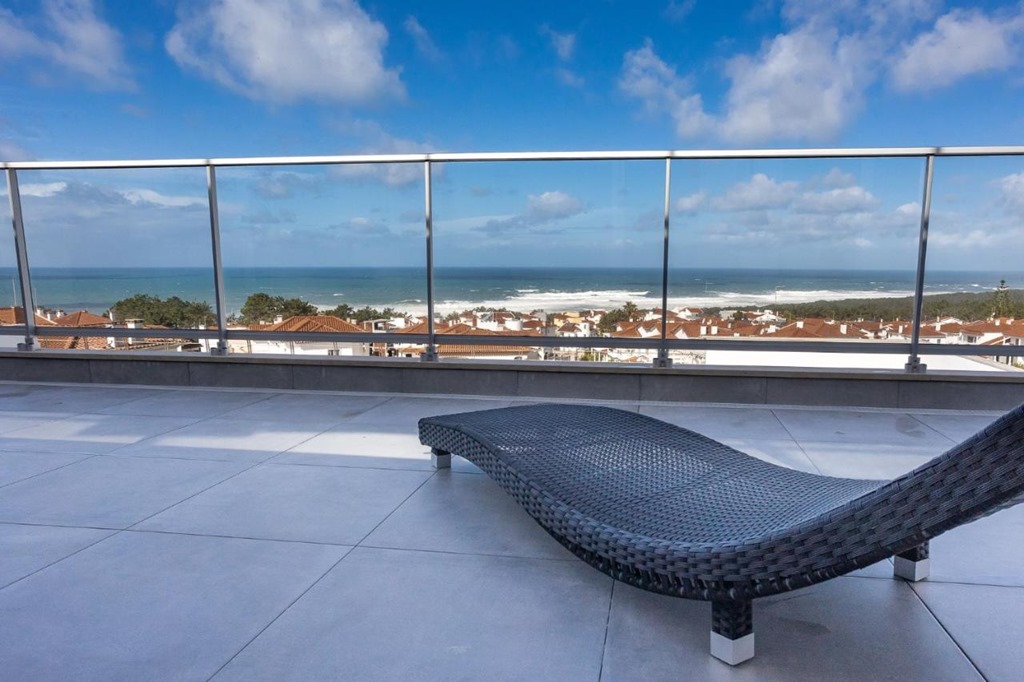
We are staying at a particularly wonderful bed and breakfast called Océane. Our innkeeper is a charming Frenchwoman named Cathy. Océane is located away from the beach, but from the room and the pool you have a wonderful blue water view.
We arrive late on Wednesday, and John was feeling pretty tired. We just unpacked and took a nap. In the evening, Cathy recommended a nearby restaurant. We were just about the only customers in it. I know that this is early in the season, but somehow it seems eerie to have a restaurant all to yourself. Even though it was close to Océane, John insisted I drive. As we went to go home, I backed up and started to turn. Immediately a police car that had just been sitting there flashed its blue lights at me. I left that car and faced a local constable who seemed really pissed off at me. As near as I could figure out with hand gestures and Spanish cognates, I was about to head the wrong was on a one-way street. I did not see the usual one way sign—a red circle with a white rectangle in it—but apparently I was just supposed to know this. I did not argue, but profusely thanked the officer, in simple English with a few Spanish words tossed in, for keeping me safe. He softened and let me go.
Today, the weather was clear but cool. This may be a beach town, but my days of sitting on a cold, windy beach pretending to enjoy it ended when I moved to Southern California. But we wanted to do…something. So we broke down and decided to see yet another church. And it was actually really worth it.
The Mosteiro de Santa Maria de Alcobaça is located in a nearby town.
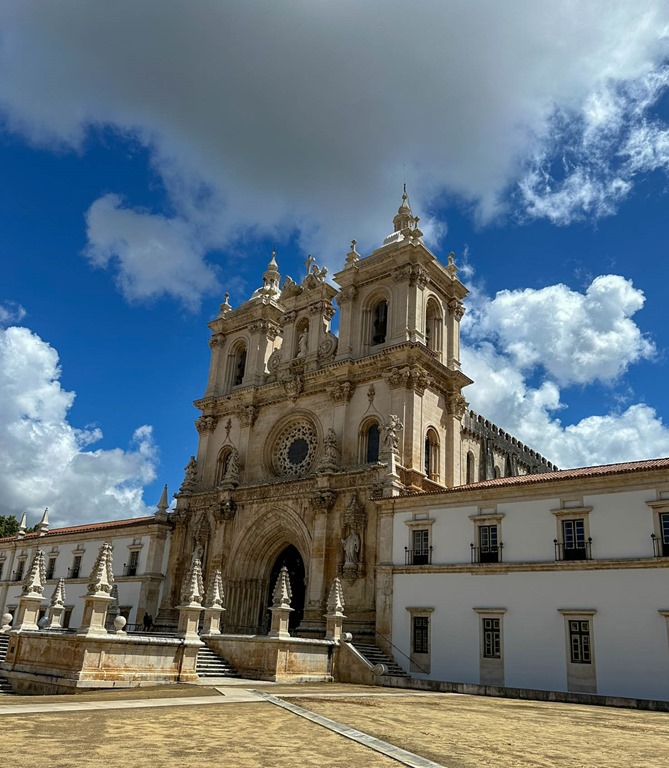
It was established by Alfonso Henriques, the first king of Portugal, shortly after Alcobaça was taken from Arab control. The king felt that establishing a strong monastic presence here would help consolidate his power. He approached Bernard, the famous abbot of the monastery of Clairvaux in France. Bernard had led a monastic reform movement by establishing the Cistercians, a new monastic order. It is hard to think of abbots as having rock-star popularity, but that was the kind of guy Bernard was. Thousands of men were flocking to join the new, austere Cistercian order. With funding from the king, the new monastery was soon the largest in Portugal with over one thousand monks.
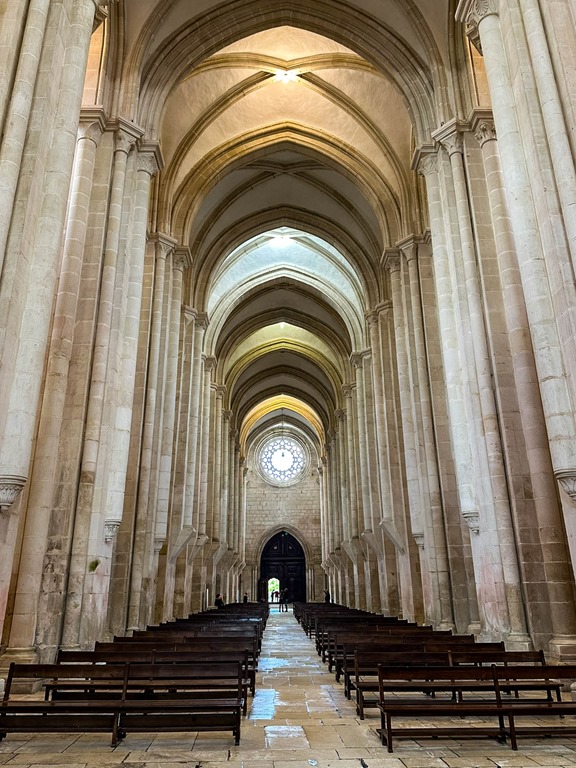
The monastery church, in its simplicity, embodies the entire austere ethos of the Cistercians.
A fair amount of the old cloister is still intact.

Copying manuscripts was a large part of the monk’s daily life. Copies of the kinds of desks the monks would have used have been placed in the old scriptorium.

The monastery retained for many centuries a close connection to the Portuguese crown. There are statues of many of the famous king-patrons of the monastery in one of the rooms.

One of the favorite spots for tourists is the tomb of Inês de Castro.
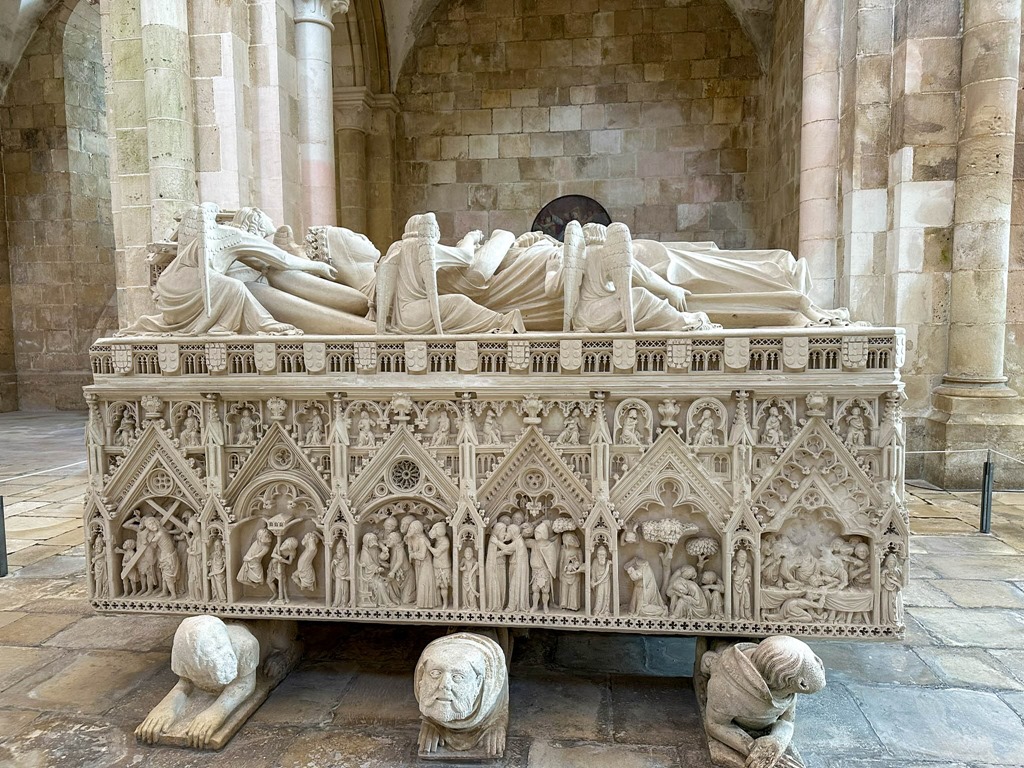
Guides relish telling this story. Inês de Castro was a beautiful Galician noblewoman. She became the lover of crown prince Pedro who was, at the time, married. When Pedro’s wife died, he wanted to marry Inês , but his father wanted a better match. When Prince Pedro did not follow his father’s orders, King Alfonso had her murdered, in front of her son, who was also Alfronso’s grandchild. When Pedro ascended the throne on his father’s death, he had her assassins murdered by ripping out their hearts while they were still alive. He then exhumed her body and had it buried in this elaborate sarcophagus placed in this royal abbey, calling her a Queen of Portugal. His own tomb, similarly decorated, is nearby.
John is tiring of Portuguese cuisine—there is a reason why there is not a Portuguese restaurant in every American town—so he made me take him to Burger King. Sadly, the “Whoppa” in the Iberian Peninsula does not taste any better than the “Whopper” in North America.
In the evening, we went out for a final Nazaré adventure.
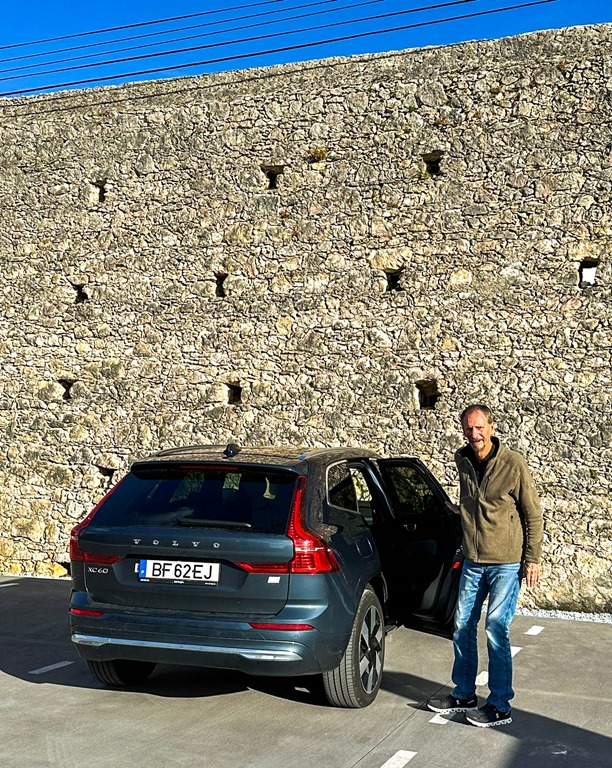
In search of the famous “O Sitio,” the place where those pictures of enormous waves are taken, we first found ourselves on the beach.
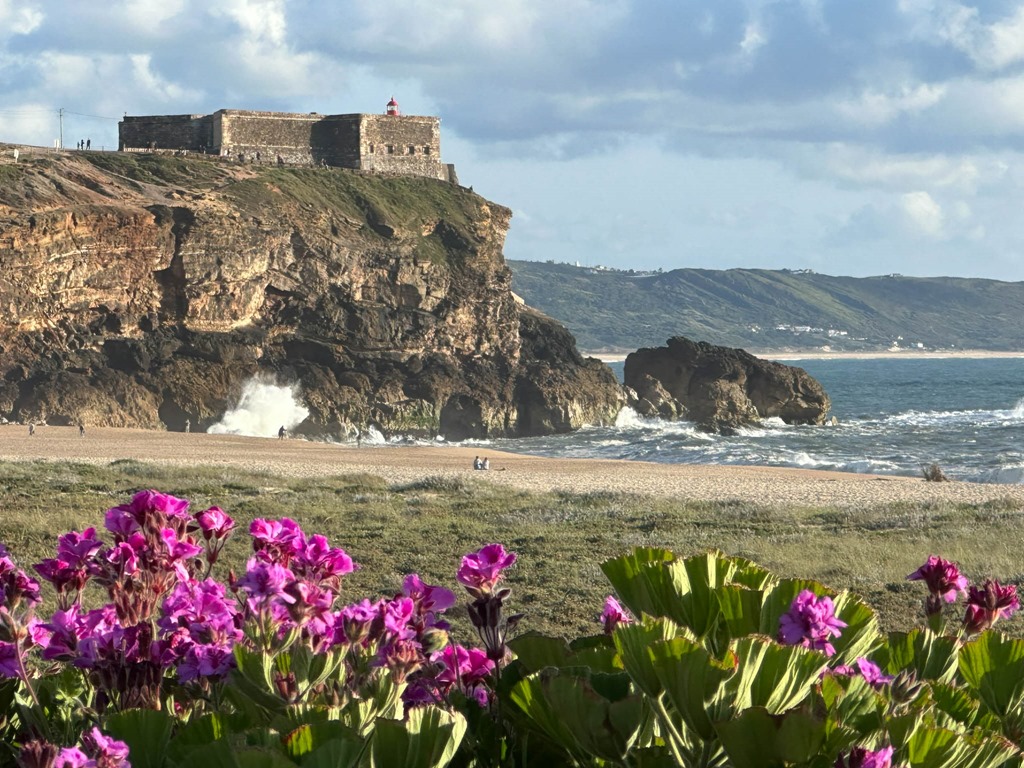
It was pretty cold, and here was not much to see there. But we did notice how the surfer aesthetic is not much different here than it would be in northern California.
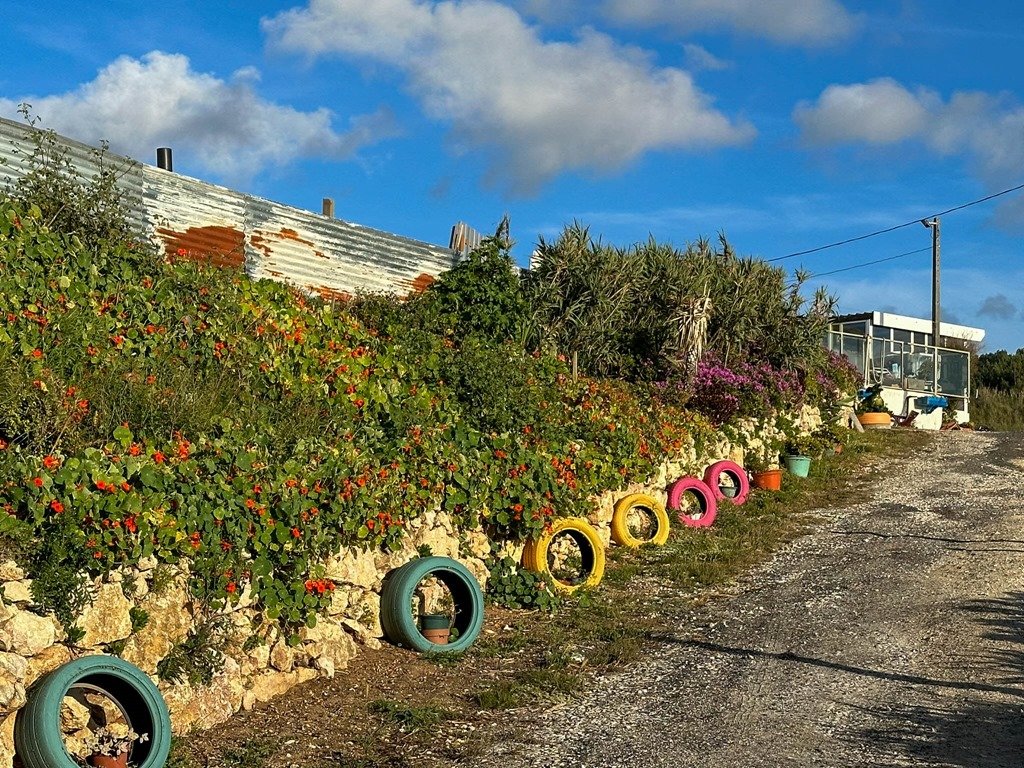
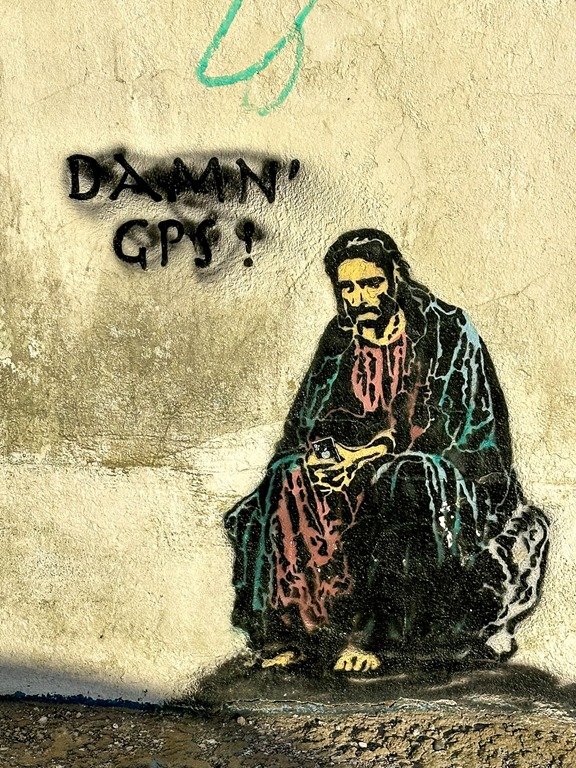
We finally located the famous site. Apparently, we were not the first to find that the phone was not the most reliable way of getting there.
From the top of the bluff, we had a great view of Nazaré’s upper and lower towns. We are staying in the upper town.

There was quite a scene of young adults eating and drinking. It reminded me a lot of Huntington Beach. A sign point the way to the famous photo point.
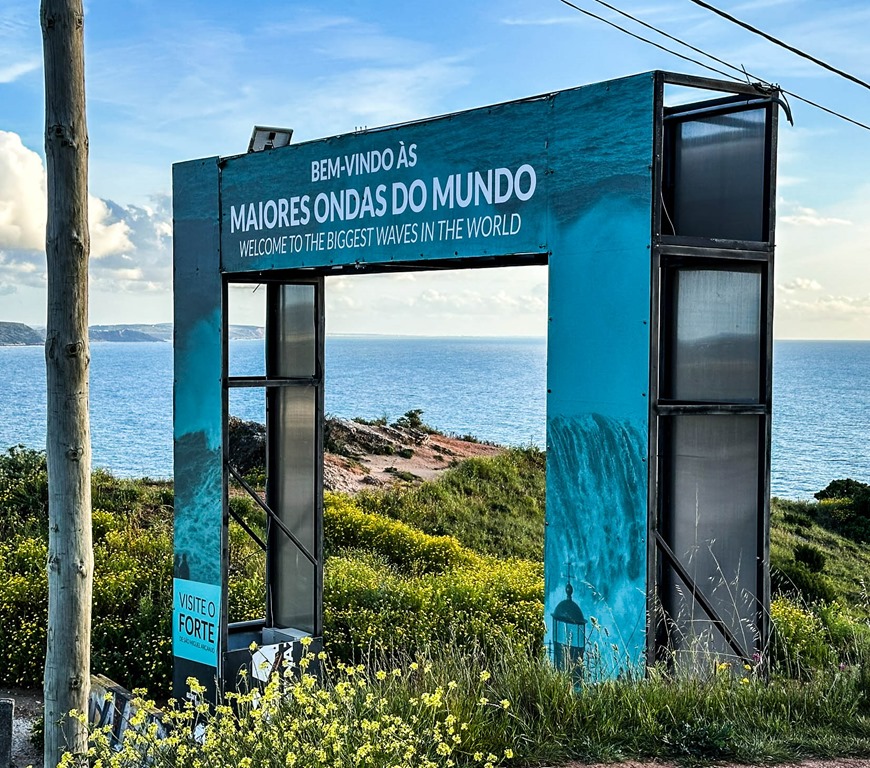
It was a little bit of a rough trail, and John was feeling ready to go back by this time. Plus, there were no big photogenic waves that night. So we went back to the bed and breakfast, ready for new adventures tomorrow.
 Traveling Johns