Partying to Portland

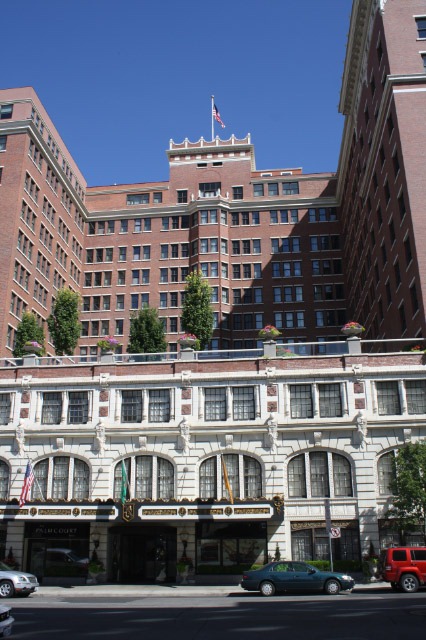
We had to get a relatively early start today to Oregon. We’ll be staying in Portland for three days with my sister, and then we’ll be heading to Ashland, our last stop on this trip, for a couple days of theater. But before we left, John wanted to explore this historic hotel some more. We learned that the Davenport Hotel had been initially constructed in 1906 by a successful restaurateur named Louis Davenport. It cost well over 2 million dollars to build, an astronomical sum for those times. It was also tremendously successful, and it was the place to stay for any famous person who happened to be passing through Spokane. Alas, as the downtown faded in the 1950’s and 1960’s, so did the hotel. By the early seventies it had filed for bankruptcy; in the mid eighties plans were being made to demolish it. In 1994, Walt and Karen Worthy, local developers, bought it for little more than the construction cost ninety years earlier, and started the renovations.
IMG_3894

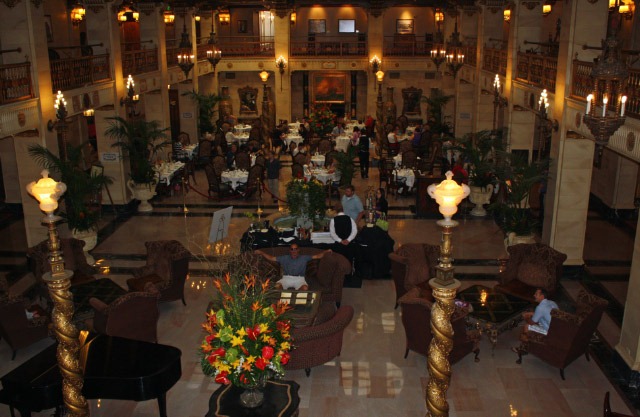
Essentially they gutted the old building, saving all the historically significant items for reinstallation, and created a new hotel in the shell of the old. The lobby, shown below, was dismantled and then reinstalled.
IMG_3892

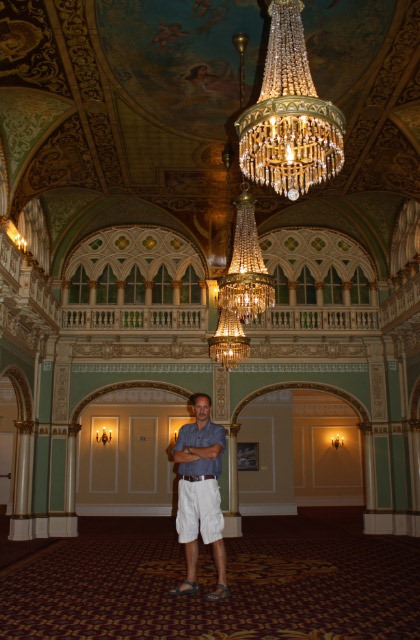
The same was true for its most famous ballroom, the “Palace of the Doges.”
IMG_3883

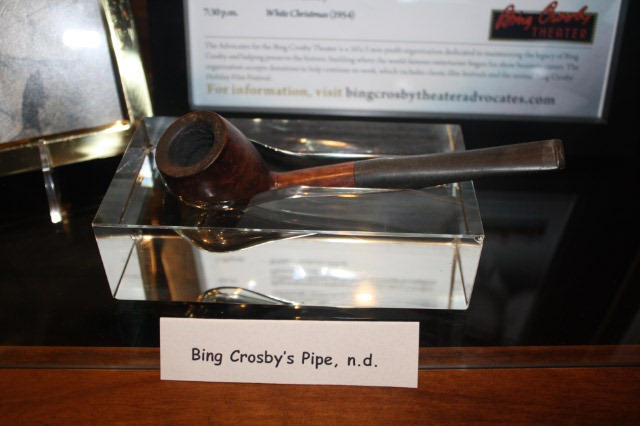
Bing Crosby is probably the most famous son of Spokane, and there are a number of places including a local theater named for him. The Davenport has an entire display case of Crosby memorabilia including his famous pipe.
IMG_3879

After leaving Spokane, we drove south along US 395 and I 84 headed to Portland. Like most people, when I think of the Pacific Northwest, images of cedars and hemlocks dripping with moisture come to my mind. Yet half of the states of Washington and Oregon are arid, and many sections of both actually have rainfall so slight that they can be considered deserts. Not many people live out in the eastern counties, though there is substantial agriculture using irrigation. We passed through these parts of those states without stopping. Highway 84 follows the route of the Columbia River as that great waterway passes through the Oregon steppe. As you reach The Dalles, however, more trees begin to appear. After Hood River, where the highway gives a stunning view of the glacier-laden volcano, savanna gives way to coniferous forest. Suddenly you find yourself in the wet, lush northwest of common imagination.

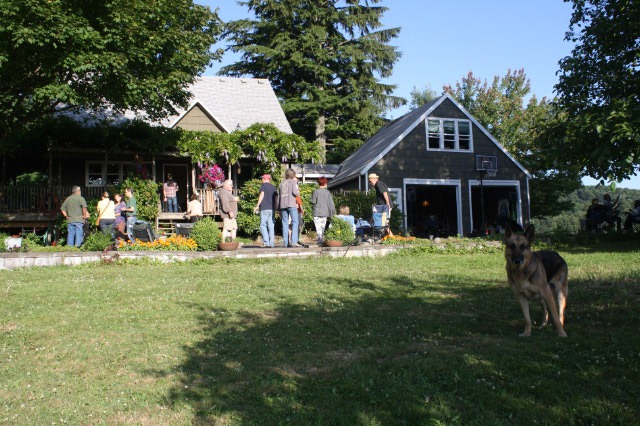
Ellen and Mike, my sister and brother-in-law, had suggested we meet them in Corbett, just east of Portland, where a friend of theirs was having a party at his sister-in-law’s house. This seemed a bit like crashing to us, but they assured us that it was the kind of event where everybody was welcome to show up. And indeed it proved to be that.
IMG_3916

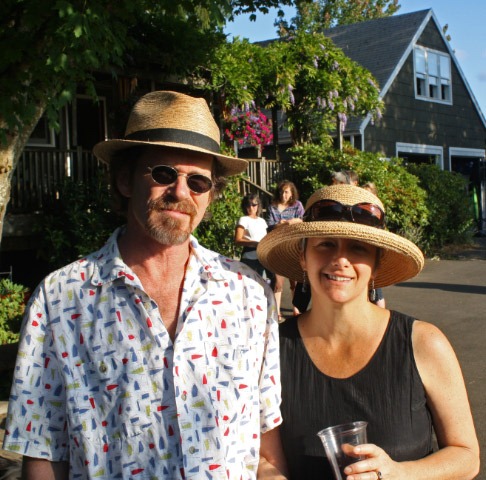
Ellen and Mike were in a festive, summer party mood.
Ellen and Mike

The four sisters who were sponsoring this party are all musicians, and there were live band performances using the garage as a stage. There was also a karaoke machine on the lawn. John was quite a hit as he did What’d I Say, the Ray Charles R & B hit from the late 1950’s.
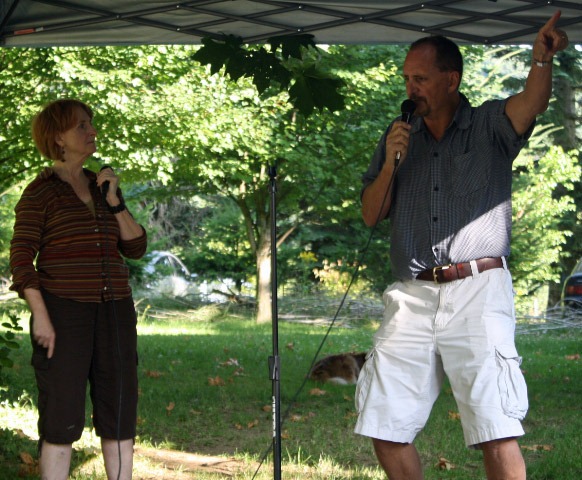
Karaoke cropped

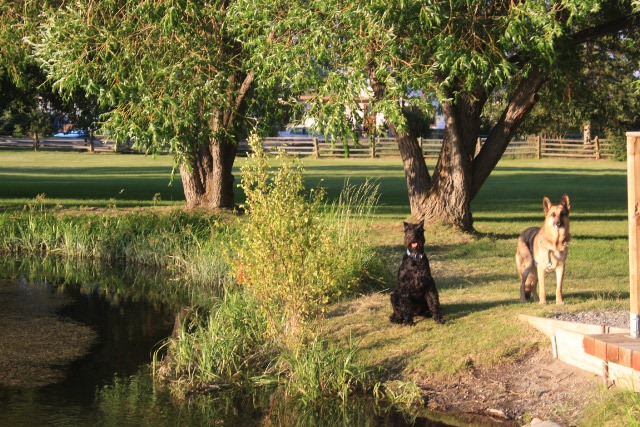
There were lots of dogs around, and Eli was a perfect party guest. Edie was a bit more problematic. As we arrived a neighbor rode up on her horse. Edie is absolutely obsessed with horses, and it is not safe to let her off-leash anywhere around one. But on-leash, with all of the other dogs off-leash, she was a problem, too. So she spent a good portion of the time in the car. When we were pretty sure she had probably let the equine recollection lapse, we let her off and she was dutifully admired and petted. As the party was disbanding, one of the younger members in attendance, the son, I suppose, of one of the four women, tried to shoot a few baskets. He did not anticipate, however, that Eli would try to join him playing ball. It was pretty funny.
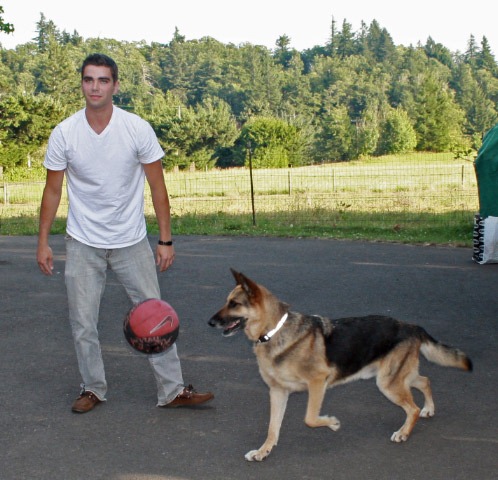
Eli play BB

On the way to Portland, we stopped to take in a picture of of the Columbia Gorge.
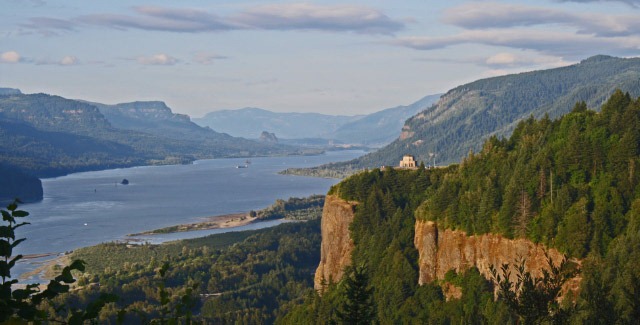
IMG_3937

Spokane

Our last day in Canada was sunny and warm. We had breakfast with our fellow guests at the bed and breakfast. I am sorry that I never took a picture of the breakfast table. Jonathan, the English innkeeper, has furnished not only this late-Victorian era home in furnishing appropriate to the era, but he also set the table in the same way. There were at least two forks and two spoons for the various breakfast courses, and there were goblets for water and glasses for juice in addition to the tiny porcelain tea cups. I felt like I was back at my grandmother’s house for Sunday dinner.

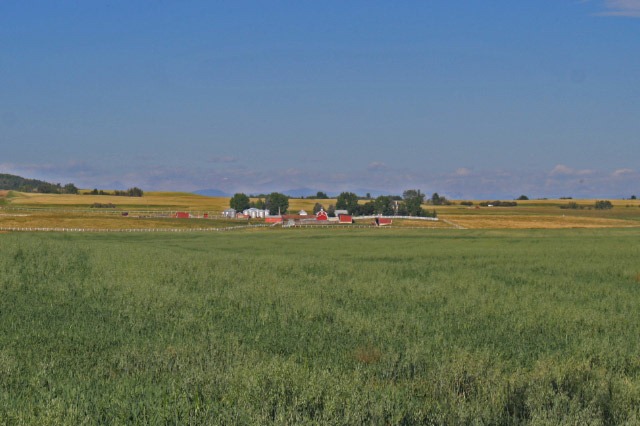
We drove south out of Calgary along the McLeod Trail. Despite the romantic western name, it is a hideous six lane highway lined with mini-malls and big box stores. But after a few miles of this urban sprawl, the city ended as abruptly as the mountains had the day before. We were suddenly surrounded by farm with vast field of wheat, hay, and what I think was sorghum. In the distance you can see the faint gray outlines of the Rockies. John snapped this photograph of a typical scene.

IMG_3843

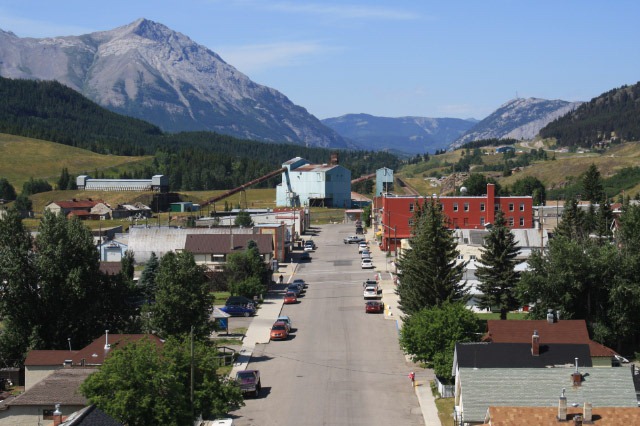
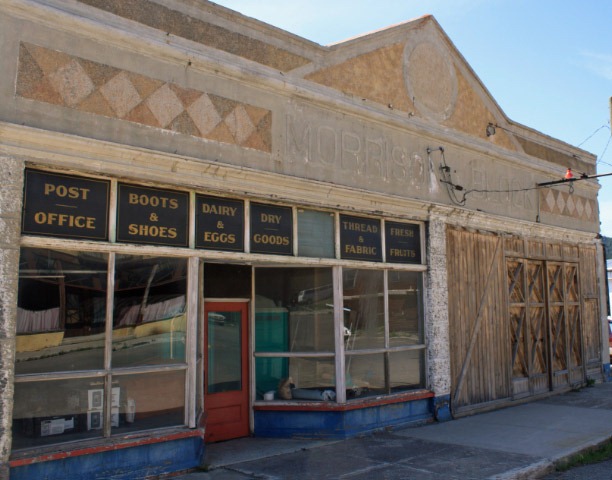
The highway brought us closer and closer to those mountains, and pretty soon we were leaving the plains behind and climbing into the foothills. We began to see some oil wells as well as signs demanding “Less Ottawa, More Alberta!” The roads curved as it slowly rose to the the Crowsnest Pass. There we stopped briefly to take a look at the town of Coleman where my friend Holly was born. Coleman was apparently once a big coal mining town, and you can see remnants of this history like the partially restored United Mineworkers hall as you drive through. The prosperity that oil and tourism have brought to other parts of Alberta does not seem to have reached Coleman, and the center of town is filled with empty and decaying storefronts and an abandoned movie theater.

IMG_3847

IMG_3849

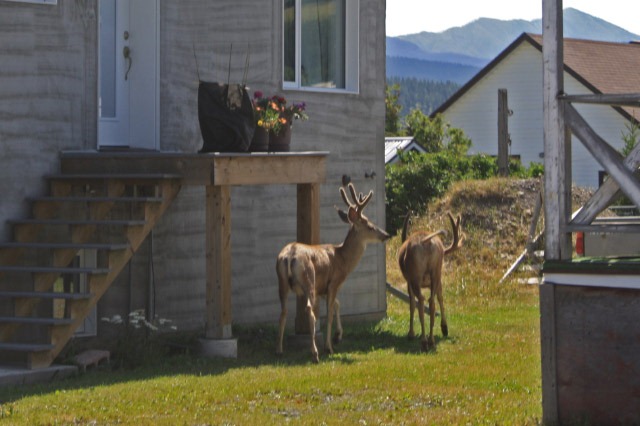
We did see some signs of life in town. If you live outside of Los Angeles or another major city, deer are usually considered annoyances. But for these two Angelenos the deer on the lawn in Coleman might as well have been Roosevelt Elk.

IMG_3845

Not long after we left Coleman we found ourselves back in British Columbia. The road followed the Kootenay river for a while before climbing over a pass and down to the city of Cranbrook. We had a reasonably short wait at the border at Kingsgate, and then drove down old US 95 towards Coeur d’Alene. This part of Idaho used to be the center of a white supremacist movement some years ago though I don’t know if that is still true. But before we came into town, Daniel the GPS in his mechanical English voice ordered us to “Take slip road right to I 90 west” and we had to obey.

Neither of us had been to Spokane for twenty years or so, and it somehow seemed bigger and a bit shabbier than either of us remembered. When we were planning the trip, the options for staying in Spokane with a dog were not that inspiring, and John discovered that for only about 50 dollars or so more than the other options we could get a deal at the Davenport, the oldest and most famous hotel in town. Since we had booked early, we had a large room next to the “Governor’s Suite” on the the top floor of the old building.

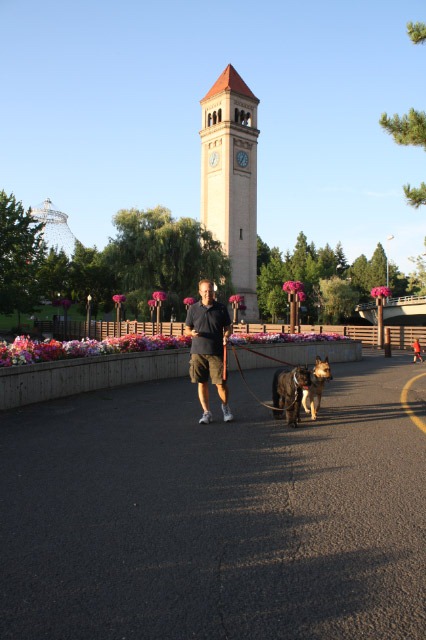
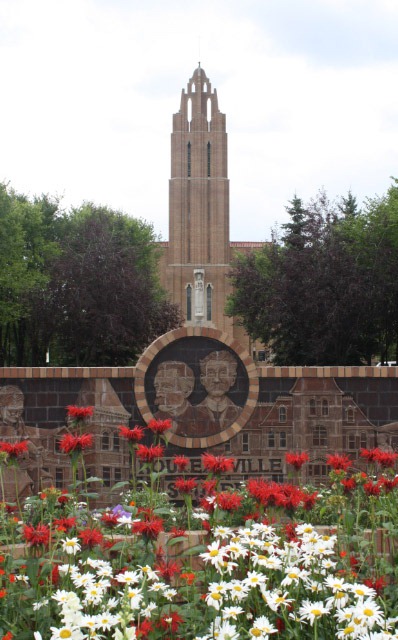
The dogs were looking miserable after eight hours in the car with only a break every two or three hours to find some bit of grass to answer nature’s call. So we took them for a walk through the downtown. I found a historic walking tour of Spokane on the internet, and I struggled to use it on the tiny screen of my iPhone. I did learn a few things from it. The tower below is the last remaining part of the old Great Northern Railroad station, once one of the grandest railroad stations in the west. The park surrounding it had been rail yards and industrial buildings, but these had been torn down in the early 1970’s for EXPO 74, Spokane’s effort to restart its decaying economy through hosting a world’s fair.

IMG_3857

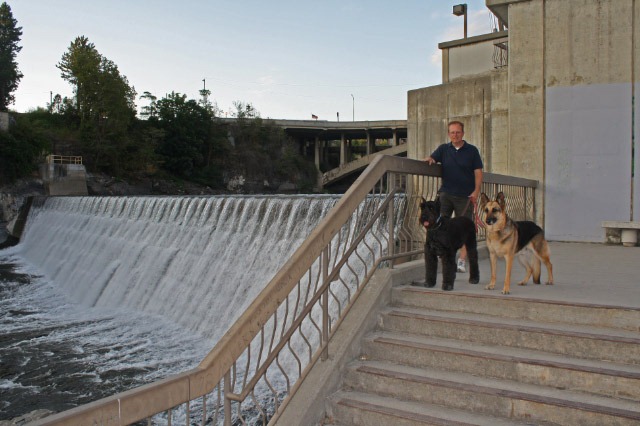
Spokane, I also learned from my iPhone tour, had originally been called Spokan Falls – the final e was added later – on an island surrounded by rapids in the river. The whites who settled this area feared the Nez Perce Indians and thought that the white water would provide some protection. Once Edison had found commercial uses for electricity, those same rapids channeled to provide hydroelectric current to power flour mills. There is still a small hydroelectric facility there run by Avista, the new corporate identity of the old Washington Water Power Company.

IMG_3864

The federal department of Energy recently renewed Avista’s lease to run several hydroelectric projects on the river, but apparently they were required to do some environmental mitigation as part of this approval. As a result, much of the riverfront is under reconstruction and walls of chain link fence are everywhere. I suppose in a few years the Spokane waterfront will be a bit more appealing than we found it today.

Tomorrow we’re off to Portland.

Calgary

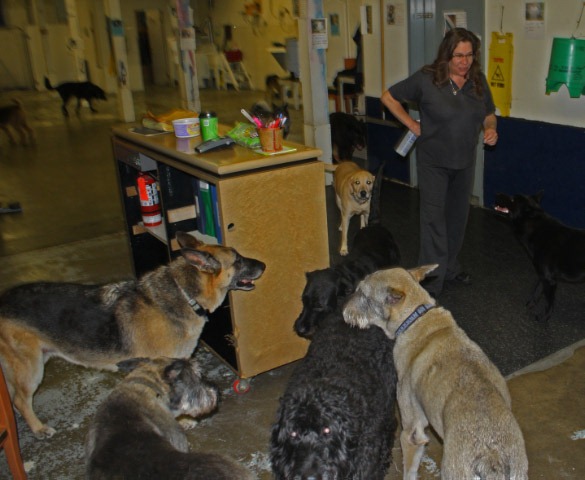
Since both Edie and Eli were pretty dirty after a couple of weeks frolicking in streams and mountains, we looked yesterday for a place to give them a bath. One of the places we came across on the Internet offered not only baths and clipped nails, but also extremely reasonable rates for day care. Since John and I wanted to do some museums and other places where we could not take the beasts, we thought it much better to leave them to play with other dogs than to stick them in the car in some underground parking garage. So our first order of the day today was to take them to the DogCity Dog Wash. The dogs were greeted at the door by about a dozen other canines including another black Bouvier! It only took Edie and Eli a moment before they were smiling and making play bows.

IMG_3749 edited

Leaving DogCity, we went back to our Bed and Breakfast where we had breakfast. One of the pleasures of staying at this kind of accommodation, as opposed to a motel or hotel, is that you get to meet the other guests at meals. We met an older man from Chester, England who had been cycling through the Rockies with his much younger Asian wife. There was also a couple from Switzerland who had been traveling through the the Yukon and the wild northern parts of BC. We had a very filling English style breakfast including bangers! Our host, Jonathan, was born and raised in Liverpool and he retains both his Scouser accent and his culinary heritage.

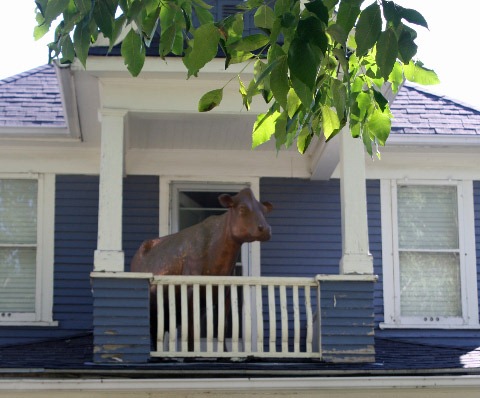
After breakfast, we planned a day of exploring central Calgary. The city of Calgary is laid out on a grid mostly, and the numbering system makes it pretty easy to not get lost. Avenues run east-west and streets north-south. The grid breaks the city into four quadrants:  northwest, southwest, northeast, and southeast. So a typical intersection, like that nearest to our bed and breakfast, would be 25 Ave SE & 2 St SE. Because of this, we felt pretty comfortable just walking around without fear of getting hopelessly lost. We walked towards an older neighborhood  still shaded with elm trees. On the second floor of one older home, we found someone who had placed this fiberglass statue on his porch.

IMG_3750

Calgary was a cattle town before it became an oil town, and there is still a lot of nostalgia for its wild west heritage. The biggest event of the year is the Stampede, a rodeo which brings tens of thousand of visitors to the city at the beginning of each summer. The Calgary police also wear big black Stetson hats. So placing  a big cow on your porch is not quite as humorous as it might be somewhere else. It can be simply a recognition of your heritage.

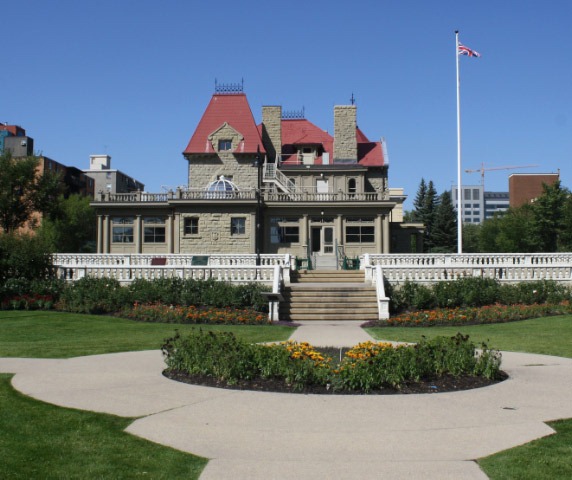
Our first stop on this walk was an Alberta Heritage site, the home of Senator James Lougheed.

IMG_3769

Lougheed was one of those bigger-than-life westerners. As a young lawyer, he moved to Calgary in the late nineteenth century when there was little else here than the main garrison of the RCMP. He married a half-Inuit woman whose father held an important position in the Hudson Bay Company. There was no province of Alberta at that time, and the northwest territories had only recently been ceded from the Hudson Bay Company to the Dominion of Canada. With boundless ambition and good connections, Lougheed prospered and not only built this house but led the drive to create the province and admit it to Confederation.

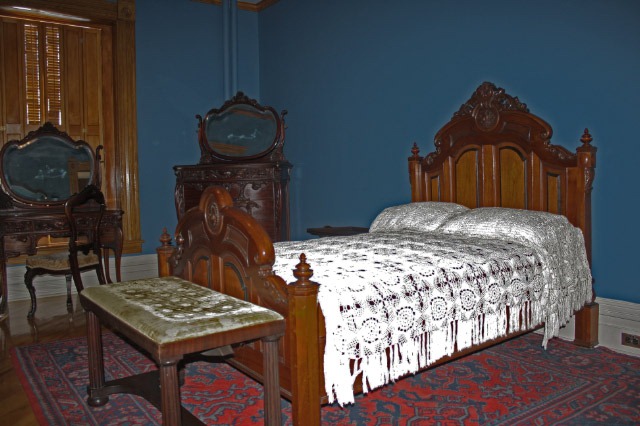
The building has suffered a lot of neglect over the years, and for several decades it was simply the blood donation site for the Red Cross. But recently a community foundation has taken it over and is slowly restoring the rooms to their original Edwardian state.

IMG_3765

IMG_3763

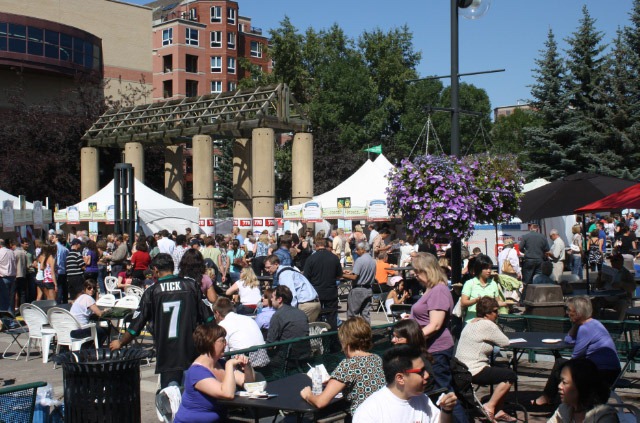
After leaving the Lougheed house, we walked towards the Bow River and the Eau Claire Market. I knew very little about the market other than the fact that it showed up routinely on lists of things to see and do in Calgary. We probably would have been disappointed in it – the market is sort of a fake enclosed market like the English built everywhere in the mid-nineteenth century – but outside the “Taste of Calgary” was going on. We have seen other of the “Taste of …” events and been unimpressed, but this one actually had real local restaurants and breweries proudly showing off their best stuff. We were sorry we had had such a big breakfast and were not hungry at all because everything looked and smelled so good!

IMG_3775

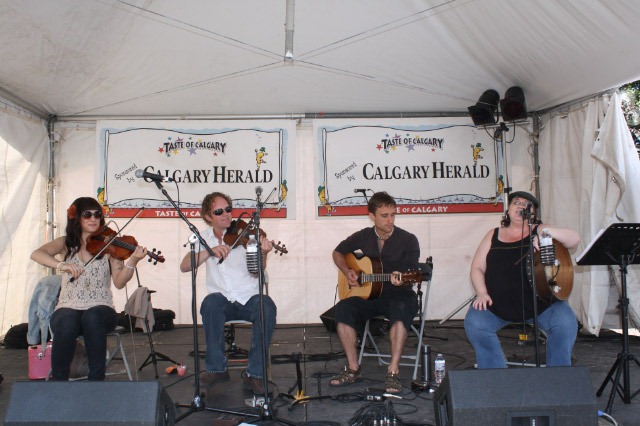
There was also live music. A pretty decent Celtic band was playing when we were there.

TasteMusic-1

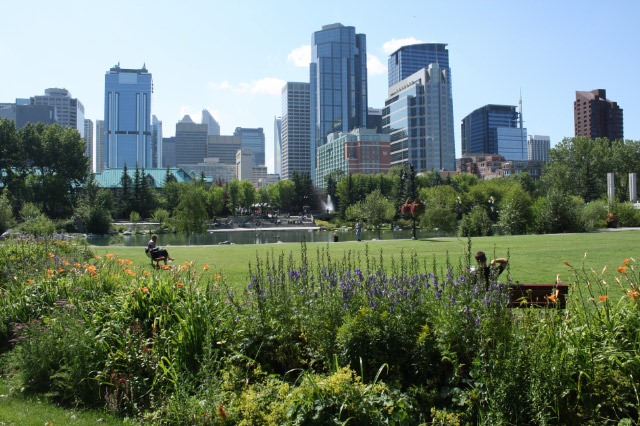
The Taste of Calgary was being held on one of the many parks that line the edge of the Bow River. Nearby, in the middle of the river, is Prince’s Island, a charming park with stunning views of downtown Calgary.

Downtown-1

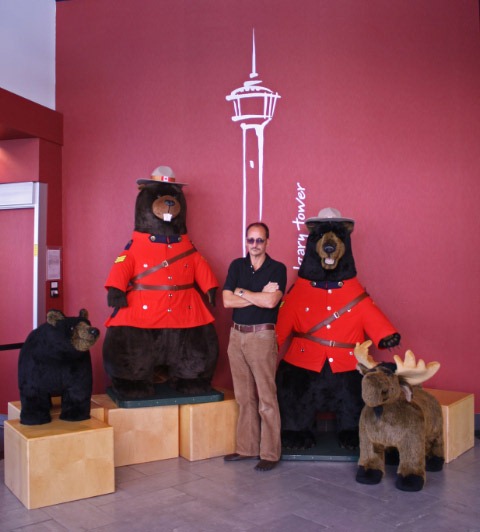
Calgary gets a lot of winter and almost all the major buildings downtown are connection by the +15 walkways. This system, named for the fact that each walkway is about 15 feet above street level, allows you to walk through downtown in the middle of the winter in shirtsleeves. It’s can also be much faster than walking at street level because you never have to wait for a light to turn. Our destination was the Calgary Tower. Much like the Seattle Space Needle, the tower is simply a big observation platform with a rotating restaurant. John figured that it was not worth paying the money to go to the observation deck, but for the same price we could probably have a salad and a diet coke at the restaurant. Alas, when we arrived they told us that they had already taken all their reservations for lunch. So we passed on the tower, though not before John had a little opportunity to pose.

CalgaryTower-1

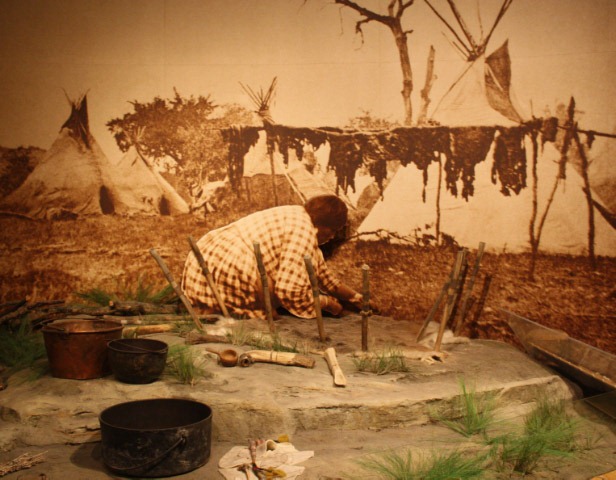
From the tower we went to the Glenbow Museum. This museum was founded by Eric Harvey, a Calgary man who had had either the foresight or the sheer dumb luck to purchase the mineral rights to much of the province before oil was discovered in 1947. After the resulting oil boom made him one of the richest men in Canada, if not the world, he decided to spend his fortune on a variety of philanthropic enterprises including a first-class ethnographic museum in his hometown. The Glenbow Museum not only has a huge collection of First Nations art and artifacts, but his similar items from countries throughout the world. In addition, it has spaces to special shows and traveling exhibits. We found the information on the Plains Indians quite informative.

IMG_3809 edited

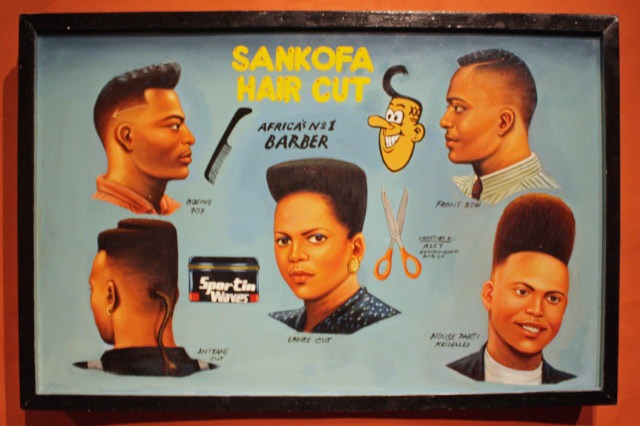
There were also shows highlighting other ethnic and cultural groups from various parts of the world. There was one exhibit highlighting the art of sub-Saharan Africa. Along with all the traditional pieces were some modern bits of folk art. We liked this advertisement for hair care.

IMG_3799

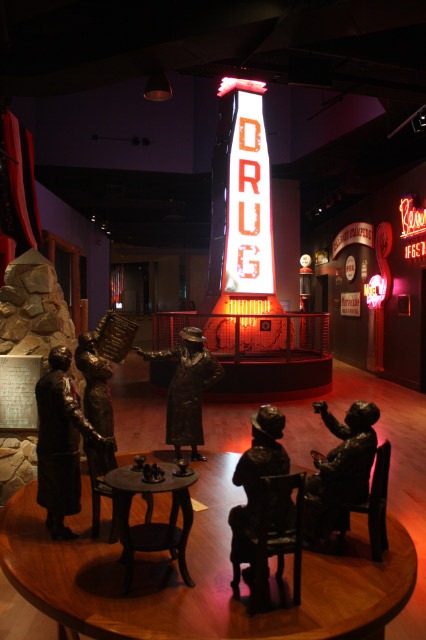
But what we really liked was a temporary show called “Alberta Mavericks” which illustrated the history of the province through examining the contributions of a variety of notable Albertans, some well-known and some who would be unfamiliar even to Alberta natives. It was great social history. The Rocket sign for Telstar Drugs was a local landmark.

IMG_3830

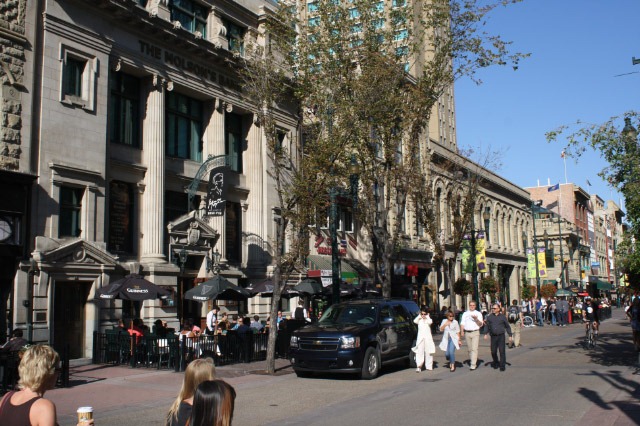
From the Glenbow we walked down Stephen Street for a bit. Officially called 8 St SW, Stephen Street – its name fore the grid system was imposed – is a pedestrian mall. Most of these pedestrian streets in the United States are dismal urban renewal failures. Stephen Street, however, is a vibrant public space. This is the only part of downtown where the historic nineteenth century buildings have not been torn down, and today they house trendy restaurants and mostly expensive shops. I say “mostly expensive” because there was one discount place where John stopped and bought me another new shirt.

IMG_3835

We walked from Stephen Street back to DogCity to pick up the beasts. They were happy to see us! Both of them looked and smelled to clean. We walk back to the bed and breakfast and when they arrived in the room they just plopped on their bed and fell asleep.

Tomorrow we leave Canada and begin the journey back to Los Angeles.

Down

This was a down day in several ways. First of all, we traveled downhill almost all the way as we left Lake Louise and made our way to Calgary. We also experienced a prairie downpour in the afternoon.  And there were a few down moments during the day when our plans did not quite work out as we anticipated. Still, although it was not the best day of the trip, it did have its pleasures.

When we woke up in the morning, there was a thick fog hanging over everything. We took our time getting up, packing up, and checking out. We decided to take Highway 1A, the Bow Valley Parkway, instead of the Trans-Canada Highway. It was a lovely park road, and there were many spots along the way to stop and enjoy the scenery or to pose for pictures.

IMG_3714

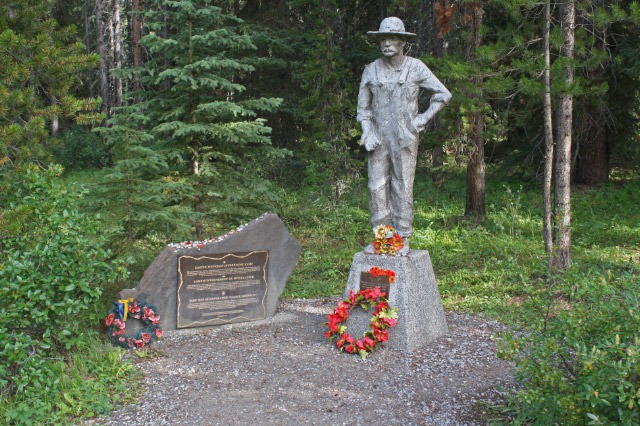
There were also some historical markers and monuments here too. Canada not only interned the Japanese during World War II, but also interned Germans and Austrians during World War I. One of those World War I camp was located in Banff Park. Most of those who were imprisoned here were unemployed Ukrainian immigrants. This is a monument to those men. 

IMG_3711

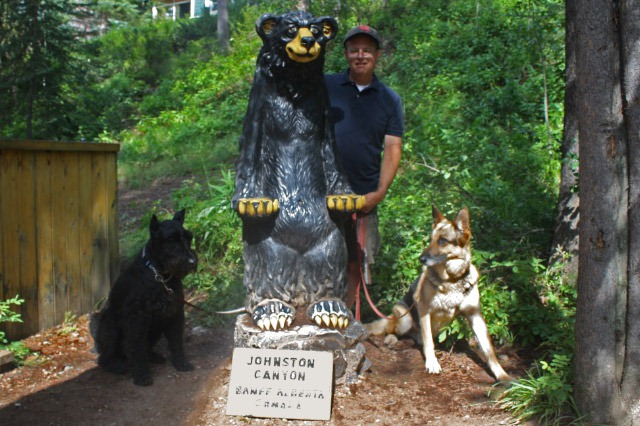
We continued down the road towards Johnston Canyon. We had met a couple people who told us that this was a great walk. I suspect it might be in the off-season, but we were stunned by the number of the people who were there and how crowded it was. It would have been hard walking up to the falls even without the dogs; with them, it was a nightmare. Although the canyon was quite pretty, we gave up and turned back. Before we left, however, we had to have the obligatory tourist photo.

IMG_3720

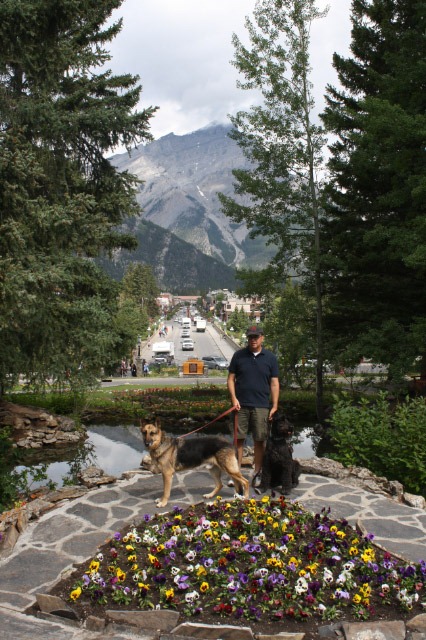
We continued a little further to Banff. The fact that Johnston Canyon is sooo close to this resort town may explain the crowds. We stopped at the headquarters of the Canadian National Park system, a handsome nineteenth century building with lovely gardens perched high above the town.

IMG_3732

We drove by the hot springs here – the Rocky Mountain parks were actually established to protect the springs from commercial exploitation – but there was no good place to park the car where the dogs would have shade, so we decided to pass on this famous attraction. John suggested that we try to get the dogs washed. I typed “Dog Wash Banff” into my phone, and a place called the Eagle Crescent Car and Dog Wash came up. We discovered that it was just a basic outdoor car wash where you could turn the hose on your pooch instead of your Porsche (not that, I suspect, people with Porsches actually wash their own cars). So we decided to pass on that too.

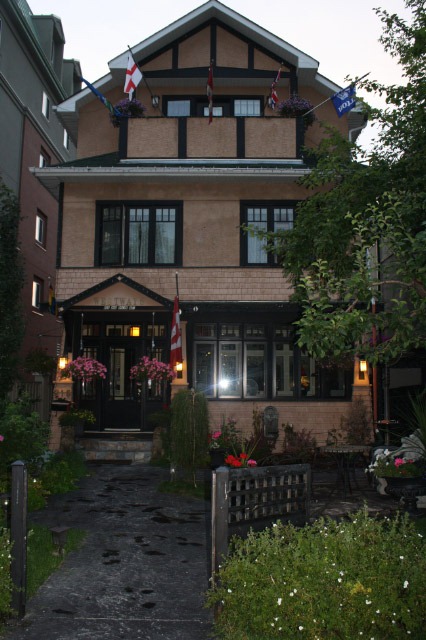
We drove about another hour until we came into Calgary. I was surprised at how quickly the mountains melt away into the prairie. As usual, the first impression of a city is seldom good. We drove through ugly suburban commercial strips before coming into the heart of the city. We’re staying at the Westways Bed and Breakfast. Our room is the one on the top floor with a tiny balcony.

IMG_3743

We did not really have an agenda for the day, but thought it might be interesting just to walk into downtown Calgary – about a mile away – and see what we saw along the way. We walked a little by the edge of the Elbow River, and then came to an old railroad station. Just next to that was the Roman Catholic cathedral and a small park adjacent to it.

IMG_3736

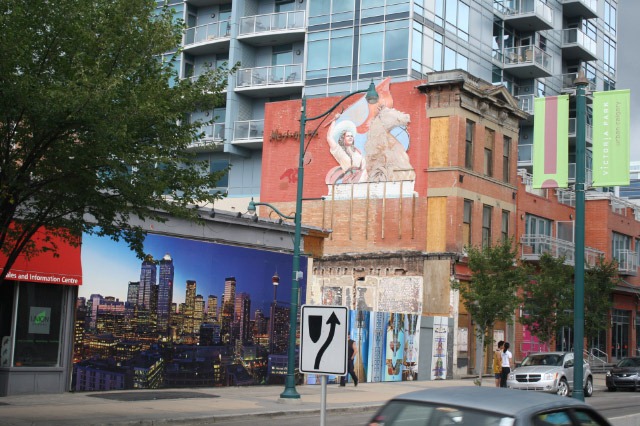
Calgary is a boom town, and there are new buildings everywhere.

IMG_3737

We were about halfway to downtown when the dark cloud abruptly replaced the sunshine. Before we could even get to the nearest building for some shelter, it was pouring.

Eli really hates thunder and lightening, so he was trembling and whimpering. I had to hold him and comfort him. Edie, ever the strong female, simply surveyed the entire scene with a certain interested detachment.

IMG_3740 copy

We walked back to our bed and breakfast when the rain had subsided to mere drizzle. The dogs were not having a good time and neither were we. But we made it back reasonably dry, and our innkeeper had thoughtfully provided towels to help us dry off the beasts at the front door.

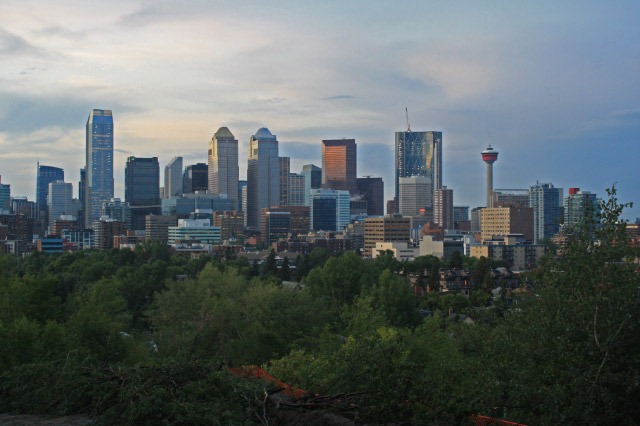
In the evening, the skies cleared. John and I set off for dinner – a place recommended on UrbanSpoon which it turned out had closed when we finally found the address – but on the way we drove through some of the adjacent neighborhoods. One nearby area was on a small bluff, and from a gap in between some houses John snapped this shot of Calgary’s downtown.

IMG_3745

Tomorrow, we’re going to be dogless and do some serious exploration of this city.

Six Glaciers, Ten Peaks, and Some Laundry

There was no sign of the promised rain when we rose in the morning, so we had a quick breakfast of mediocre hotel room coffee and peanut butter on rye bread.  We drove to the lake. It was not yet nine in the morning, but the parking lot was already fairly full. Our plan was to hike up to the Plain of the Six Glaciers. In areas like the national parks bilingualism is strictly observed. This often seems a little absurd at times, but there was something about the translation of our destination into French – Le plaine des six glaciers – which made it seem more romantic and less geological. On the map, this looked like a relatively short and easy hike. It proved to be neither of those things, but both of us were glad we did it.

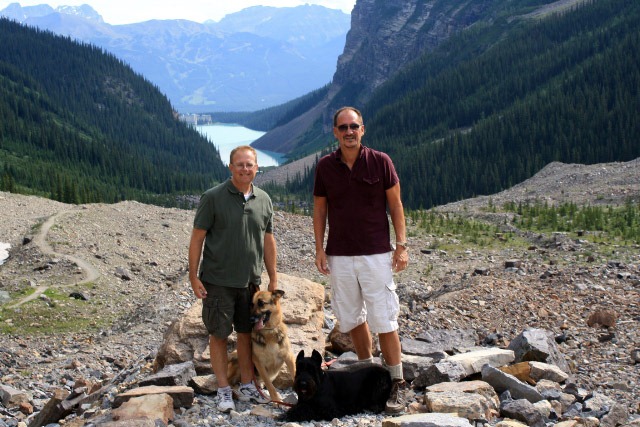
The trail next to the lake is wide, flat and easy, but as soon as we left the lakeshore we were steadily climbing in elevation and often climbing over rocks, too. Fortunately, there were lots of places to stop along the way not only to catch your breath but to take a picture. Once again we had some people offer to take a group picture of us. You can see the hotel at the very end of the lake.

IMG_3618_edited-1

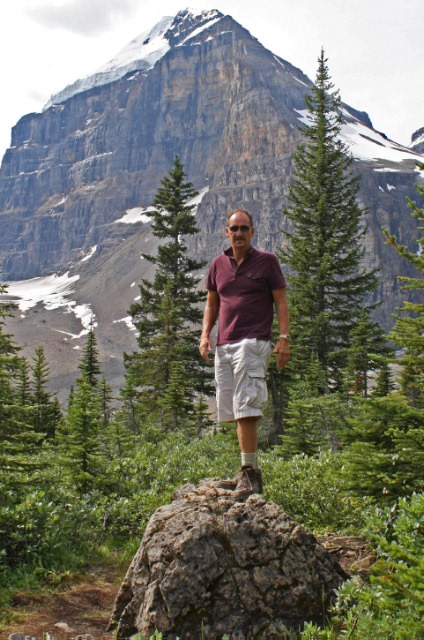
I snapped this picture of John…

IMG_3636_edited-1

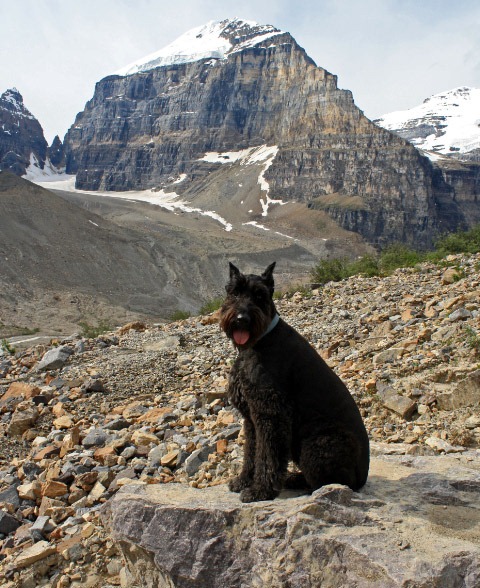
and he snapped this one of Edie.

IMG_3620_edited-1

It took some cajoling to get her to sit on that rock.

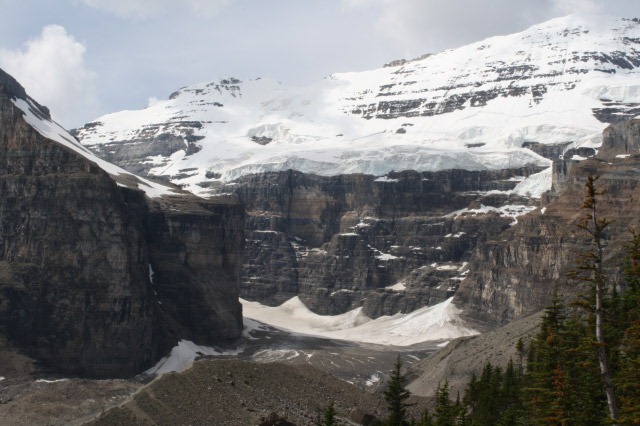
The area is dominated by the Victoria glacier. The lake is named after one of Queen Victoria’s daughters. I guess the nineteenth century Englishmen who gave names to all these places thought of the glacier as the mother of the lake. Although still a very impressive ice field, the Victoria glacier has diminished considerably in the last 50 years as a result of climate change.

IMG_3643

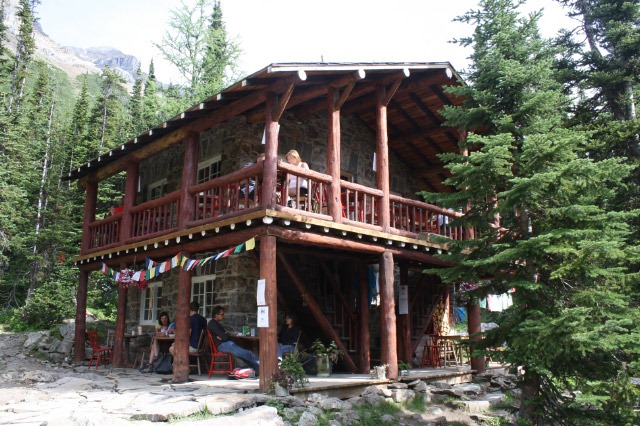
At the very end of the trail there is a teahouse. The woman who runs the place has her own dog there, and all the dogs played around for a bit while we ordered a light lunch. Since this place was so remote, we were neither surprised nor upset that it was not cheap. We were surprised that the soup and the bread were so good!

IMG_3629

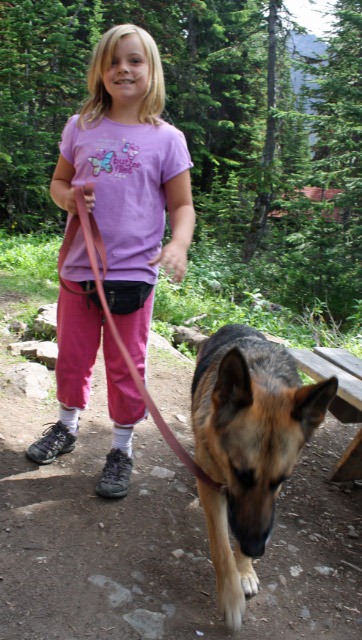
Most people eat upstairs, but with the dogs we ate outside. We were joined by Hannah, a precocious third grader from Toronto, who is obviously crazy about dogs. “She’ll talk your ear off,” her mother warned us. She told us all about the results of her research project on Los Angeles and also the plots of several episodes of Marmaduke.

IMG_3628

As usual, the trail back was a bit easier. We were tempted to let Edie off-leash to make it easier to walk, but when we saw some horses on the trail we thought better of it. Towards the end of the trail, we reached the point where the stream from the melting glacier enters the lake. Glacial silt, the fine sand formed from the crushed rock beneath the glacier, not only give the lake its famous turquoise color but also creates a beach of sorts at the delta.

IMG_3647_edited-1

IMG_3646_edited-1

After we finished this hike – a longer one than either of us expected it to be – we needed to figure out what to do for the rest of the afternoon. It was starting to cloud up a bit, but it was not raining. John said he was not up for any more major hikes today. I suggested that we go to Takkakaw Falls.

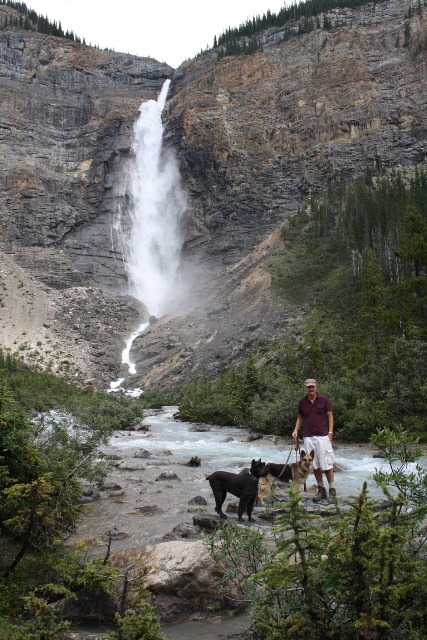
The Canadian Rockies have four national parks all adjacent to each other. Banff, where Lake Louise is located, is the most famous, but Jasper, Kootenay, and Yoho have equally impressive sights. Takkakaw Falls is in Yoho National Park. Since this is in British Columbia, not Alberta, we had to drive about 30 minutes west to get there. It was worth it! This is the largest waterfall in the Canadian Rockies. As I’ve noted before, it isn’t easy to get a picture of a waterfall. The motion of the water and the sound the water creates are simply cannot be captured by a still image, and even video somehow seems inadequate.

IMG_3661

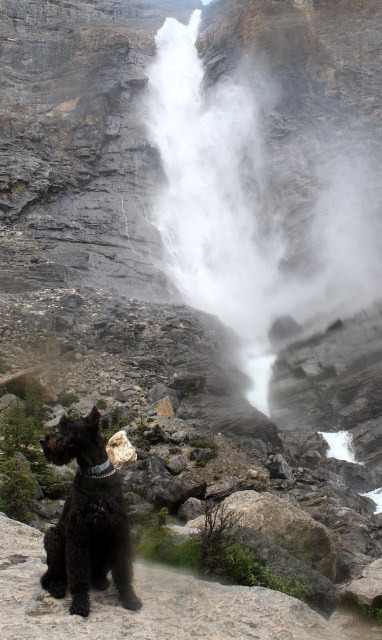
Edie did not share my fascination here, but was still willing to pose for a picture.

IMG_3670_edited-1

As we were leaving the lake, the rain finally started to fall. We returned to our hotel room. To make the time as productive as possible, we did a couple loads of laundry. This is an important part of traveling, but one that is not worthy of either pictures or commentary.

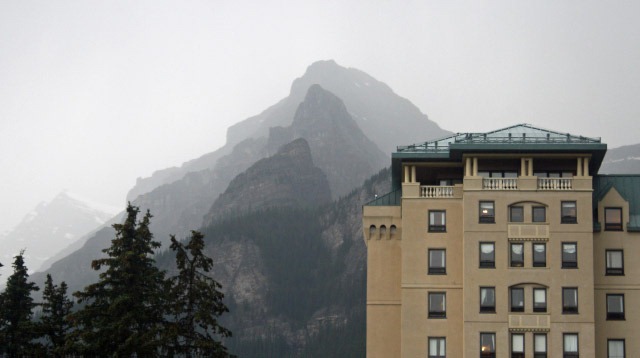
There was a fair bit of thunder with this storm, though we did not see much lightning. The dogs were tired and quite contented to sleep. So we left them in the room and went to look at the big, famous hotel. John snapped this picture of the side of the hotel with the mountains in the distance fading into the rain.

IMG_3692

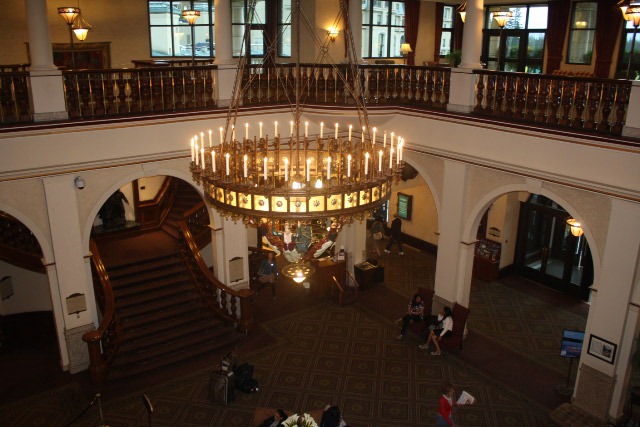
While the exterior of the hotel shows extensive renovations, some parts of the interior are still old and somewhat charming. In the picture below, you can see the lobby from the mezzanine. The Canadian Pacific chose to market the Lake Louise area as the North American Alps, so there is a vague Swiss theme throughout. You can see a bit of that in the chandelier.

IMG_3691

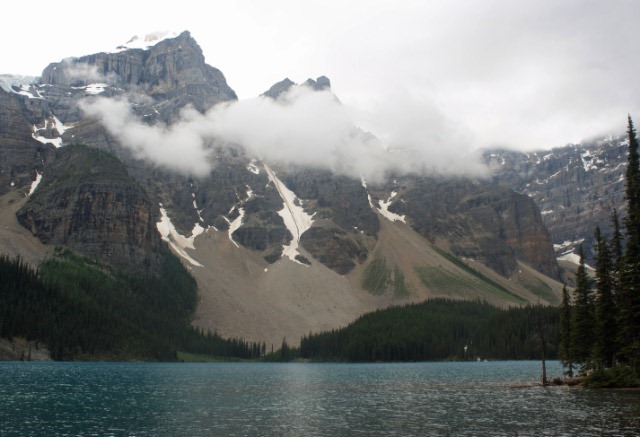
The rain began to diminish, so we went back to the hotel and picked up the dogs. We drove this time to Moraine Lake. This is smaller than Lake Louise, but in some ways it is more dramatic. The lake is named after a pile of rock slag left at one end by a retreating glacier. Around the lake, ten different mountain peaks are visible. Some of these were covered in clouds which came and went as we did our lakefront walk. There were relatively few tourists here, so the dogs could really frolic.

IMG_3702

Tomorrow, we will spend our last few hours in the Rockies and head towards our final Canadian destination, Calgary.

Lake Louise

Although we really enjoyed Revelstoke, we wanted to leave fairly early so we could spend as much time as possible in our major destination of the day, Glacier National Park. The drive into the Columbia Mountains was stunning. Great, gray peaks many capped with large ice masses lined each side of the road. The lower elevations of the mountains were covered in a thick, dark green,coniferous blanket.

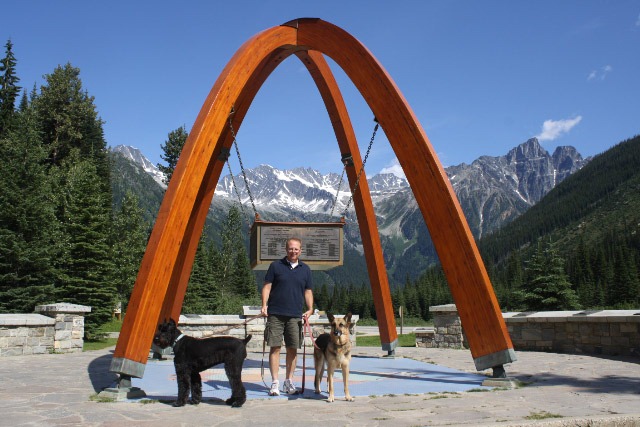
We climbed steadily until we reached the Rogers Pass at about 4200 feet.  There we stopped to to look at the rather unusual monument below.

IMG_3509

Although its hard to see in the picture, the tiles at the base create a map of the provinces and territories of Canada in the early 1960’s. The interpretive material, partly on some nearby plaques and partly on the box handing in the center of the two arches, indicate that this was the place where the Trans-Canada Highway was completed in 1962. Pictures show a dour John Diefenbaker, the Conservative Prime Minister, holding a shovelful of asphalt. It seemed odd to me that so much of this highway is only two lanes. Was it ever designed to move serious freight traffic? Or was it just created for the vacationers of that era pulling campers behind a V-8 Chevy?  It seems like trying to join Newfoundland to British Columbia by road was both a grand gesture and a fairly timid one at the same time.

There was a Parks Canada  information center near the monument. We went in an asked the young woman there what hikes would be good to do with dogs. She handed us a map with a list of hikes on the back. “Dogs can go on all of these except for Balu,” she said, pointing to a hike designated “strenuous”  and apparently lasting 8 hours. John and I left and we studied the map in the car. I suggested that we try the Glacier Summit hike. It was designated as “moderate” and was supposed to last about three and a half hours. That was a little more than John wanted, but he agreed it seemed like the best choice.

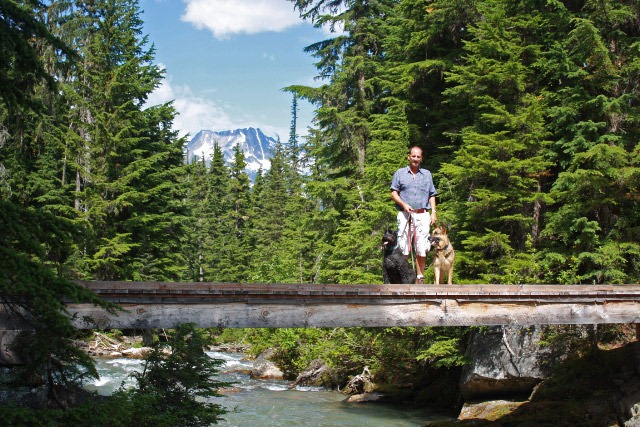
Initially the trail was quite gentle and followed the path of a small mountain river.

IMG_3516

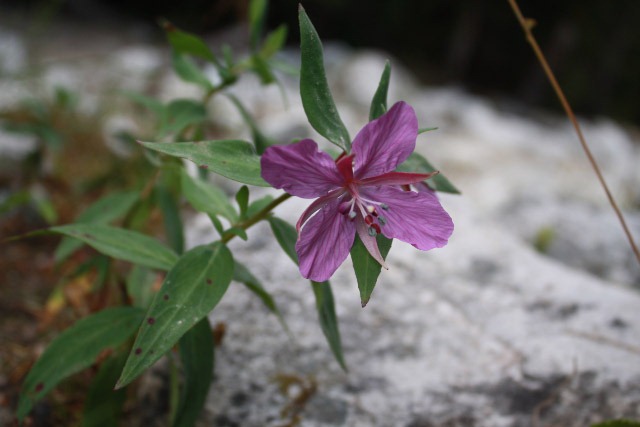
Along the way, we again saw lovely wildflowers.

IMG_3520

We also saw quite a few small animals, though no large ones, predatory or not. 

IMG_3513

We were almost the only people on the trail, so we unleashed the dogs. Eli stayed close by us, but Edie took on the role of trailblazer. She would run ahead about 10 feet or so, then run back to us to make sure she knew where we were.

IMG_3524

As we walked further along the trail, it began to gain elevation and to become rockier. Every time we were tempted to say, “This is enough,” and turn back, we were given some new and astonishing vista.

IMG_3525

Eli always seems much less aware of his surroundings that Edie is, but even he seemed to grasp that we were in a pretty cool place.

IMG_3543

We almost turned back about this point, but we pushed on just about 500 feet more until John saw this sign. We had a great sense of accomplishment.

IMG_3547

There was a little mountain stream at the top. The dogs had a good drink. There were some German hikers on the rocks in the stream silently eating the lunch they had packed for this purpose. We did not want to either disturb their contemplation, so we headed back.

IMG_3553

The way down was easier, and Edie seem particularly proud that she knew that trail and she rushed ahead and then back.

IMG_3574

We had only a short drive further until we came to Lake Louise. We had programmed our hotel, the Lake Louise Inn, into the GPS, but Daniel kept on taking us to a gas station. We finally gave up on him and went into the information center. “I don’t know what it is,” the woman at the desk said, “but GPS doesn’t seem to work well here. It takes everybody to a gas station.” She gave us a map and with a laugh said, “I guess you’ll just have to do it the old-fashioned way.” On a board at the information center, we noticed that there is a 60 percent chance of rain tomorrow. So we figured we should stop by the lake before going to the hotel so we could take some pictures while we had clear skies and sun.

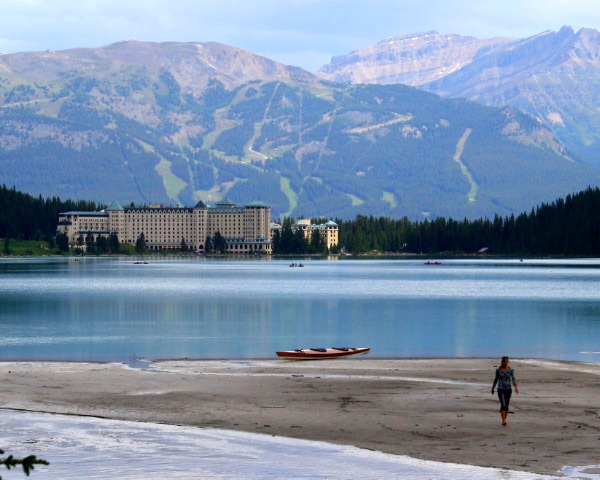
Lake Louise itself is about 4 kilometers from the town of Lake Louise. Both John and I had seen pictures of Lake Louise since we were children. It is perhaps the most iconic view of the Canadian Rockies. Some places, as John has often said, look smaller or shabbier than the postcard image. A few places, like Niagara Falls manage to be more impressive than the postcard. And others, like Lake Louise, look exactly like the postcard. The lake itself is not large. It is narrow with granite canyon walls on two sides and a glacier on a the far end. The water is a bright turquoise, typical of glacier melt, and reflects the sky and the canyon perfectly. The closer end of the Lake is dominated by the old Canadian Pacific hotel. This was the only disappointment; it was obvious to both of us that the hotel had been extensively reconstructed and it looked like a modern building trying to look old rather than an authentically old structure.
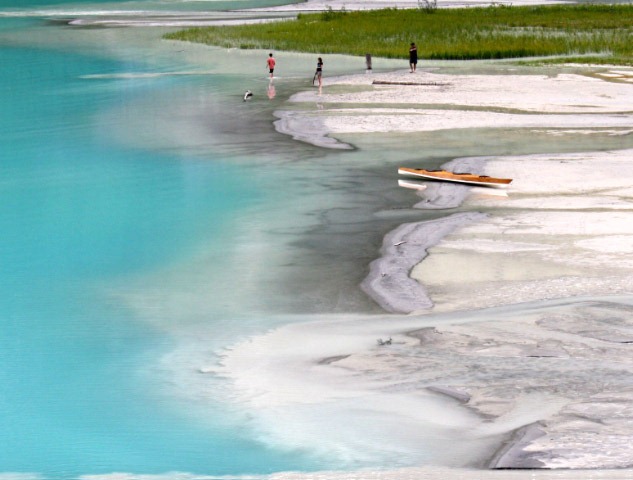
There were hundreds and hundreds of tourists milling about as we walked the lakefront. Most of them were Asian. We listened for the distinctive sounds of each language to try to determine the country of each group. We mostly heard Mandarin, and both of us noticed that these were also by far the best-dressed tourists. That distinction used to fall to the Japanese.

A few hundred feet from the hotel, the crowds thinned a bit. We could move around a little more easily and even take some pictures of the scenery.

IMG_3598

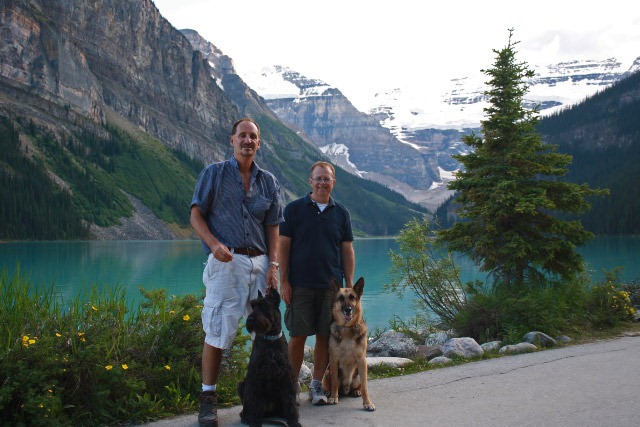
John was trying to take my picture when a man offered to snap a picture of the both of us. It rather looks like we’re standing in front of some kind of backdrop, doesn’t it? The dogs have grown better at posing for pictures and are more tolerant of it.

IMG_3607

From the lake, we returned to our hotel, the Lake Louise Inn. Our Frommers guidebook notes that it is expensive to stay in Lake Louise. We are at the cheapest accommodation in town, but it still charges double what it should for the quality of the rooms. As soon as we had unpacked and placed their beds on the floor, the dogs were fast asleep. John went off and found an equally overpriced grocery store where he purchased a few item for supper.

Tomorrow, unless it rains a lot, we’ll go back for some more extensive hiking around the lake.

Revelstoke

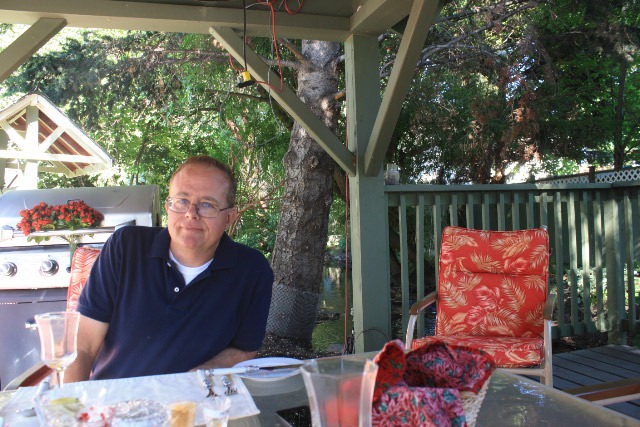
Like yesterday, we had a big breakfast by Mill Creek before we left Kelowna. Kris Stewart, our innkeeper shown below, made waffles as well as her cinnamon bread. We weren’t even tempted to eat lunch after that feast. This morning we were joined by an older couple from Cranbrook, a small city in the far south of the province. The woman, probably in her late sixties or early seventies, was traveling around on her motorcycle. He husband, who appeared a few years older, driven up to spend the evening with her on her travels.

Kris Straightened

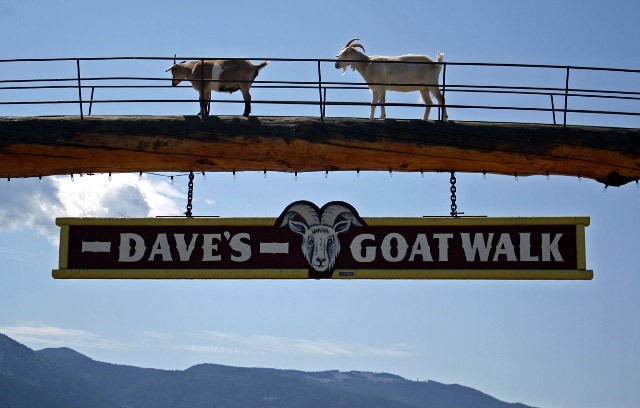
Kelowna sprawls, and it took a few minutes before we had left the last convenience store and gas station in the rear view mirror. The land was fairly flat for a while as we traveled the eastern edge of the Okanagan highland. But the road began to climb gently and we could tell we were headed into the mountains. Almost imperceptibly, the forests grew thicker and taller and the dominant color of the landscape changed from brown to green. We passed the Shuswap Lake. Here we turned from 97 to the Transcanada Highway. I was expecting a bigger, broader stretch of pavement here, but it to was just a two lane road. Worse, these two lanes were under a lot of construction so we sat stalled a a while a a couple points waiting for the signalman to turn the sign from “STOP” to “SLOW.” There were a couple of old-fashioned roadside attractions here including this one.

IMG_3422_edited-1

Yes, those are indeed live goats. There are pens on either side of the parking area and for a dollar you can fill a can with feed and using pulleys bring it up to the goat walk where the goats will happily eat it. Dave’s had a lot of other things to sell you besides goat feed, but we just used the bathroom and snapped the photos.

Along Highway 1, the road rises into the Monashee mountains. This is one of the ranges which comprise the large Columbia Mountains, and they divide the drainage of the Thompson and Fraser rivers from that of the Columbia River. We drove through  Eagle pass. Here, at the small settlement of Craigellachie the last spike of the Canadian Pacific Railroad was driven in 1887.

Our destination was the mountain town of Revelstoke, home to Mount Revelstoke National Park. We dropped our bags off in our hotel room and drove to the park. After paying the entrance fee at the gate, you drive up a 16 kilometer road to the top of the mountain. Along the way you gain nearly a mile in elevation. Our ears popped a couple times. But it was our eyes that popped when we saw the view!

IMG_3447_edited-1

On every side, as far as you can see, you are surrounded by glacier-capped granite ridges. It was all a little too much for John. He unleashed both the dogs and his inner Julie Andrews as he ran and sang, “The hills are alive….”

IMG_3450_edited-1

The only downside of the Alpine perfection were the mosquitos. John had the foresight to have brought some Off after we learned our lesson at Joffre Lakes. Other travelers were not as prescient. John helpfully offered some of the spray to a Spanish tourist and his family, and he in turn offered to take our picture.

IMG_3437_edited-1

We took the trail to the “Ice box.” That’s the rock formation below so called because bits of snow are found in the crevices year round. I am not quite sure who thought that sticking a cast-iron statue of a Plains Indian carrying a peace pipe would be a good addition to the scene, but I did not much care for it.

IMG_3453_edited-1

At this elevation, it is still spring and there were wildflowers everywhere.

IMG_3478_edited-1

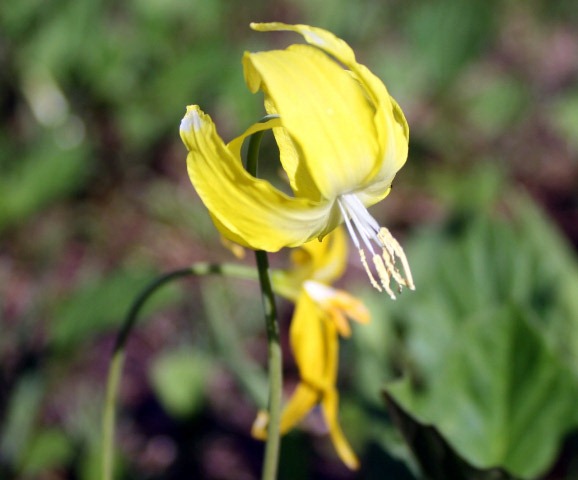
John and I were both particularly taken with the small Glacial lily.

IMG_3474_edited-1

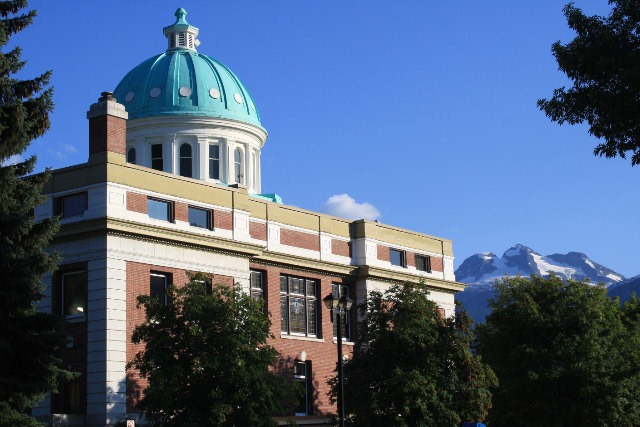
After leaving the park, we decided to explore Revelstoke. Particularly after Kelowna, we were taken by this small charming town on the banks of the Columbia River. The blue green dome of the courthouse is visible throughout the city.

IMG_3489

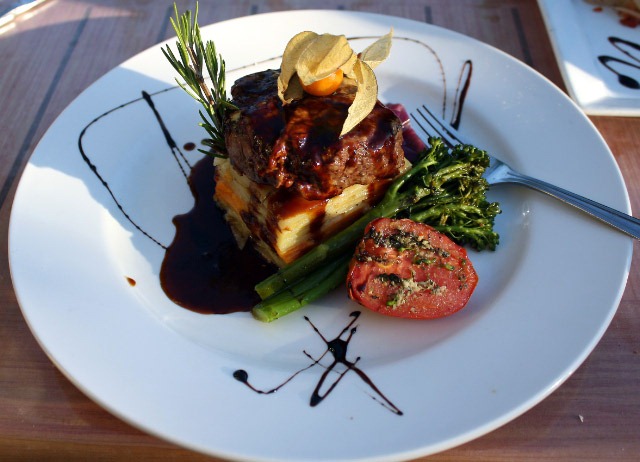
John was famished and wanted dinner. I wasn’t feeling well all that well – I think it may have been dehydration or perhaps the elevation – so I only nibbled on an appetizer. He had quite a formidable piece of beef tenderloin which he pronounced “superb.” As we ate, we were sitting on the outside patio of the restaurant. The dogs were in the car, under the shade of a tree, with the windows opened. We both hoped they would just curl up and sleep, but instead they bark at every person and animal that walked even close. I began to feel for parents whose children misbehave in restaurants.

IMG_3495_edited-1

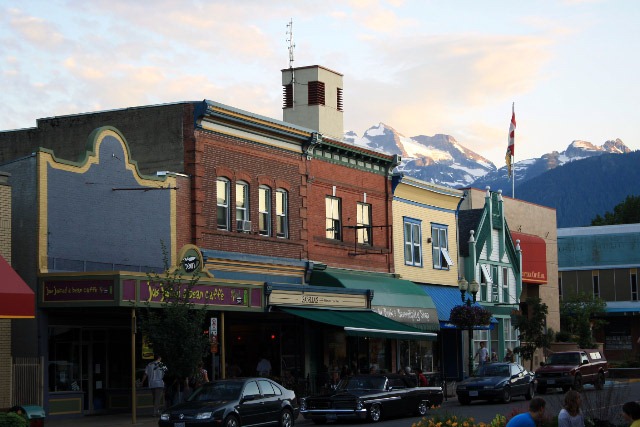
After dinner, we looked around town. It reminded me a lot of Dunsmuir, but it seemed more prosperous.

IMG_3500_edited-1

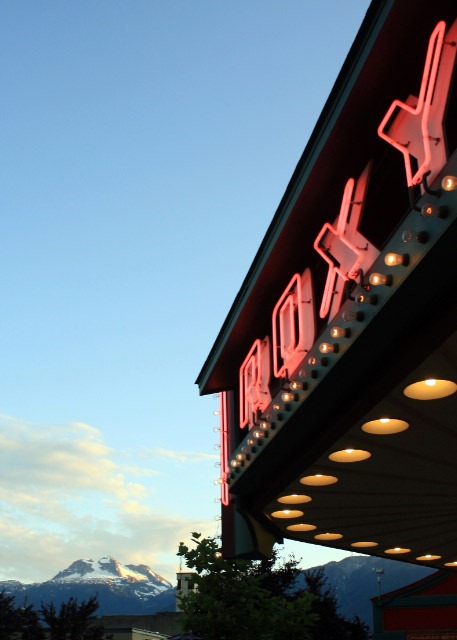
There was a couple guys with guitars singing folk rock on a small bandstand. People strolled around eating ice cream or sat in plastic chairs to listen. There were lots of dogs, and Edie would have much preferred to have smelled her fellow canines than to be forced to sit and listen to the music! There is still a functioning movie theater in town, and John took this artsy shot with its marquee.

IMG_3499_edited-1

We returned to hotel. Tomorrow we’ll be off to Glacier National Park and Lake Louise.

Frustration and Satisfaction

I cannot go so far as to say with Dickens that this was “the best of times…the worst of times,” but it was a day which was at once deeply frustrating and quite satisfying. Traveling is often like that.

We had a lovely breakfast at our B & B. We had some time for a good chat with Kris, our innkeeper. Since I knew she had run for election as a Liberal candidate in the last federal election, I was curious to get her take on the political situation. Not surprisingly, she had complete disdain for Stephen Harper and his Conservative Party government. But then, when this topic had been pretty thoroughly discussed, John asked her about what she was doing when she was not running an inn. She told us that she is in the private medical imaging business. This seemed rather odd to me because selling medical care to rich people who wish to bypass the national health care system seems at odds with what I would think a Liberal would believe. But I hardly challenged her on it. Instead, I enjoyed that wonderful homemade bread and the lovely patio by Mill Creek.

IMG_3382

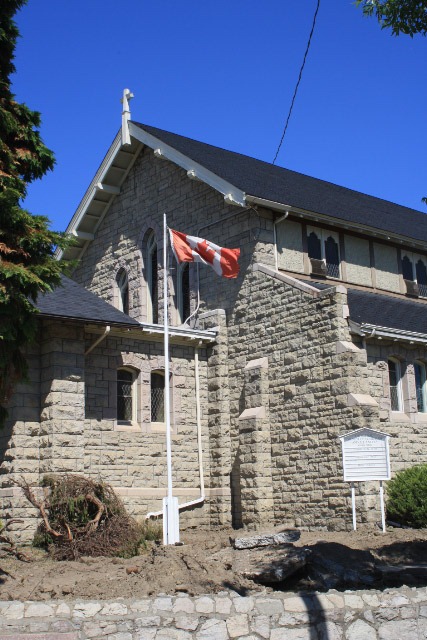
After we finished, I went off to the Anglican cathedral for Sunday mass. John did not join me this time. This was a pretty standard service with an unexceptional sermon provided by the bishop. What was exceptional was how friendly everybody was. I talked to many people after the service, and all of them were curious how a Californian had found his way to the Okanagan Valley.

IMG_3388

John, meanwhile, had gone off to look for a place he never found, so he was already feeling a bit frustrated. Unfortunately, our frustration had just begun. Since the valley is dominated by this magnificent, huge lake, I thought it would be a lot of fun to rent a powerboat and do some exploring. We have done things like this many times before, and it’s always been a lot of fun. There are a number of places that rent boats here, but most of them want to rent them for a half day or a full day, more than we wanted to spend. There was one place, however, that had a reasonable price for one hour, all we really needed. But when we arrived there, shortly after taking the picture below, the young lady at the desk told us that she could not rent us a boat because of the dogs. “People have allergies, you know,” she said. We have rented boats with the dogs many times before, and it is almost impossible to understand how a fiberglass and vinyl boat open to the air could possibly retain anything which could cause an allergy. But there was no point in arguing with her.

IMG_3387

After this, the dogs were hot and we figured we would at least take them down to the water. We had noticed on the map that there was a dog beach in West Kalowna, on the other side of the lake. After twenty minutes of driving, however, we found that there wasn’t even really a beach there, and certainly no dogs to be seen. So we figured we would have to backtrack to the beach we went to yesterday. This meant about another 40 minutes stuck in traffic crossing the bridge and going through Kalowna. By this time, both of us were in a bad mood and the dogs were looking mournfully at us from the back of the car. each. When we finally made it to dog beach, we had a good time with Eli. We thought we might entice Edie into the water if both of us were in the lake, but she would have none of it. She sat on the bank barking for us to come to dry land.

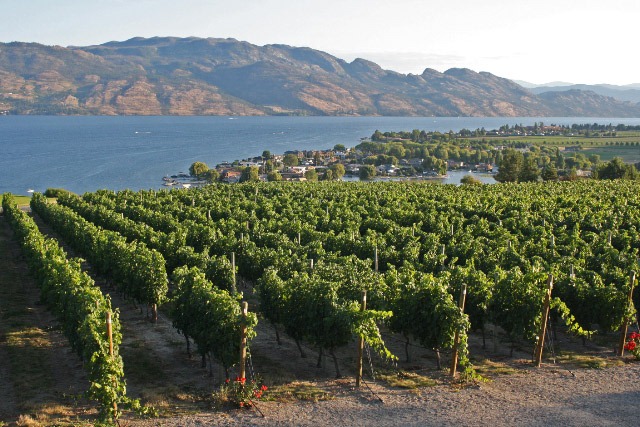
With at least one dog nicely exhausted from swimming, we left them in the cottage while we did some exploring in the late afternoon. The Okanagan valley is famous for its wineries. John does not drink but he thinks that I should enjoy wine tasting. Unfortunately, my sense of taste is sensitive enough only to tell the difference between apple juice and battery acid, so that fine distinctions I am supposed to get from swishing tiny sips of wine are completely lost on me. But I do think that vineyards are pretty, and the ones in the Okanagan, overlooking the lake, are particularly lovely.

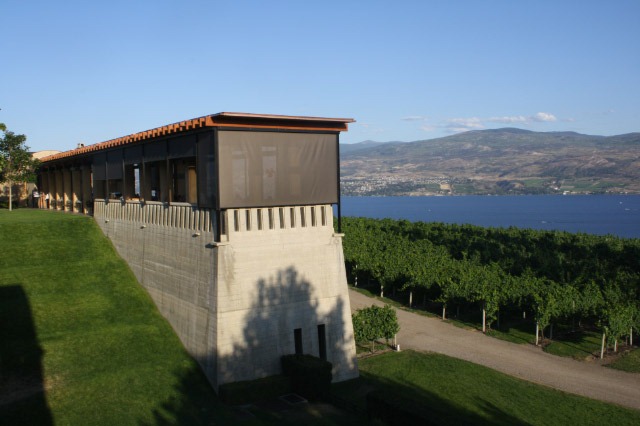
The most beautiful of all of these is the Mission Hill Winery. Like most of the its competition, is has a great location.

IMG_3406

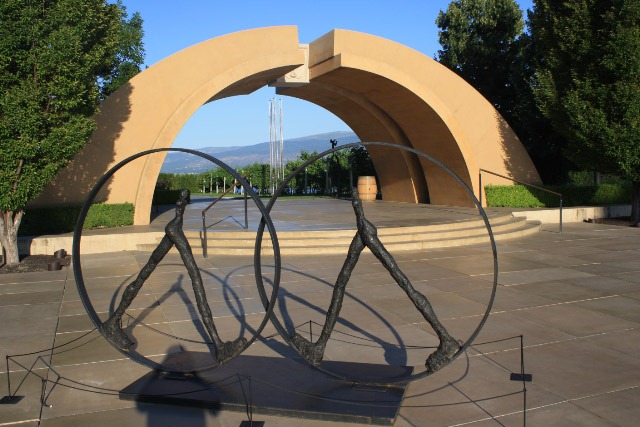
What distinguishes Mission Hill, though, is its stunning architecture. After you drive up to the top of the hill, you park in a secluded space. You enter the winery through this modern archway.

IMG_3394

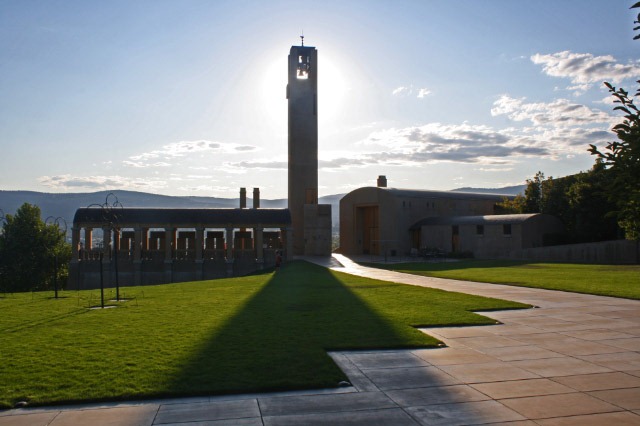
This leads you into a courtyard domination by bell tower. You can see this tower from all over the valley. The owners of the vineyard are art collectors, and the building on the right is not a chapel but a gallery. We were too late to take the tour so we did not see their Picassos.

IMG_3401

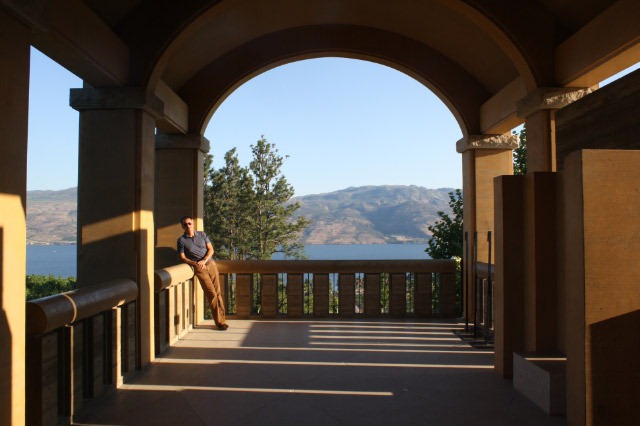
Instead, we posed in the loggia which provided stellar views of Kelowna and the valley.

IMG_3397

Like the wineries in Napa and Sonoma, many of these vineyards have restaurants which are run by famous chefs. You can see the restaurant at Mission Hill below.

IMG_3399

Although we knew it was far more than we wanted to spend, we did inquire if they happened to have an open table. They told us that they did not. So instead we went into town to find the best meal we could since we for once did not have to worry about accommodating the animals.

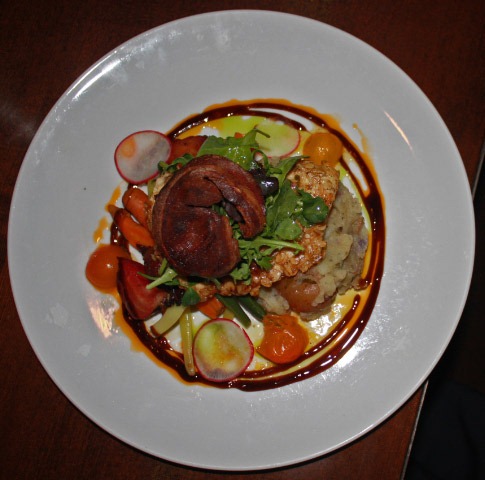
I chose RauDZ. In case you’re confused, that’s pronounced “Rod’s” after the celebrity chef Rod Butters. We had not heard of it before coming to Kelowna, but it is apparently one of Canada’s hottest restaurants. We had to wait close to an 45 minutes before we could get a table, but it was worth it. The food was outstanding and reasonably-priced in comparison to the winery offerings. Like so many of the disciples of Alice Waters, the culinary team here focuses on seasonal, local, organic ingredients cooked lightly to preserve to flavors. John had their famous oat-crusted arctic char. It was prettier than the picture below, but there’s only so much art you can do when you are trying to unobtrusively take a picture of your plate in a crowded restaurant.

IMG_3409

I had a rigatoni with wild boar meat. It was unusual and good.

The dogs were happy to see us when we came back. Tomorrow, we head into the Canadian Rockies to the town of Revelstoke.

Interior Journeys

We left Clinton and drove south towards Cache Creek, and then west toward Kamloops. This took us into the  Thompson Valley, considered one of western Canada’s three deserts. Other than a few large farms using irrigation,  the surrounding land is mostly uninhabited. The arid landscape is dominated by sagebrush and native bunch grasses, though there is, typical of the the west, a great deal of invasive cheatgrass. At the small settlement of Savona, the river turns into a narrow lake. At the far end of that lake is the city of Kamloops.

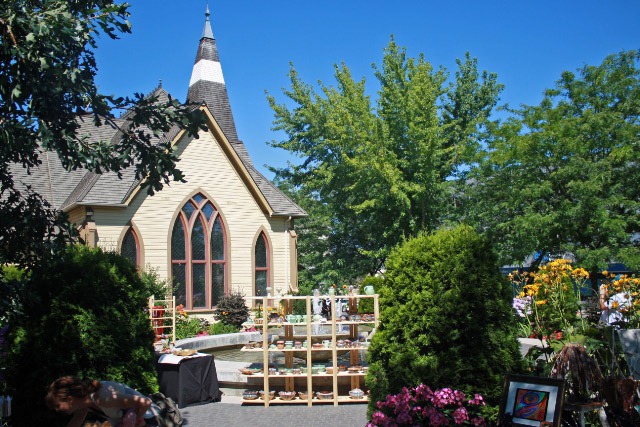
Kamloops aggressively markets itself as tourist destination.  I think its major attraction is probably its dry warm weather. For those of us accustomed to that kind of climate, the charms of the city are limited. There is an old downtown core. It is pleasant, though unremarkable. When we arrived on Saturday morning, there was an farmer’s market taking place. We bought some apricots, a regional specialty. Nearby was a crafts market selling all the usual pottery and jewelry.

august_6-1

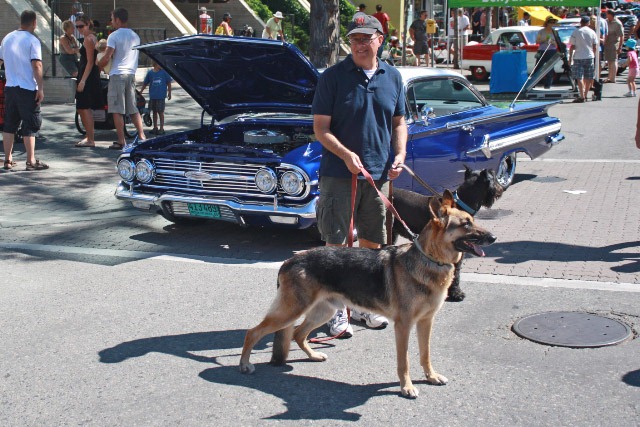
The downtown streets were closed off for “Hot Night in the City.” I guess there were going to be musical performances later in the day, but the major draw while we were there was a classic car show. John has a little more appreciation than I do for older cars, so he had me pose next to one he remembered from his childhood. All the dogs were interested in were other dogs and the nearest bowl of water.

august_6-2

We had lunch in a shady spot outside a café. As is often true in smaller cities, it seemed like the people were friendlier. Our server suggested a couple places where we could take the dogs to the river to get wet, but looking at the time we decided to push on.

From Kamloops we drove south through the Nicola region. The Nicola is a high plateau in the rain shadow of the Coast and Lillooet ranges. It is again a pretty empty part of the country. The only major settlement there is the town of Merritt, where we stopped for gas. Merritt calls itself the “Country Music Capital of Canada.” Never having been to Nashville or Branson, I am not sure exactly what a country music capital is supposed to look like, but this one seemed pretty modest.

From Merritt we headed east towards the Okanagan Valley. We climbed rapidly into a more mountainous region. I could tell that this had once been a prime forest production area, but huge areas of the forest were dead. There were signs referring to sections as “Mountain Bark Beetle Salvage Areas.” I began to understand why the forest fires were so bad last summer after a dry winter.

After climbing rapidly for a while, the highway descended equally rapidly towards the Okanagan. This valley is one of the prime agricultural areas of western Canada, and I had heard about Okanagan peaches and wines for years. Our destination for the night was the city of Kalowna. As we drove into the West Kalona, I must admit I was not impressed. All along highway 97 were miles and miles of the worst strip development imaginable. There was one ugly stucco big box store after another, all surrounded by huge parking lots. I began to feel deeply misled by our guidebooks.

Crossing the bridge into Kalona proper, I found it a little more palatable. We are staying tonight and tomorrow night at the Mill Creek Bed and Breakfast.  I had corresponded several times with Kris, the owner, in setting this up. That’s often the case when you are traveling with two dogs. She was not there when we arrived, but her mother was, and she suggested we would be more comfortable in the cottage in the back rather than in the main house. This seemed just find with us. There’s a small, gurgling creek right next to the cottage. The dogs immediately stepped in for a drink.
august_6-3

After we had settled in, Kris stopped by to introduce herself. We asked her if there was a dog beach nearby, and she suggested a spot a few miles south of town. As we drove there, we noticed that there were some fairly fancy residences facing the lake, and on the other side of the highway were many wineries. Right across the parking area for the dog beach was this vineyard.

august_6-4

There was nothing particularly special about this dog beach. You could tell that it had probably been one of those beaches that nobody used at all until they formally decided to allow dogs there. The shore was rocky, not sandy, but neither the dogs nor their owners seemed to mind that. Eli rushed down right away and tried to steal some other dog’s tennis ball.
august_6-5

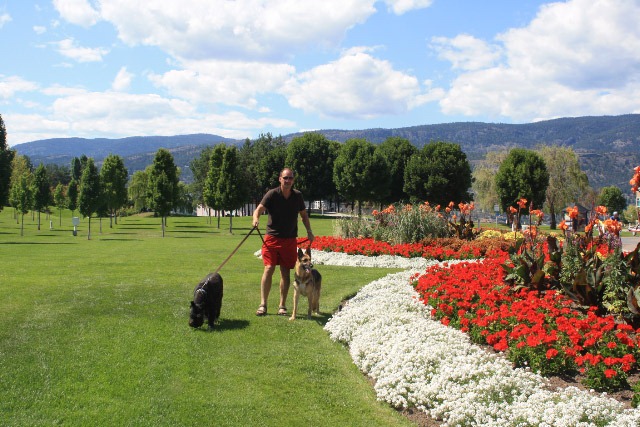
We returned to the bed and breakfast and fed the dogs their dinner. Kris had suggested that we take an evening stroll down towards the lake and into the center of town. We took her advice. For the first couple blocks, the houses were pretty simple, even shabby at times, but the closer we came to the lake the grander they became. Abbott Avenue, right off the lake, next to the City Park, was lined with beautiful old homes.

august_6-6

I am sure that there are many weeks of the year when this waterfront is lightly used, but on this hot summer night it was packed. There were people still on the beach. Older couples were strolling, while young tattooed boys shot by on skateboards. There were many people walking dogs, and we had to keep a sharp eye on our canines. Kris had told us that most places with outdoor patios would be happy to take dogs, but almost all of the restaurants were jammed. We finally located an Indian restaurant a bit off the lake which had an empty patio. We had a pleasant time sitting there, though not a particularly memorable meal.

High … and Dry

We left Whistler relatively early. Our first stop, only about 20 minutes away, was Nairn Falls Provincial Park. The falls are located about a half mile from the entrance to the park. The trail is not hard to walk, but it is right on the edge of a steep hillside. The snowfall was heavy this winter, and so the runoff with the summer melting is also quite intense. We kept the dogs on leash here, not just because it is the official park policy but because one slip into that river would have been the last time we ever saw them. The falls themselves are not that steep. They are the remains of an eroded volcano, and the river has to flow through a couple narrow channels as it falls.

IMG_0458

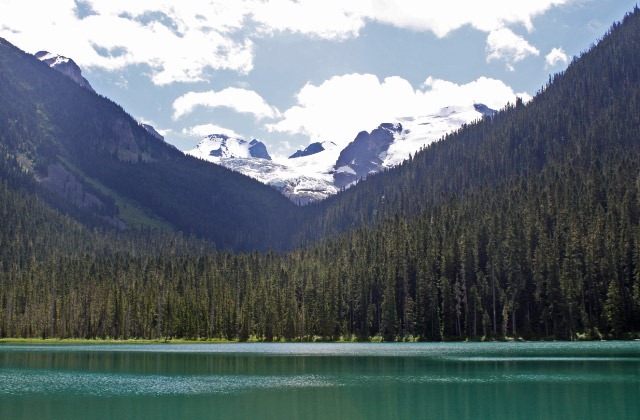
Leaving Nairn Falls, the road seems to gain elevation quickly. I watched a couple of cyclists carrying camping gear working arduously to gain only a few yards. The scenery was spectacular with rocky cliff sides, thick pine forests, and glacier-laden peaks above the tree line. After about a half hour, we arrived at Joffre Lakes Provincial Park. This park consists of three lakes, all fed by the summer melt from the glaciers above. The first of the three lakes is only a short walk from the park entrance.

IMG_3306

Glacier melt is usually an opaque bluish green. The water is quite pretty, though it is so cold that there is generally little plant or fish life in it. But the marshes on the edge of the lake are admirably suited for mosquitoes, and we were attacked by dozens of the blood-sucking creatures as we stopped to take this picture. Fortunately, there was a Canadian family nearby who generously offered to spray us with Off. That helped a bit.

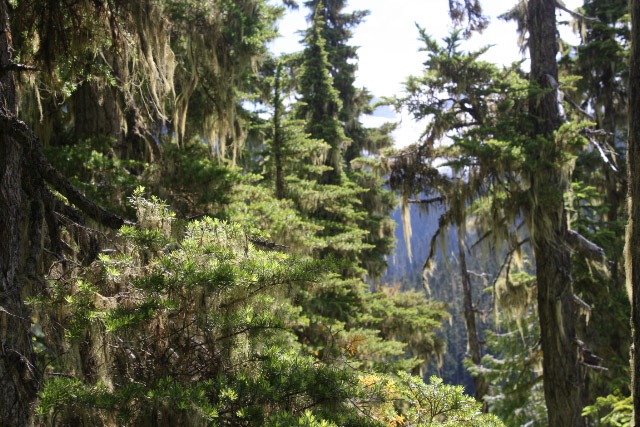
There’s a five kilometer trail which leads from the lower lake to the glacier. John surprised me by suggesting that we hike it or at least part of it. We did not have to get far away from the lake for the mosquitoes to dissipate. We were surprised as we walked down the trail to find Spanish Moss covering the branches of pine trees. I would have thought that it was too cold up here for this to flourish. I guess it is hardier than I supposed.

IMG_3308

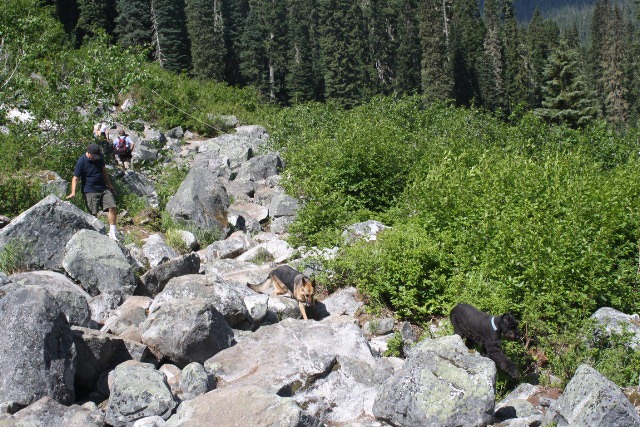
The path changed fairly quickly from dirt and tree roots to rocks. The rocks grew bigger and bigger the farther we walked. After a while, we were clambering over boulders. We let the dogs off leash here, and they did reasonably well for a while. But finally the rocks were just too big for Eli. His back legs are not that strong and there was only so much he could do with just his forelegs. We decided to turn back.

IMG_3309

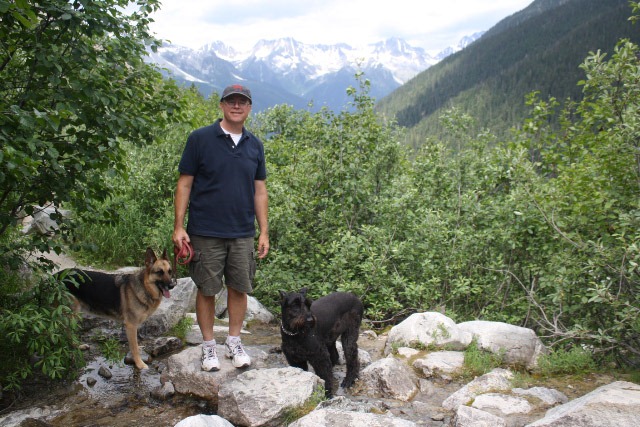
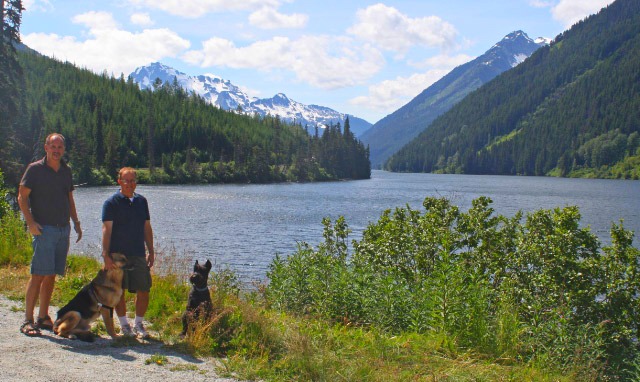
We found some springs on the way back where the dogs could get a cool drink of fresh water. They were quite happy to climb back into the car onto their pillows and fall asleep. They missed some astonishingly beautiful scenery, but I have noted before that dogs seem to have little appreciation for great landscapes. They probably do not understand how I can be so unappreciative of the beauty of the smell of a dead seal. John, who has a great eye for scenery, saw this spot on the edge of the road. He cleverly set the camera on the roof of the car, adjusted it for a timed shot, and snapped this little family portrait of the four of us.

IMG_3321

Shortly after this, the beautiful Alpine landscape gave way to a much less verdant one. There were suddenly far fewer trees, and they were short, spindly pines. We were now on the leeward side of the mountains in the interior of the province. We tend to think of British Columbia as a great temperate rain forest, but most of the province receives less than 20 inches of rain a year, and some of it less than than 10 inches.

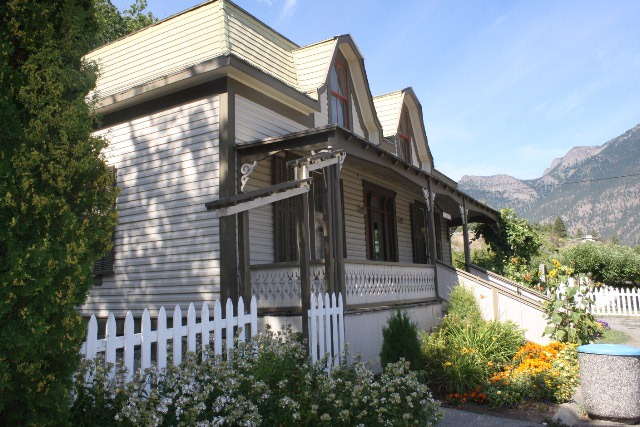
Our destination in this area was the historic city of Lillooet. The name of the municipality, a corruption of the native tribal name of L’ilwat, rhymes with “minuet”. During the 1860’s, the town was the center of activity during the Cariboo Gold Rush. Only San Francisco was a larger settlement in western North America. The main street of town was called the “Golden Mile” because careless miners supposedly dropped so much gold dust there. Like most mining boom towns, the moment that the mineral had been exhausted the town was abandoned. In the Second World War, Canada, like the United States, forcibly relocated all of its Japanese to internment camps away from the coast. Lillooet was chosen as a site for one of the largest of the Canadian prison camps. Dr. Masajiro Miyazaki was appointed as the physician for the residents of the camps. He chose to stay in Lillooet after internment ended in 1947 and this became his house. It is currently a museum, though it was closed when we came by.

IMG_3325

Lillooet was frankly pretty disappointing. Other than the Miyazaki House and the large cairn making the beginning of the hundred miles of the Cariboo Road, there is little of left of any historical interest. It is largely a native – First Nation, as they say in Canada – community now, and most of it is pretty poor and run down. The picture below shows a not untypical example of modern Lillooet.

IMG_3324

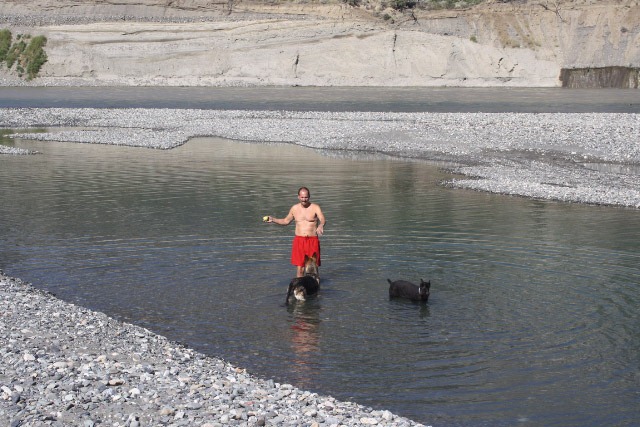
Lillooet is generally the hottest spot in British Columbia on any summer day with temperatures typically around 100 or more. It was only about 80 today, but that was plenty hot enough for the dogs. The young women at the information center had suggested to us that we could bring our dogs down to the bank of the Fraser River to get wet. They said that there were little pools on the edge of the river where we wouldn’t have to worry about the current. After taking a couple wrong turns, we finally found the spot and the dogs had a great time.

IMG_3329

From Lillooet, with wet dogs in the back of the car, we headed towards our last destination of the day, the town of Clinton. There is not much historical or cultural significance to Clinton, but it was the closest spot with pet-friendly accommodation. We are staying in the Cariboo Lodge. It’s a pretty basic motel. There’s a somewhat fancier spot outside of town called the Echo Ranch. But the room charges there begin at about 750 dollars a night, and the Cariboo Lodge is less than one tenth of that. It is close to the city park.

IMG_3338

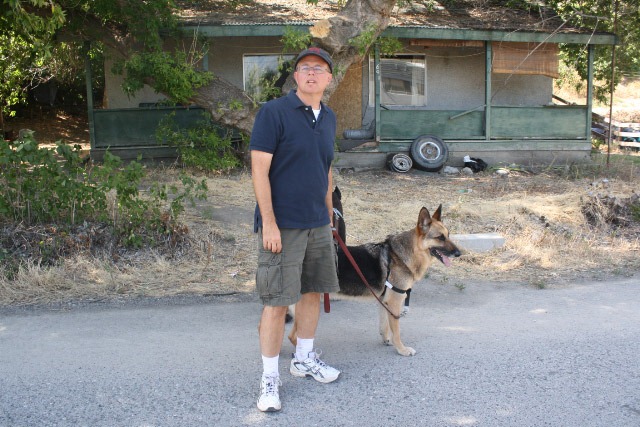
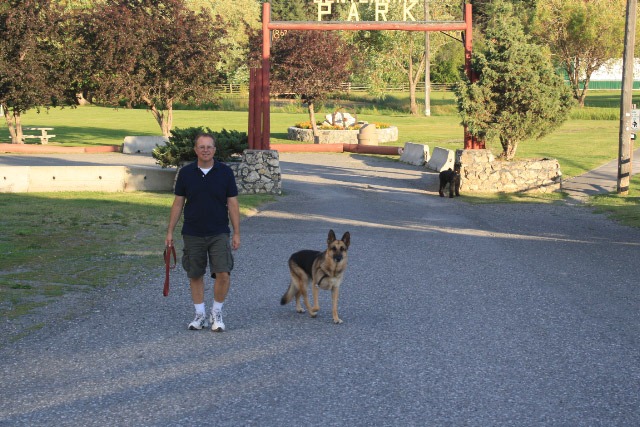
There was nobody in this pretty little public space, so we ignored the leash law and let them wander. With some difficulty, John even got them to pose for a picture.

IMG_3343

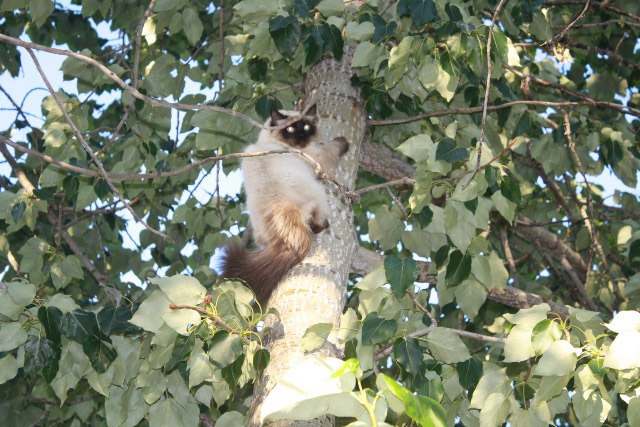
Edie’s usual sharp eyes spotted a cat a moment after that, and she gave a good-natured chase. Edie thought it was all fun. The Siamese was annoyed.

IMG_3346

Tomorrow we leave for Kamloops, Kalowna, and the Okanagan Valley.