Blue Tiles and Code Blue

Yesterday, John and I had an early day. We were up as soon as the lovely Italian sun came streaming through the windows of our Roman apartment. I made some coffee—a Nespresso machine, of course—and packed up the two of us. Our taxi arrived right about eight o’clock to take us off to Fuimicino, the larger of Rome’s two airports.

I had booked our flight to Lisbon on TAP, the Portuguese national airline. I admit I had never heard of them before, but the only other option for a direct flight was Ryan Air, and that is a completely miserable experience. I looked at business class on TAP, but it was almost triple the price of economy and I figured that for a three-hour flight John would just have to be a little uncomfortable. But when I started the check in, suddenly the upgrade to business was less than two hundred each. I decided to go for it.

The flight was okay. It turns out that business class on TAP consists of a guaranteed empty middle seat plus a reasonably good lunch. This did make John a little more comfortable as he could stretch out a bit. The flight attendants could sense that John had some mobility issues and they were quite helpful and kind.

At Lisbon airport, I had a ride already arranged to the airport. This was some kind of reward for using Booking.com so often. Our driver was a Brazilian who is in Portugal about to start his PhD in education. He was a huge fan of American basketball, so when he heard we were living in Oregon he was excited. “Portland Trailblazers,” he beamed. “Very good team!”

We checked in to our hotel, and the moment we were in the room we took a nap. After sleeping for a little bit, we went out. We had some coffee in a little square while we heard a group singing.

IMG_0777

One of Lisbon’s famous trolley’s went past.
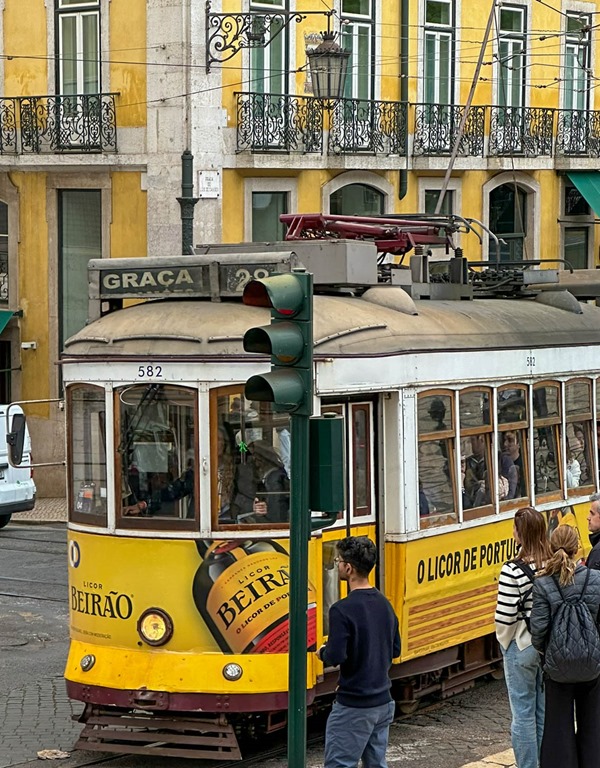
IMG_0778

It was a little chilly so, we did not spend long in the square after our coffee. After that, we had a Portuguese dinner is a restaurant called Trinidade, housed in a former monastery, and we called it a night.

Our hotel in Lisbon was the biggest splurge of the trip. Most places in most towns in Portugal are reasonable, and many are downright cheap. But Lisbon is always the most expensive, and on weekends the prices go up. So looking at the options I decided we would stay at the Palácio das Especiarias, the former home of a wealthy Portuguese trading family, now a boutique hotel.

The public rooms are quite elegantly furnished.
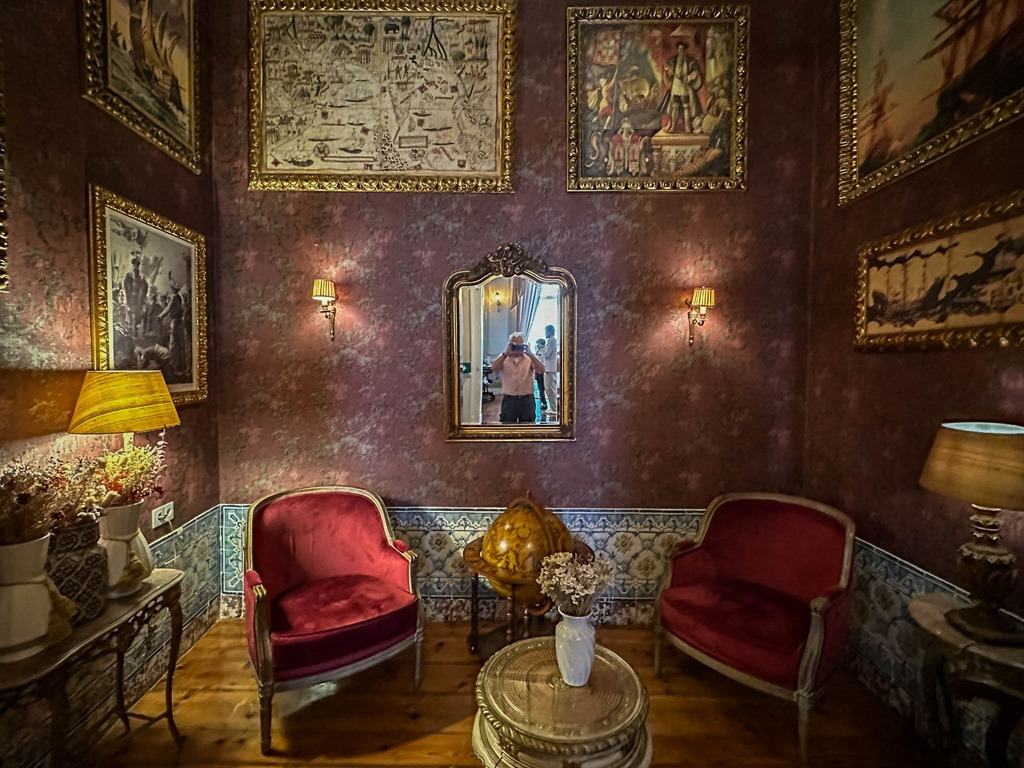
IMG_0788

I particularly loved all the faux marble effects such as in this staircase.

IMG_0786

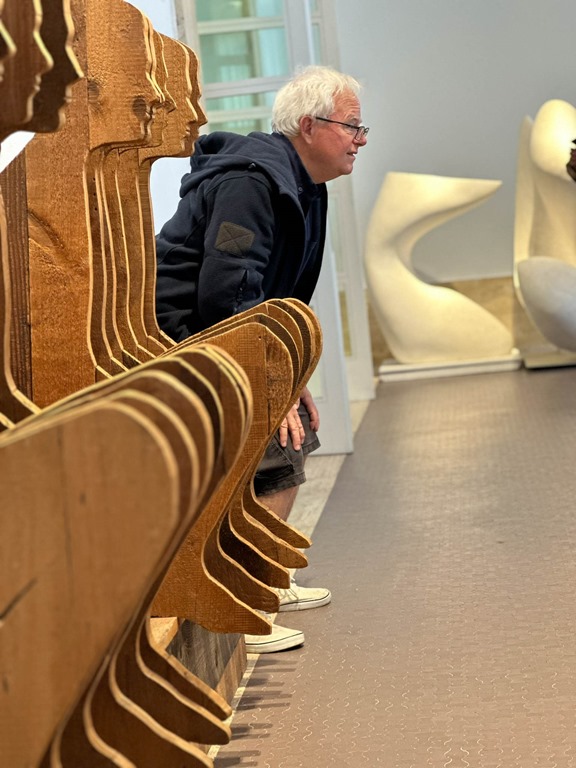
Breakfast was served in several rooms on what we would call the second floor, but the Portuguese call the first floor. I liked this odd piece of furniture in one of the rooms were the buffet was laid out.
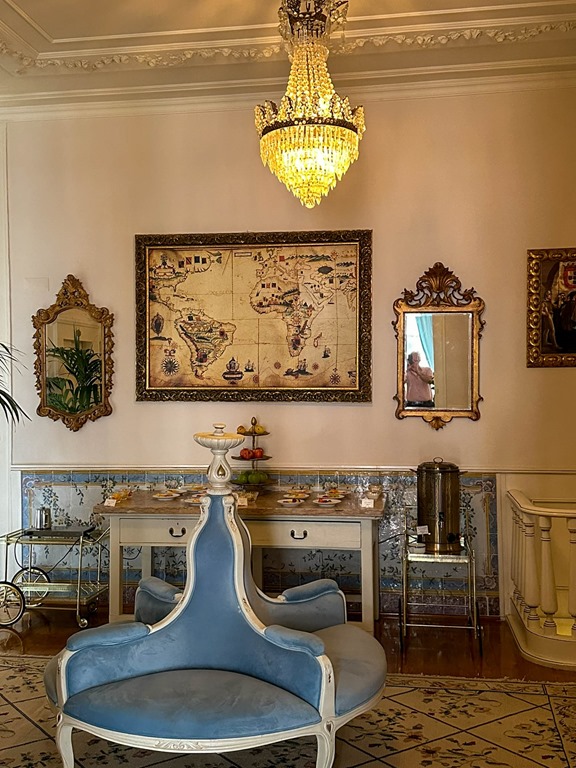
IMG_0785

Four people can sit there and not have to talk to each other! I need to get this for my living room.

John spent his time at breakfast thinking about pretty things that were not part of the permanent décor.
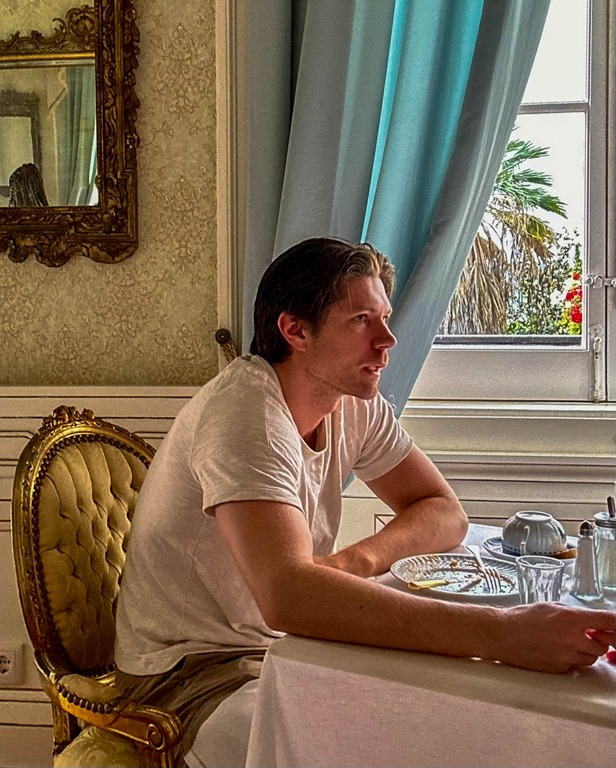
IMG_0782

Walking around, I could tell that many of the room were spacious and beautifully furnished. I had my heart set on a room with a view of the estuary, and those, it turned out, were on the top floor, an area that pretty obviously had once been servants’ quarters. Our room was nice enough, and it had a wonderful view. But it was overpriced for what it was.

There are a lot of things to see and do in Lisbon. In our youth we would have spent twelve or fourteen hours rushing from one to another, determine to see and do everything. But now, John’s energy is far more limited, so it works out best to do a couple things only. So our plan for the day was to visit the National Tile Museum in the morning, followed by a look at the area around the Cathedral. In the evening, I had arranged a Portuguese cooking class for us.

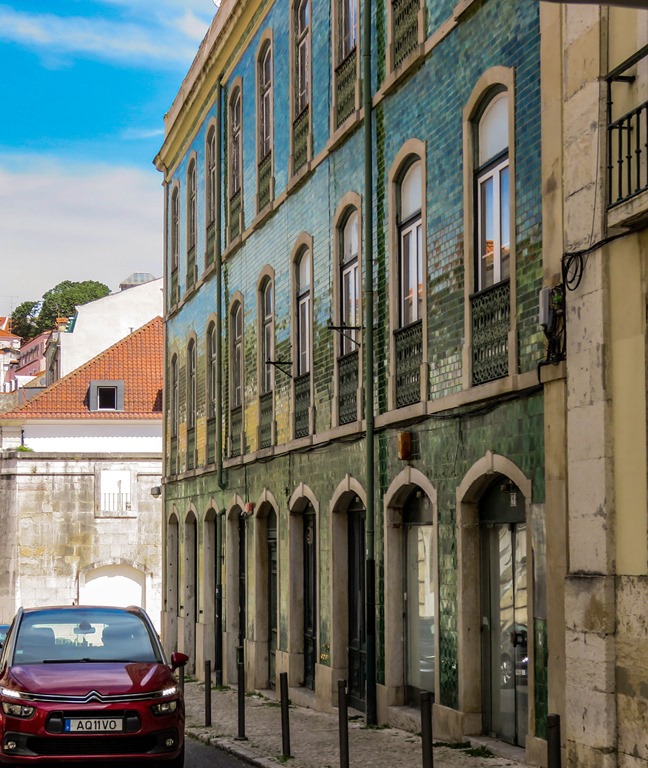
The day started out as planned. We took a Bolt—that is the local ridesharing platform—to the tile museum. It may seem odd to spend time a museum devoted to making tiles, but tile is a Portuguese obsession. Most older homes in Lisbon have a fair amount of tile inside and there are some whose exteriors are completely faced with colorful ceramic tiles. It is considered the national art form.

Like so many things in the Iberian peninsula, there is a Moorish influence here. The early Portuguese tiles, we learned, were derived from Islamic models.
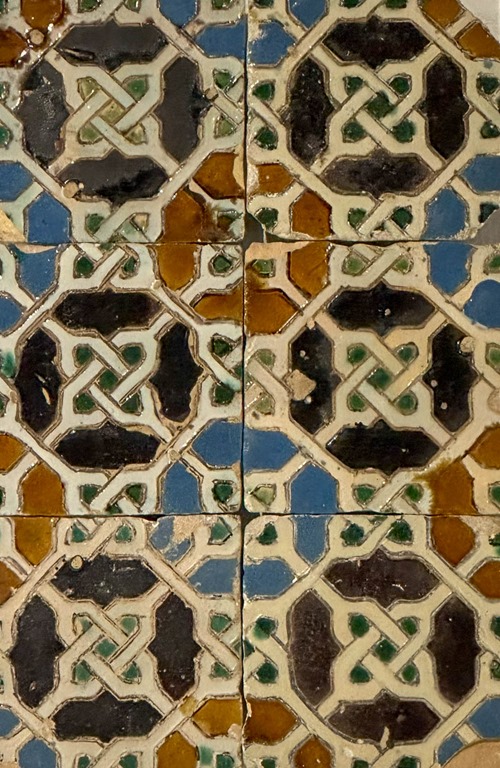
IMG_0790

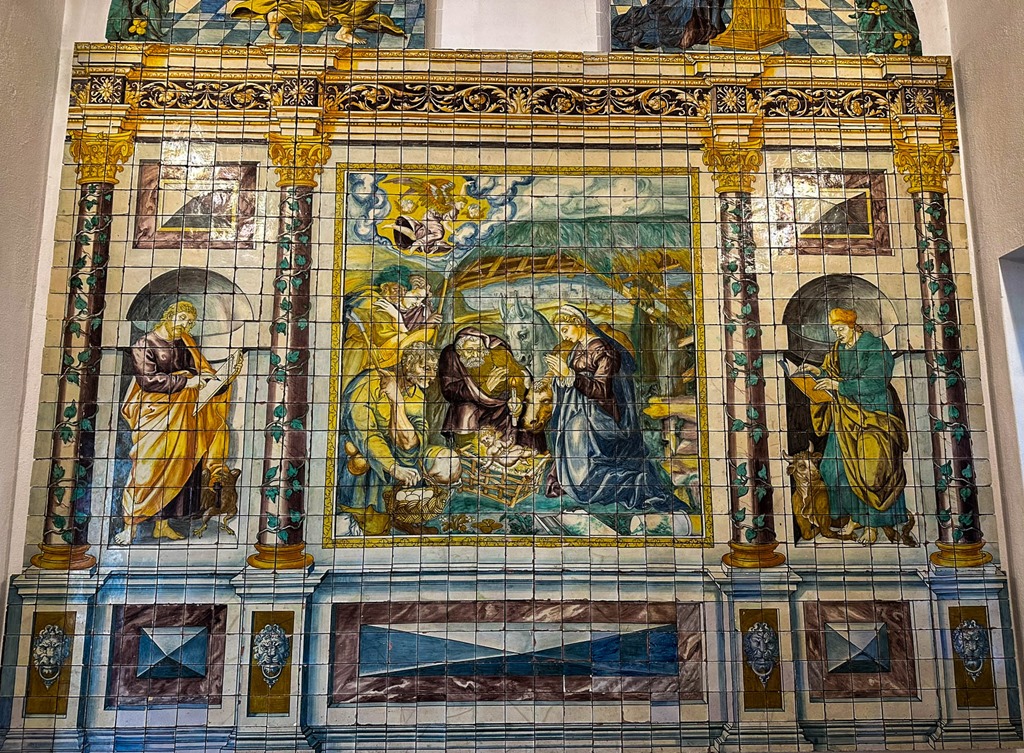
But the Christians soon moved beyond geometric abstractions and began to paint pictures of biblical scenes on them.
IMG_0792

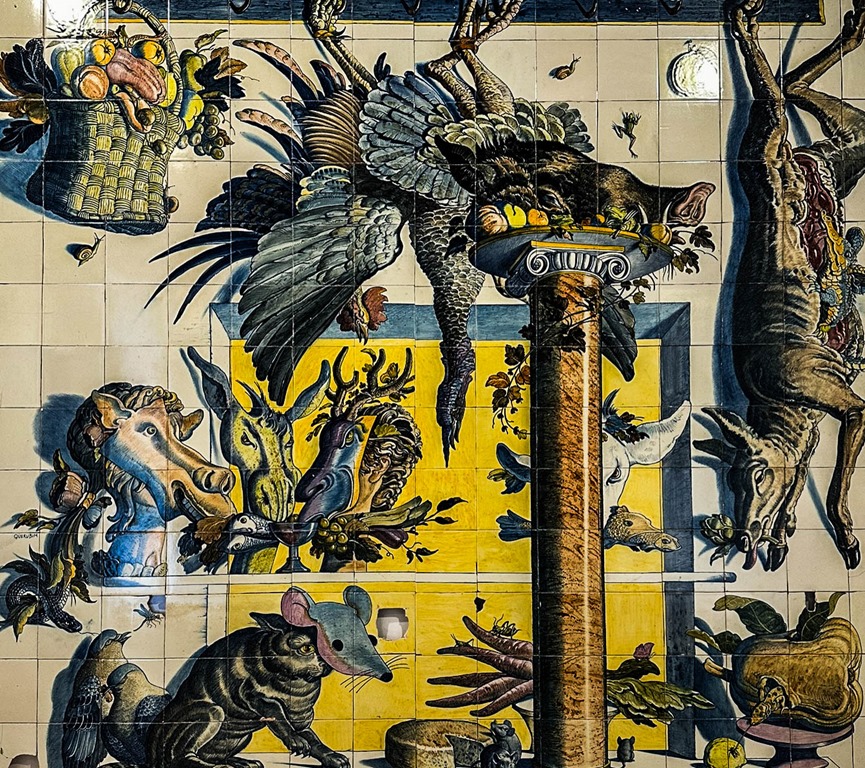
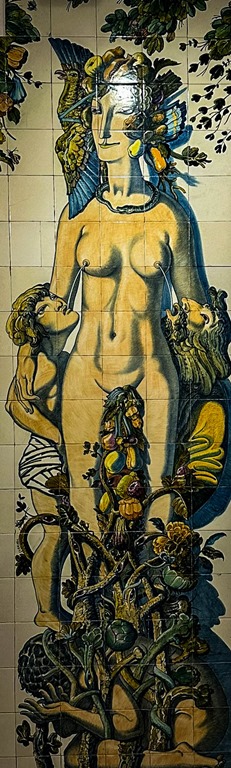
Many of the classic Portuguese tiles, particularly from the eighteenth century are blue and white. This reflects both Chinese and Dutch influences. I find these a little boring, so I did not take that many pictures of them. I did find some of the modern versions of tile fascinating. These were made for the walls of a kitchen.
IMG_0803

IMG_0804

The tile museum is also located in a former convent, as you can see from the cloister.

IMG_0806

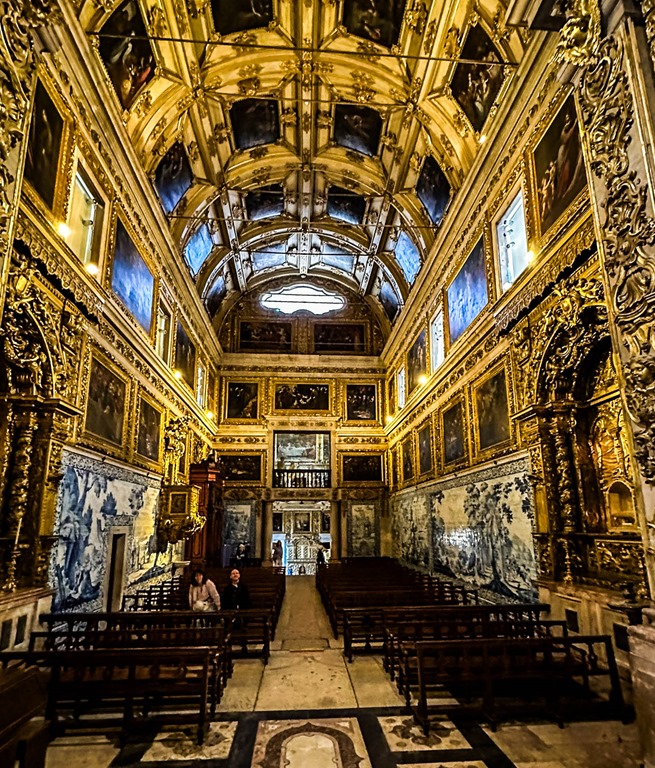
Unlike most of the dissolved monastic sites, the church here was preserved. It is absolutely stunning.
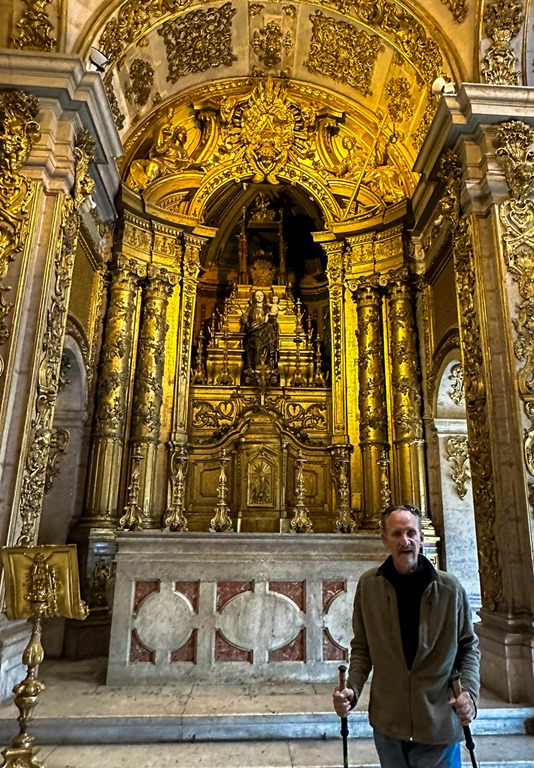
IMG_0797

IMG_0796

After a couple of very informative hours in the museum, we had seen it all. John was up for one one more sight, so we went ahead to see the cathedral. I was mostly interested in this building because it was one of the few to not be completely destroyed in the devastating 1755 Easter Sunday earthquake.

The building is not that great. Construction was started by the Normans, and it looks more like a castle than a church from the outside. The inside is dark, with massive stone walls and barrel vaults. There was some effort later to make the choir and the apse look more appealing.

IMG_0812

I was fascinated by the en chamade trumpets on the historic organ
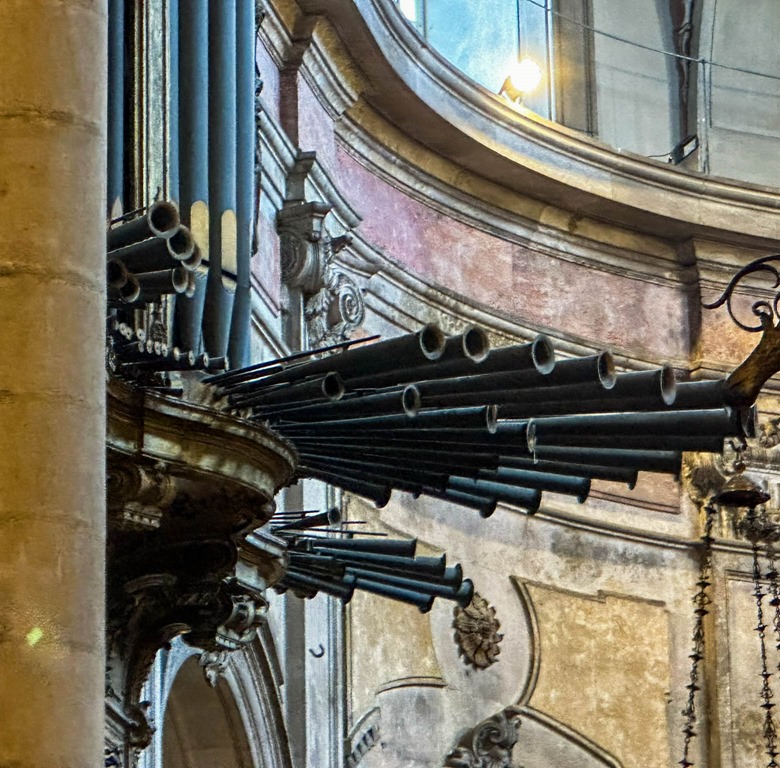
IMG_0813

while John gravitated to a statue of Saint Sebastian.
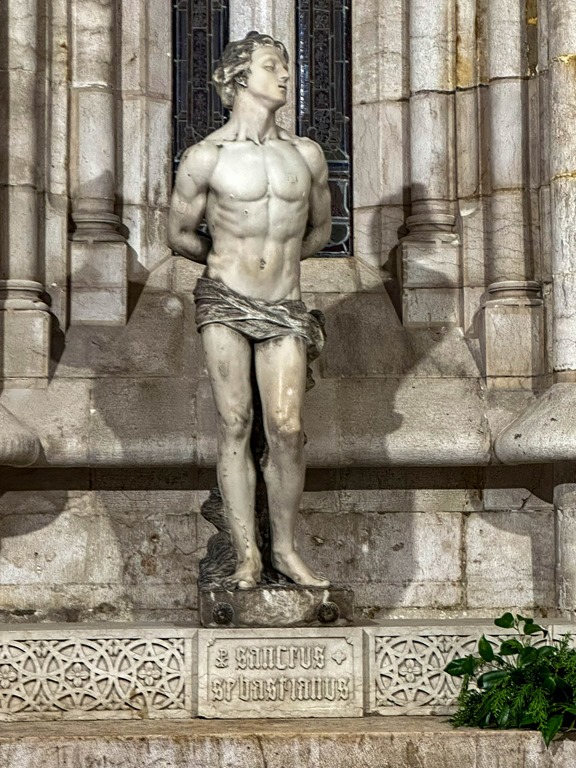
IMG_0815

We did not spend that much time in the Cathedral. After we walked out, John was feeling good, so he started to walk around the neighborhood with his trekking poles. And that was when disaster struck. There was an area where the cobblestones were missing and a small orange mesh fence marked it off. The sun was quite bright, and John just did not see the mesh. His poles caught in it, and he fell face down.

I raced over to him. His faces was covered in blood, mostly coming from a gash in his nose. Somehow, he had not hit his forehead. He was sure he had broken several teeth, but I checked, and they were fine. One small and painful touch, though, told both of us that his nose was broken.

A crowd gathered. A woman who looked Pakistani gave John her handkerchief. It was soaked in blood in a minute. I opened the wheelchair, and a couple men helped John to get into it. A Portuguese woman pulled out her phone and told me in English that she was calling the ambulance. She stayed until they arrived and helped translate for me.

The ambulance took us to the Hospital de São José. If you look up this medical facility online, you will be told that it is a world-class teaching institution with some of the best facilities in Portugal. If you talk to people in Lisbon, you will be told that the place is a nightmare where people often wait for care for hours and never see a doctor. Both are probably true.

It was a little scary to be in a hospital and unable to really communicate with people. A few staff members spoke a little English. Almost all of them radiated indifference to the patients. There was some system where numbers were displayed on a screen and you were expected to go to the consulting room that corresponded with the code on a sticker you were given. But nobody explained that to us. A few times we would hear names called as well. After two hours, we heard, “Pratt-John-Winsor room 7.”

We talked to a young doctor. She spoke decent English.  “You did not expect to get to see the Portuguese health system on your trip,” she said. I noted that she sighed and rolled her eyes when she said “Portuguese health system.” She cleaned the wound and agreed that the nose was broken. She said she was planning to order a CT scan for his head, and that he would be evaluated for stitches inside his nose, a procedure she said would be done under general anesthesia. All that started to make me really nervous because these people have no access to John’s extensive medical history.

We went back to the waiting room. And we waited. And we waited. And we waited some more. By this time, my cooking class had already started, and there was no way I could have gone anyhow. John was feeling really restless. The bleeding from his nose was only a trickle. He said he just wanted to go back to the hotel.

I went to the desk and tried to pay. I had been quoted 112 euro for a basic evaluation. The man brusquely told me that he could not charge me until John was released by the doctor. I told him I had no idea who the doctor was. He almost exploded and told me to find her. I went back and sheepishly knocked on door to examination room seven. There was nobody there.

So, we just left. Part of me was certain that somebody was going to chase after us, but when we walked out the emergency room doors there were only a cluster of staff members smoking in the street. We grabbed a cab and went back to the hotel.
Italy, Old and New

There is no city on earth that I think I love as much as Rome. It is not heaven on earth. There is dirt and decay; there is no lack of petty crime; and the traffic is absolutely insane. And yet it is heaven on earth. Matthew Arnold spoke of Oxford’s “dreamy spires,” but these seem like minor reveries compared with the towers and domes effortlessly floating above the Tiber’s early morning mists. There is a profound sense of the sacred here—Christian, of course, but also faint traces of the the Roman and Etruscan pantheons.

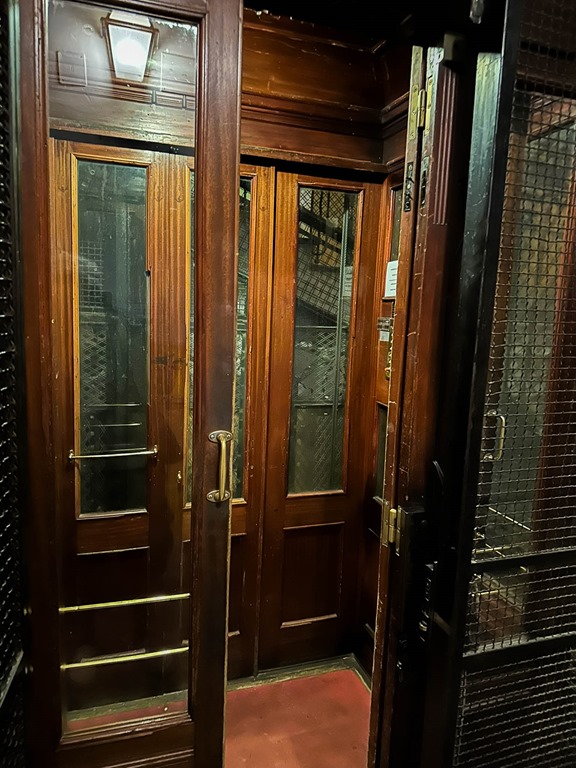
Ah, but back to the travelogue. John and I had breakfast at a small bar on the Via Cola di Rienza near our Roman residence. As I wrote before, we are in an apartment building that was built only a century ago, so it is a new edifice by Roman standards. And yet everything about it—the chipped tile, the faded frescoes, the heavy wooden doors—seems to belong to a time even earlier than its construction. And wonderful elevator in its iron cage seems even more antique than it is.

IMG_0758

Our “collazione”—oh, how the Italian seems more elegant that the English “breakfast”—was a croissant, a cappuccino, and a glass of freshly squeezed juice of blood oranges. After that, we called for a cab and headed for our first adventure of the day.

I wanted to see the Galleria Doria Pamphilj. This is considered a minor Roman museum as there are no famous paintings in this old mansion of a Roman aristocratic family. But I knew that the apartments were still splendidly furnished, and John loves arts displayed the way it was meant to be seen. Alas, when we arrived we discovered that the elevator at the Gallery was not working, and John was not willing to attempt a long flight of marble stairs without a bannister. There was a set of rooms on the first floor, though, and John and I were able to see these. These date largely from the late nineteenth century and were the residence of one of the last Pamphiljs to live in the house. He shocked Rome and his parents by marrying an English girl, no doubt a Protestant, but I suspect the dowry helped them with their misgivings. There is a strange reception room with a fountain.

IMG_0746

The less formal family sitting room seemed more English than Italian.

IMG_0752

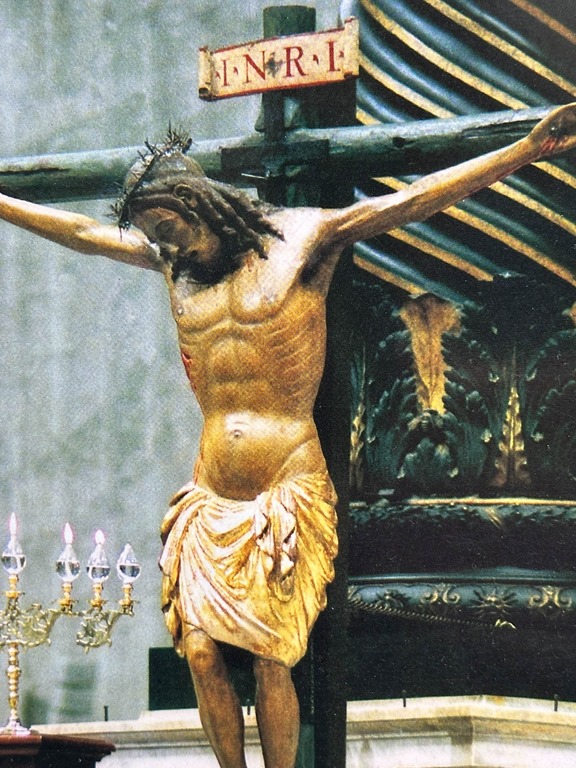
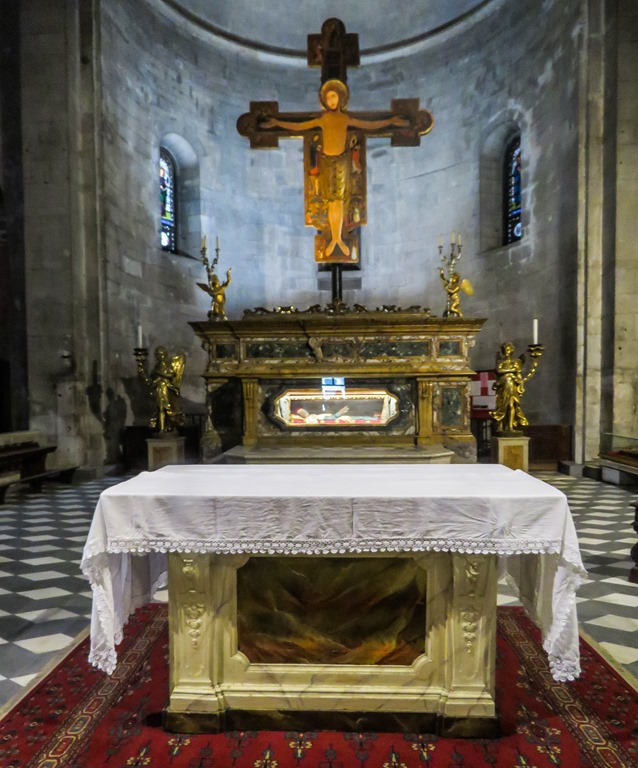
Since we had spent less time at the Doria Pamphilj than I planned, I searched the map for attractions nearby. A few yards away was the church of San Marcello. I learned from the plaque outside that a church dedicated to Saint Marcellus, an early Roman martyr, had been on this site since the fifth century. But it caught fire in the early sixteenth century, and nothing was saved from it but the altar crucifix. It is now displayed in one of the side chapels.

IMG_0756

The new church, commissioned, I believe, by Pope Julius, is a masterpiece of baroque art. Sadly, subsequent generations have not been content to leave it alone, and there are a number of hideous pieces like this plaster pieta.

IMG_0754

John liked it, but he always had more of an appreciation for kitsch than I do.

We headed out again, and looking for an famous Art Nouveau galleria, not an art gallery like the Barberini galleria, but a shopping galleria, like the famous one in Milan. Sadly, it was closed and we could only glimpse through the iron gates. John was feeling tired now, and asked to be taken back to our rooms in Prati.

After quite a long nap, he was feeling better. It was nearly five by this time, and most of the main attractions were closing. I knew that the various branches of the National Gallery would be open until seven today. The building devoted to nineteenth and twentieth century art was closest, so I directed the cab to go there.

My heart sank when we arrived. I remembered that April 25 is some kind of minor holiday in Italy, the kind that gives a day off to students and civil servants but to no one else. But museums are free on holidays, and the lines waiting to get in were absurdly long. Worse still, there appeared to be no handicapped access at all. I pulled out my phone and used the translation app to come up with a rough Italian equivalent of handicapped entrance. It turned out that there was one, though John still had to climb a flight of stairs to get to it.

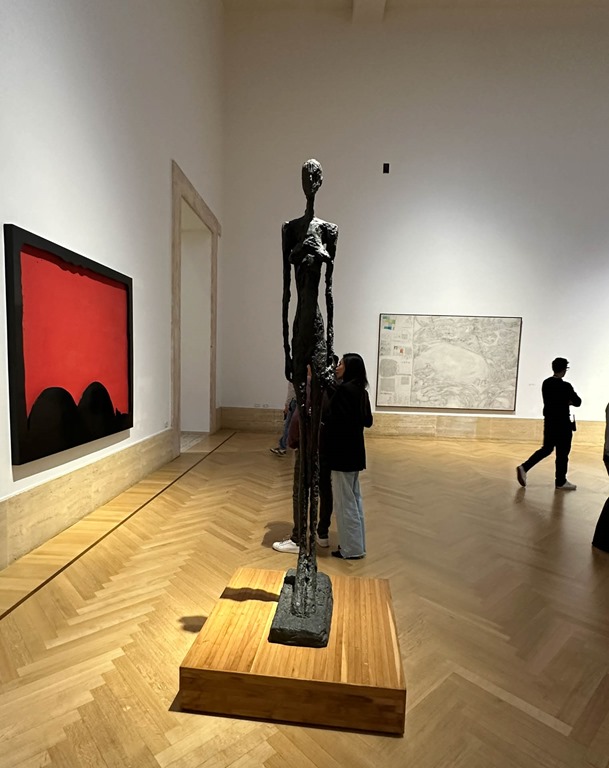
Once inside the museum, we wandered about looking at the collection. The museum weirdly mixes pieces from different periods together in the same room. Interpretive material is limited mostly to the name of the piece. Most of the work was by Italians, but I failed to get any sense of how and why Italian art developed in the late nineteenth and early-to-mid twentieth centuries. There were some interesting pieces like this Standing Woman.

IMG_0760

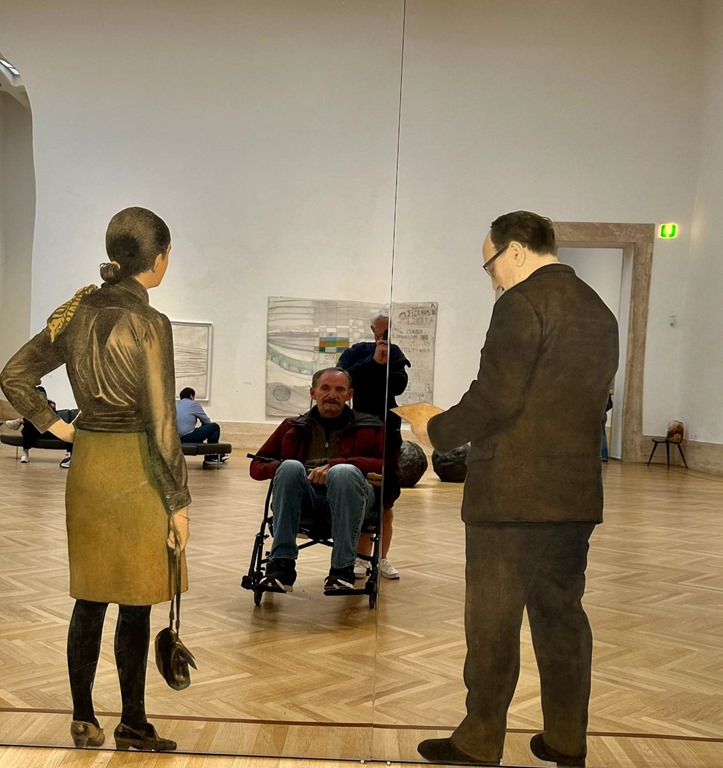
There were a few fun pieces like this one.

IMG_0759

The man and the woman are simply painted on the mirror. John and I, obviously, are not.

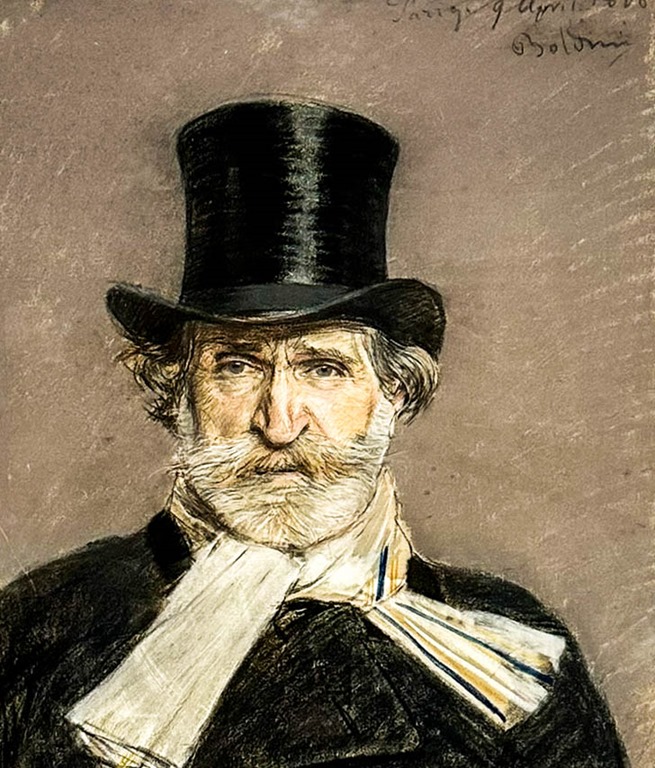
I only saw a few things I had seen before like this portrait of Giuseppe Verdi.

IMG_0765

John kept trying to get me to do silly poses with the art. Most of them did not work out. This was the best of them.

IMG_0768

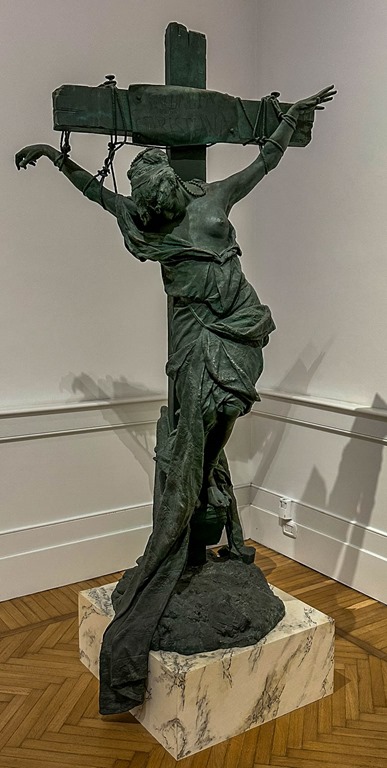
A was really surprised by Eulalia Christiana—it must have been a shocking piece when first unveiled in the early 1880s.

IMG_0772

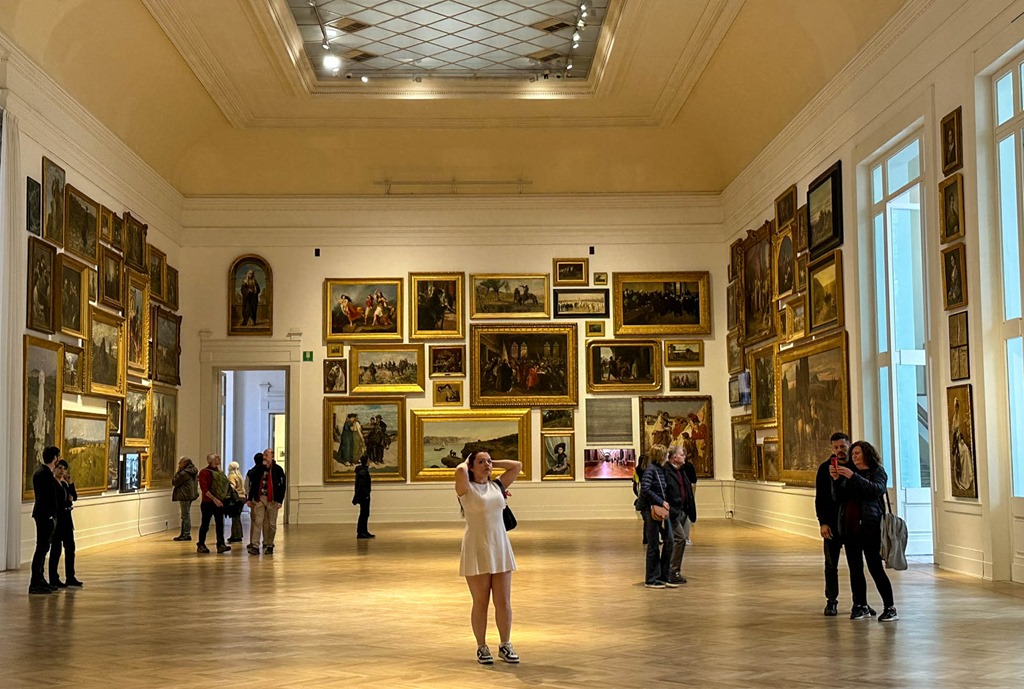
John and I both loved the enormous room on the ground floor where paintings were apparently just randomly placed on the wall to create a decorative effect.

IMG_0771

We both agreed that was what we wanted our hallway to look like one day.

About a half hour before official closing time, they started to herd us all out of the museum. I called for a cab. Uber is officially banned in Rome, but the Uber model of an app based system for arranging rides has triumphed. Everyone uses FreeNow. I never saw anybody try to hail a cab in Rome. No Uber, but iPhone uber alles.

Back in peaceful Prati, we had dim sum for dinner. Chinese food does not seem Italian, but when you think about Marco Polo and all that, it is the most Italian food of all.

Tomorrow we are off to Lisbon.

Addio Barca, Ciao Roma

It never fails to amaze me how fast they can empty out a cruise ship. It takes hours to get everyone on board and all their luggage delivered to their rooms. It takes less than two hours to completely reverse that process.

Unfortunately for the passengers, there is a lot of chaos and wasted time in that process. Unless you have arranged a flight through the cruise line, always one the priciest options, the luggage is dumped into a cavernous room arranged by tag color. With some difficulty I found ours and then looked at the huge line to get out and wondered how I could push John and also three large pieces of luggage. Just then a man came by with a cart. He loaded it up with our luggage and almost mowed over half of the passengers waiting in line. Paying him was the best 20 euros I may have spent on this trip. We had to wait about another hour before our shuttle came to take us to our hotel.
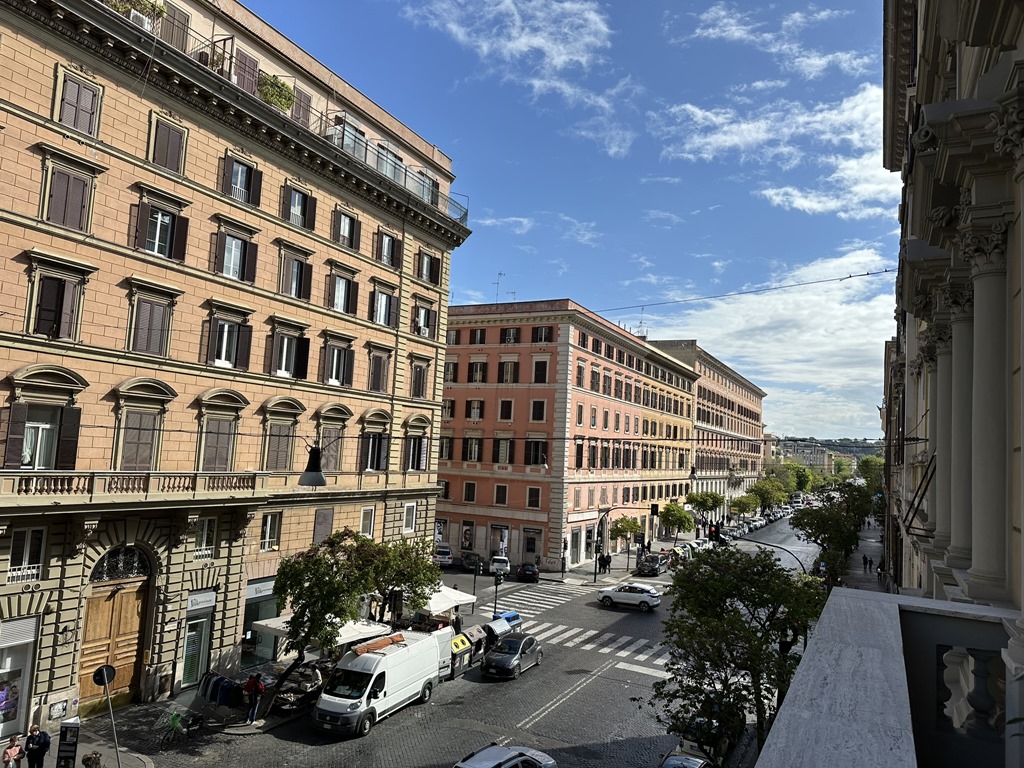
We are staying in Prati, the district of Rome between the Vatican and the Tiber. Once a marshy grassland—“prati”means meadow in Italian—it was developed in the early twentieth century to serve as a an elegant quarter for the offices of the nearly established Kingdom of Italy and as a place for civil servants to live. Modeled in part on Haussmann’s Paris, it had wide streets arranged on a rectangular pattern. We are on the Via de Cola di Rienza. The Castel Sant’Angelo is at the end of the street. This is the view from our balcony.

IMG_0744

IMG_0745

After settling in, John was ready to do something. He wanted to go to the Borghese Gallery, but I discovered that it was closed for renovations. Some of the best works have been moved temporarily to the Palazzo Barberini, one of the two sites of Italy’s National Gallery. We had never been there, so I ordered a cab and off we went.

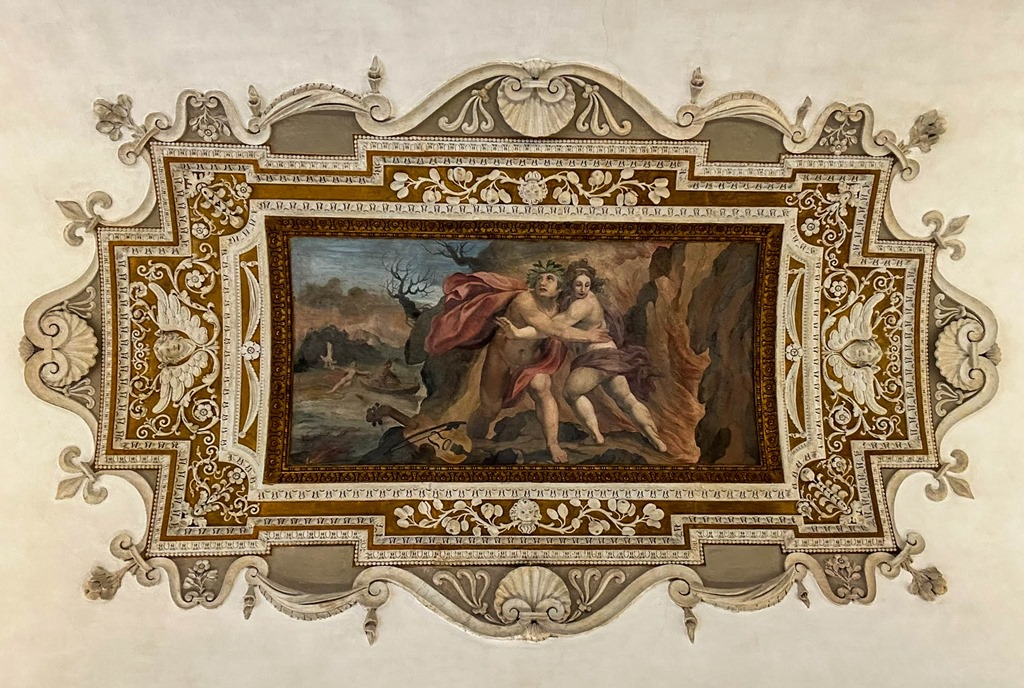
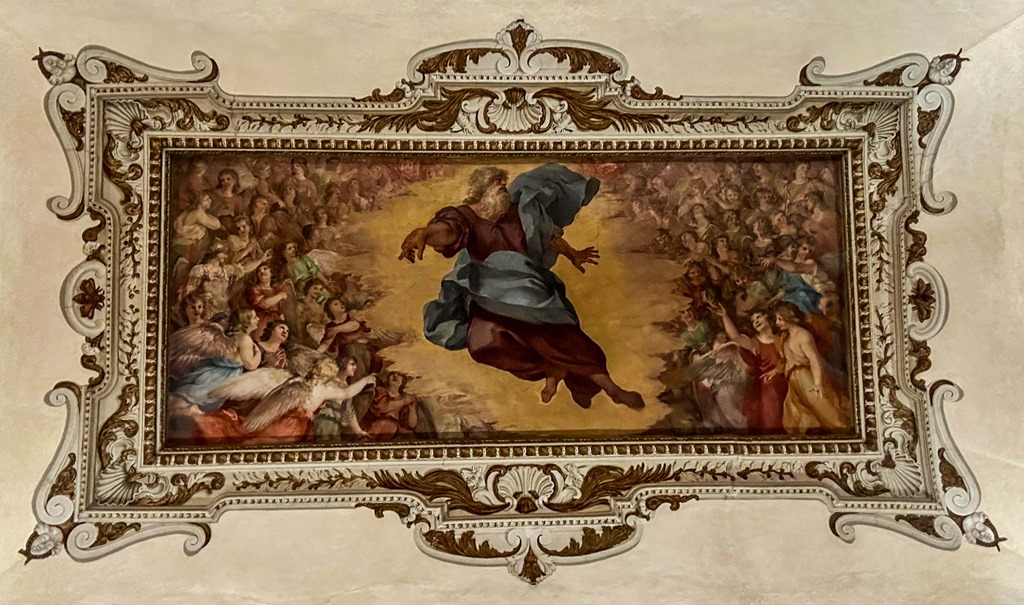
John loves art museums where the building is as interesting as the paintings, so the Barberini was just the ticket. Almost every room has a gloriously painted ceiling.

IMG_0734

IMG_0739

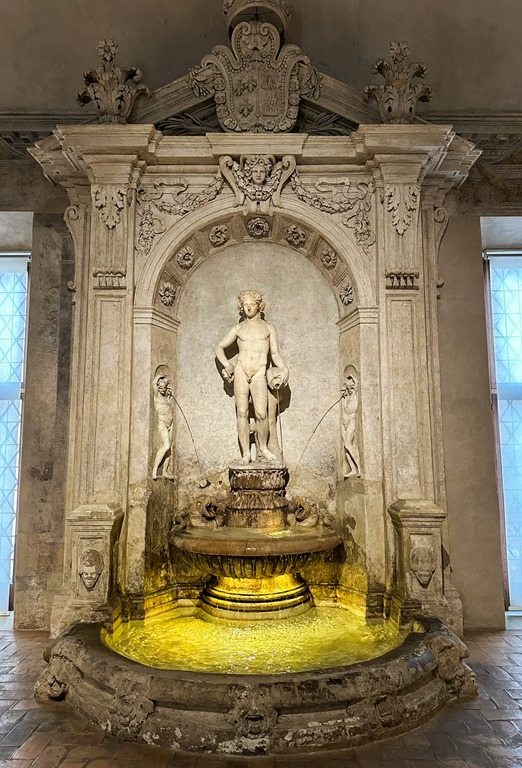
There are some of the original details left including this fountain.

IMG_0735

The art is, of course, quite good. Some pieces were familiar such as Holbein’s portrait of Henry VIII.

IMG_0736

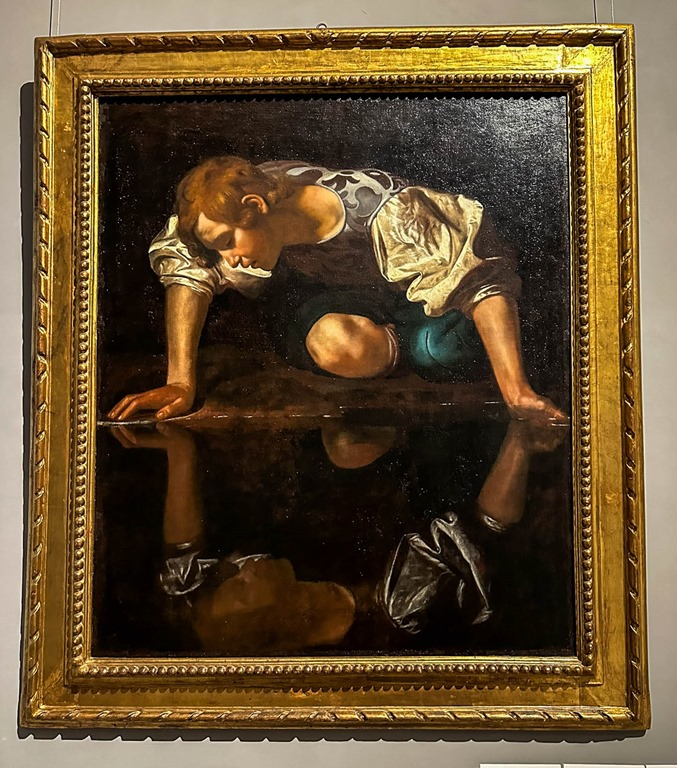
Others were works I did not know by artists I knew well. This is Narcissus by Caravaggio—though some dispute that.

IMG_0740

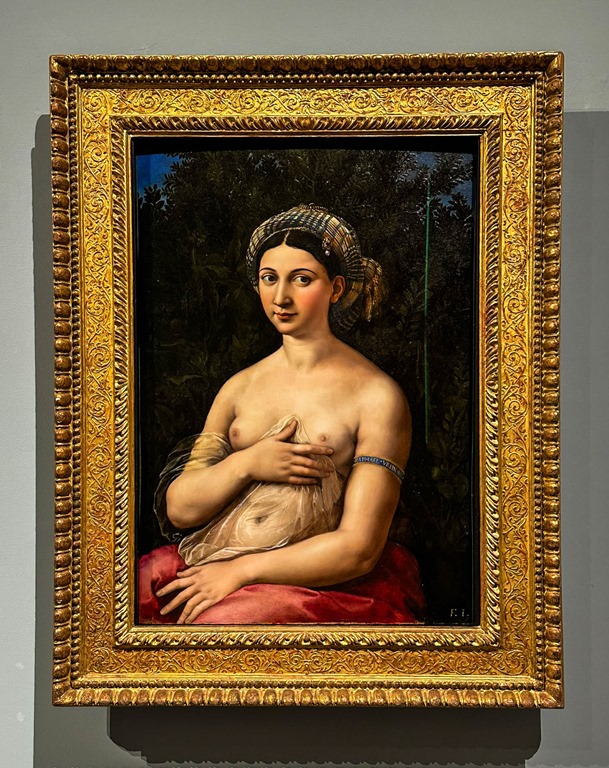
Here is Rafael’s La Fornarina, one of the most famous pieces in the collection.

IMG_0737

And another famous picture here in the Woman with a Turban. Goethe said that this was the most haunting face he had ever seen in a painting. It is supposedly the portrait of Beatrice Cenci, a young woman who shocked Rome when he murdered her father. The portrait was possibly done just before her execution.

IMG_0742

After this we went to a nearby restaurant for a well-deserved dinner.

Good Lucca and Bad Luck

The ship docked this morning in the city of Livorno. Many of the passengers disembarked quite early, some just a few minutes after six, to board busses that would take them to Florence and Siena. John and I have spent a fair amount of time in Tuscany, and the idea of trying to see the highlights of those Renaissance cities in a couple of hours seemed ludicrous. Instead, I chose an “on your own” trip to two places we had never been, Lucca and Pisa.

From the port we boarded a shuttle to the central square of Livorno. There was quite a crowd of our fellow cruise passengers already there waiting. We had a few anxious minutes before a person appeared with a big sign with “Lucca & Pisa” written on it. Usually people are quite deferential when they see John in a wheelchair, but much of this group was hell bent on getting the best seats on the bus that they could. No matter—we made it and took the seats in the very back where John could stretch his legs into the aisle.

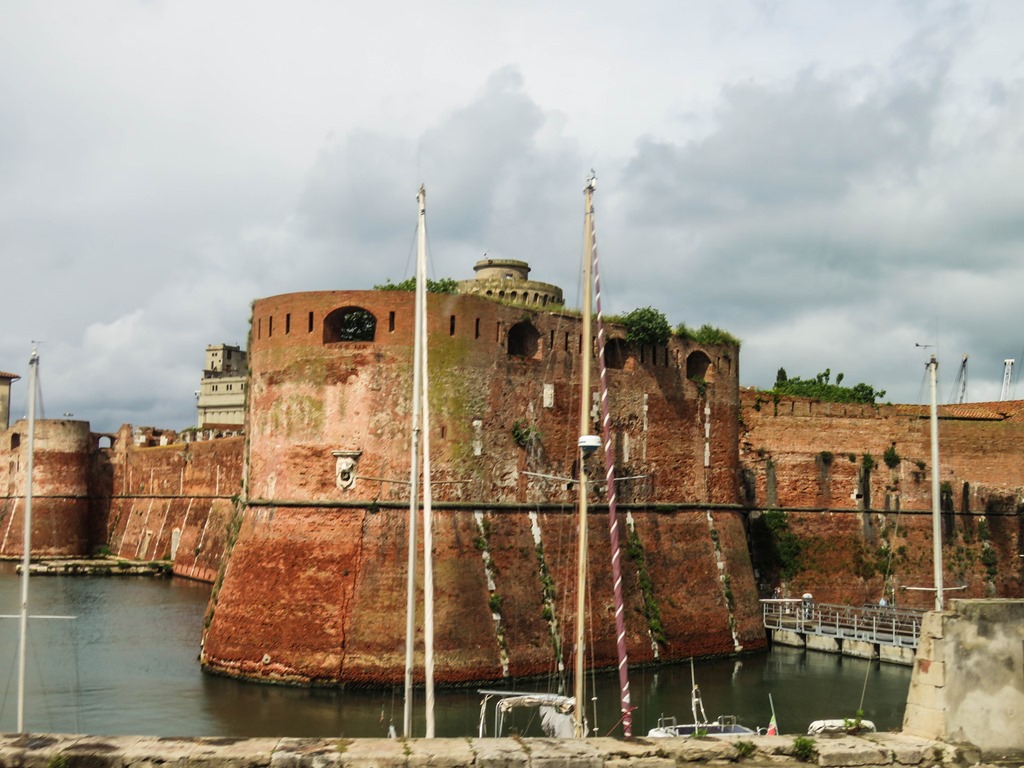
As we left Livorno, we saw some remnants of the city walls. The Florentines, particularly Lorenzo di Medici, established Livorno as the port of Florence. As such, it needed to be fortified.

IMG_9051

On the way, we saw some of the Apuan Alps. The mountains are not much higher than the Oregon coast ranges, but this early in the spring many were still covered in snow.

IMG_9058

The mountains contain rich deposits of fine marble:  Carrara, which sits at the foot of the Apuan range, provided all the marble used by Michelangelo and the other great Renaissance sculptors. 

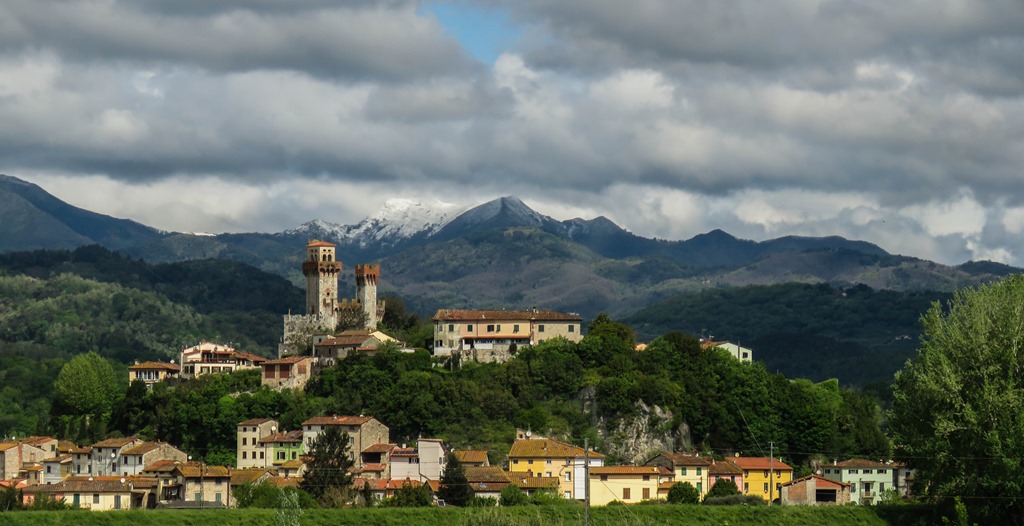
We also saw some of the smaller Tuscan towns.

IMG_9061

After about 45 minutes on the road, we arrived a Lucca. One of the things that Lucca is famous for is that it has perhaps the best-preserved fortifications of any Italian town. Sadly, city walls, no matter now impressive when you see them in person, do not photograph well. I discarded a half dozen pictures of bricks!

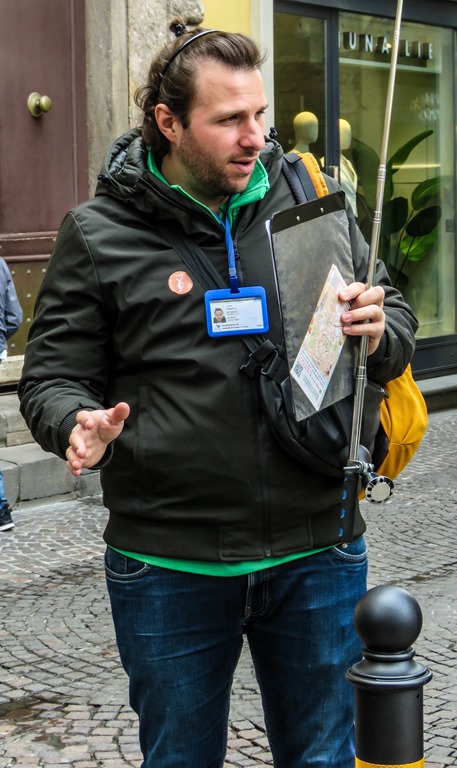
As we left the bus, we were given a choice. We had three hours to explore on our own with a map, or we could go with the guide for five euros more. We seldom turn down a guide, and I think we made the best choice. Our guide was Francisco—“Kiko” is the Italian diminutive—and he had been born and raised in Tuscany.

IMG_9064

Besides its well-preserved city walls, now a pedestrian promenade, Lucca is known as “The City of a Hundred and One Churches.” I would probably have been happy to visit them all, but fortunately for John our guide only took us to the three most important. We first went to the basilica of San Frediano. It is one of the oldest of the churches, and it is famously mostly for the Byzantine-influenced mosaics on its façade.

IMG_9063

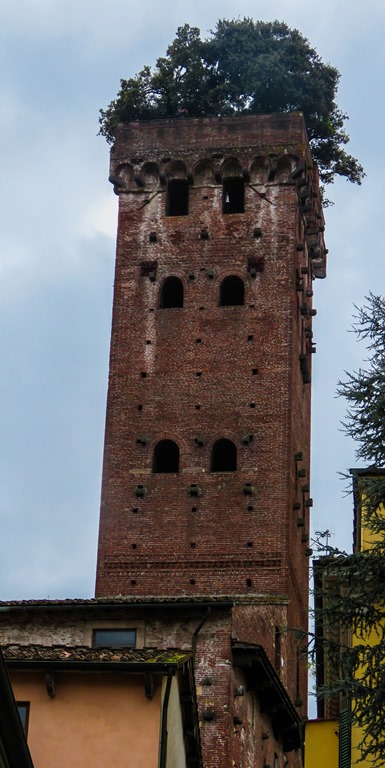
We admired it from the small piazza in front of the basilica, but did not go in. We also passed by one of the last remaining merchant towers. Much like American corporations in the twentieth century, who declared their importance by the height of their headquarters, Tuscan merchants built vertical warehouses with the height deemed to be a measure of their wealth. In Lucca, the town set limits to this by decreeing that no tower could be higher than the campanili of the duomo. The Guinigi family skirted this rule by build theirs as high as the bell tower and then planting trees to make it ever taller!

IMG_9068

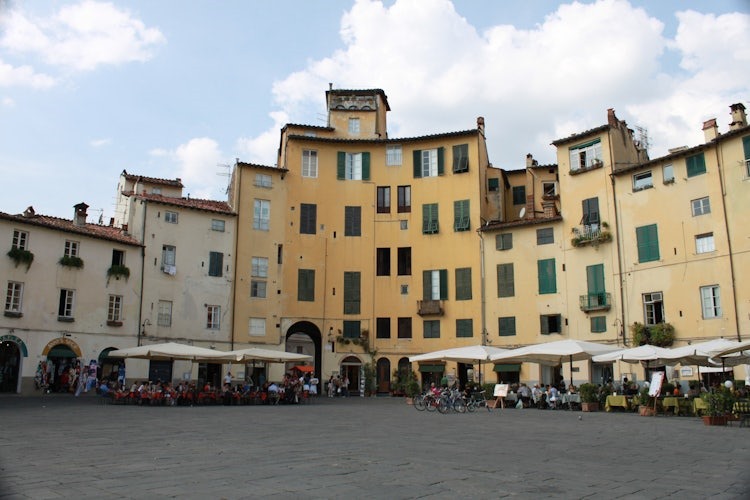
Lucca is also famous for its “amphitheater.” This is not a Roman ruin but a circular square, reminiscent of the the Circus in Bath. It was raining off and on while we were in Lucca, and fairly early in the day, so none of the cafes had tables spread our and Kiko was rushing us through to try to keep us as dry as possible. I did not get a good photograph, so here is a stock image.

piazza-anfiteatro

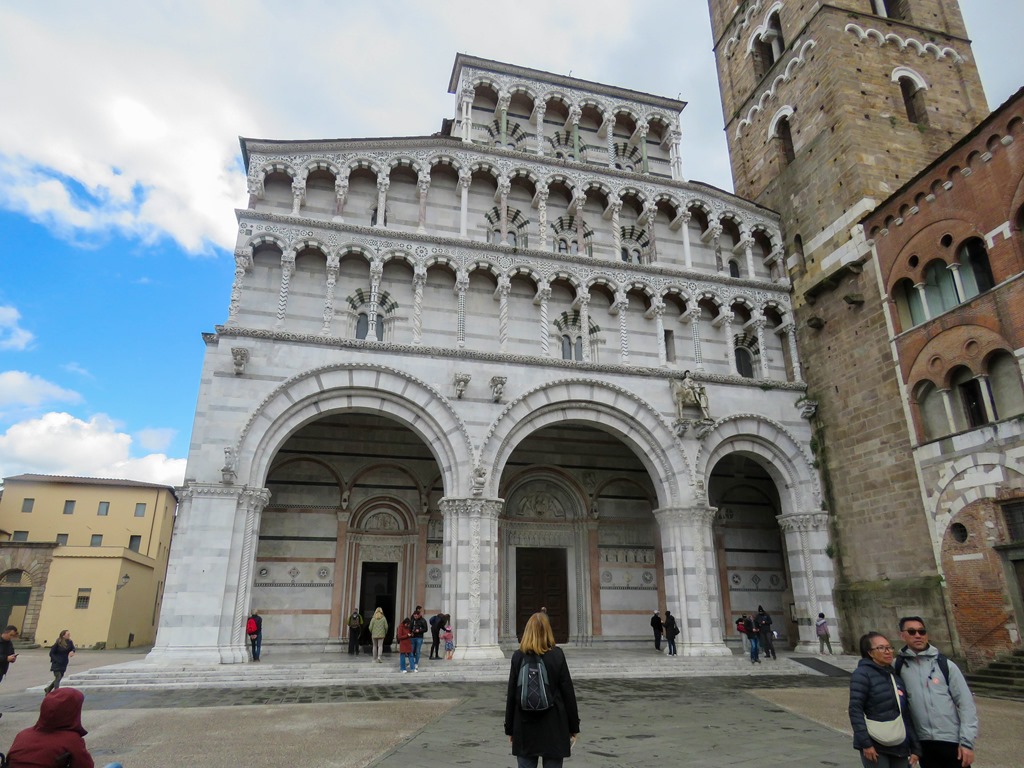
We arrived at the Cathedral of San Martino. It is covered in Carrara marble.

IMG_9069

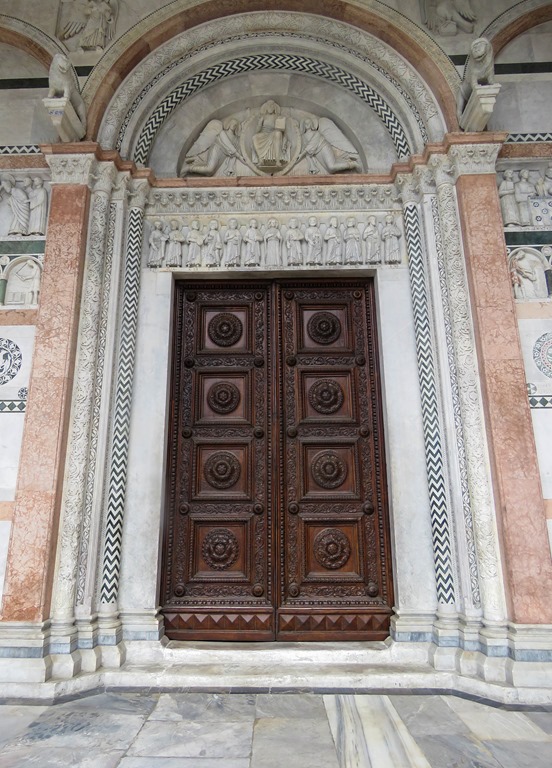
The portals are exquisitely carved.

IMG_9071

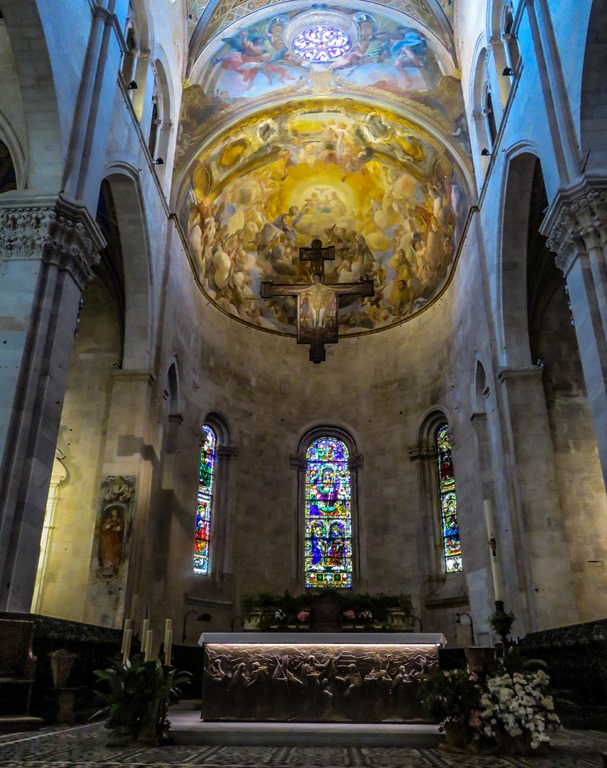
And the interior is stunning.

IMG_9076

Larger Italian churches have two organs facing each other in the nave, the “epistle organ” on the south side and the “gospel organ” on the north. Those in San Martino have quite handsome cases.

IMG_9072

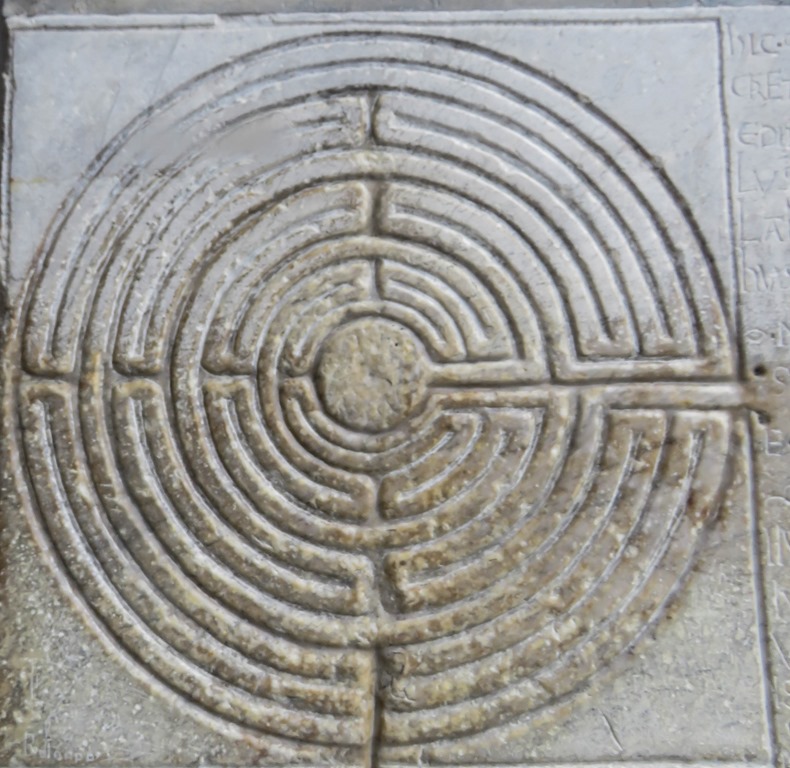
Labyrinths were popular in the middle ages. San Martino has a miniature one on the portico. You walk this labyrinth with your finger. 

IMG_9079

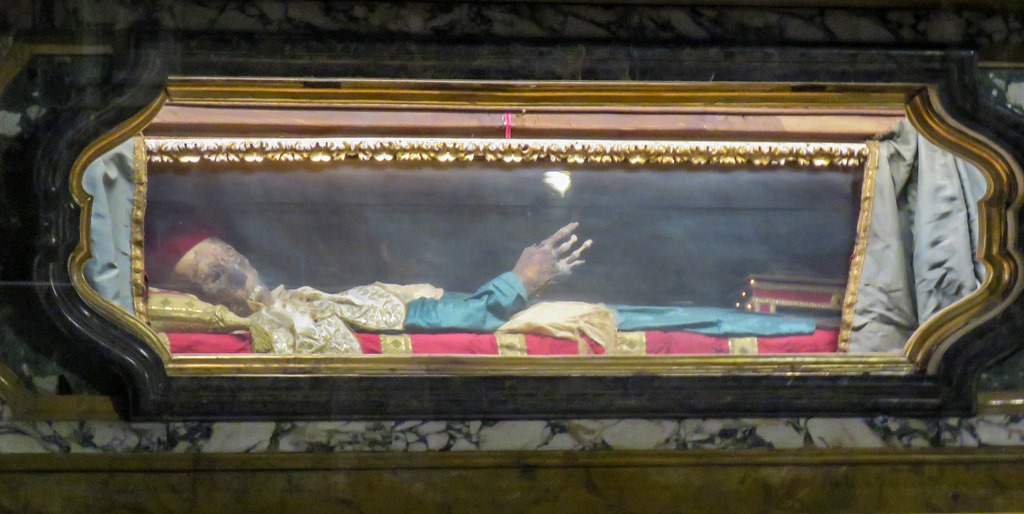
Kiko took to one final church, San Davino. Reading some of the interpretive material, I learned that Saint Davin was wealthy Armenian who donated all his wealth to the poor and embarked on a pilgrimage to Santiago de Compostela. He never made it. He became ill and finally died in Lucca. But before he died, he impressed the locals with his sanctity. After his death, he developed a significant cult, and a church was built in his honor.

IMG_9081

His relics on a display here, and for this reason the Luccans dislike having noisy tourists thronging the church.

IMG_9083

By this time, the skies had opened up. We still had about an hour more before we had to go to the bus, and Kiko asked us if we were interested in lunch. The group readily agreed, and he arranged tables for us in a charming trattoria.

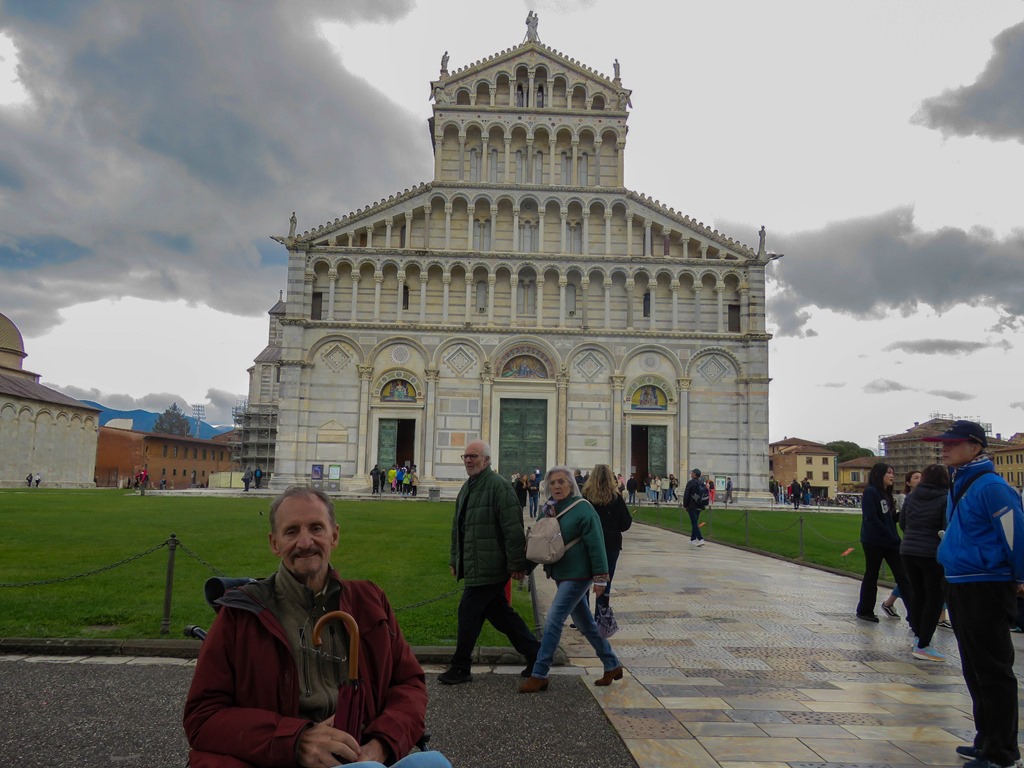
After this, we boarded the bus and headed to our second stop of the day, Pisa. This was not an easy stop for John and me. The busses have to park almost a kilometer from the entrance to the Piazza dei Miracoli, the entrance to the duomo and the tower. The route was difficult to do with a wheelchair. There were busy streets to cross. The pavement was in poor condition with pot holes and railroad tracks. Once we were close, there was a hellish scene of stall filled with the most hideous souvenirs imaginable. Aggressive hawkers, mostly African, rushed up  and shoved watches and turquoise jewelry in our faces.

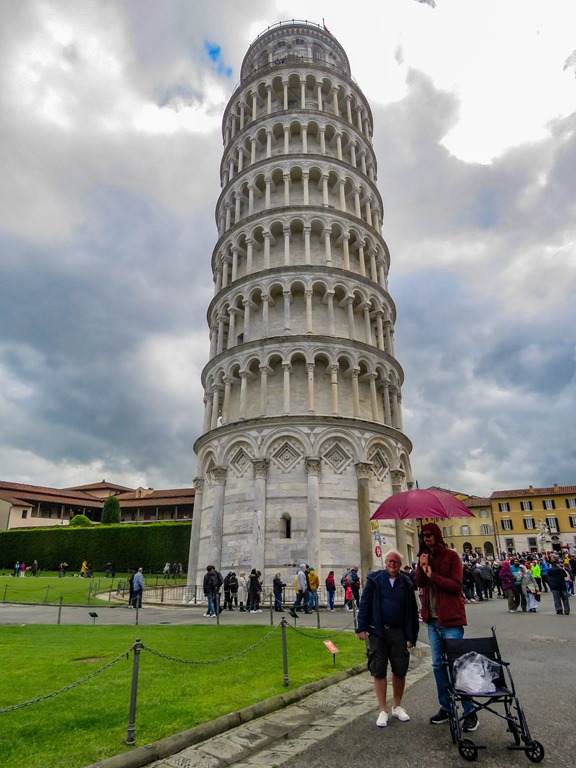
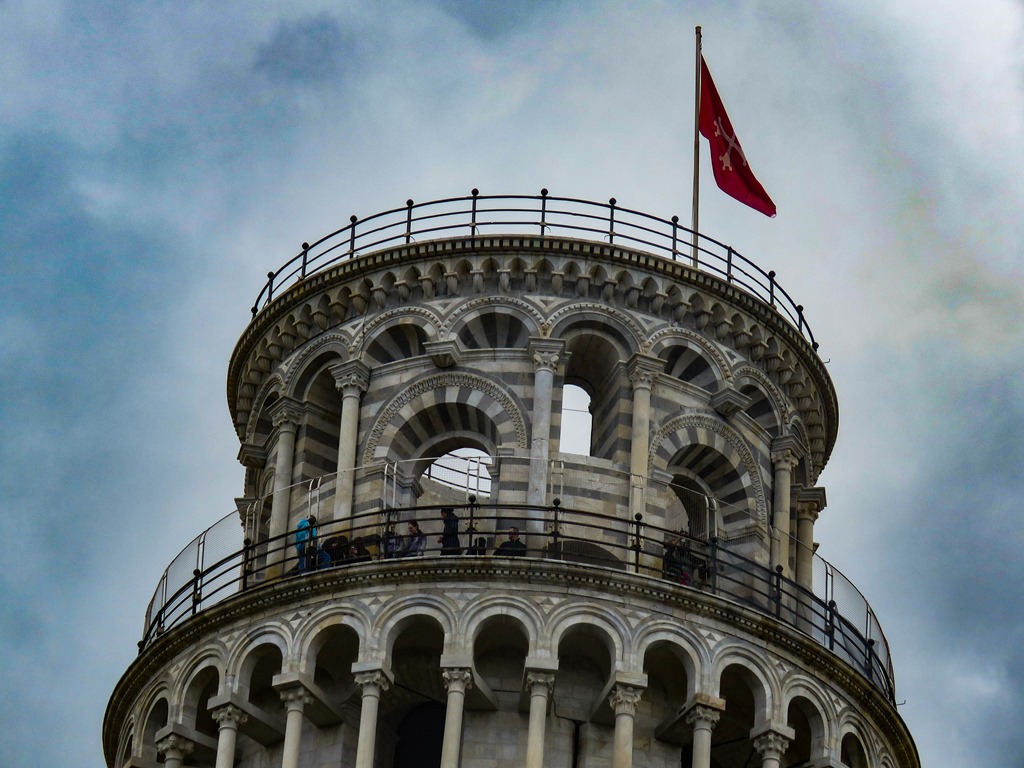
Once inside the walls, things were a little calmer. The tower is a little bit like Niagara Falls:  you have seen it so often and for long that that you do not expect to be impressed, but somehow…well, it’s impressive. 

IMG_9089

You can buy a ticket and walk to the top. Twenty years ago I would have done that. John hates heights, so it had no appeal to him even if I could have climbed it.

IMG_9093

The cathedral is deceptively small from the front.

IMG_9099

Only for the sides or the back do you get a sense of how truly massive it is.

IMG_9092

The interior is magnificently decorated.

IMG_9097

Despite the crowds, I would have liked to have explored the church and seen a bit more of Pisa. But it took us so long to make it to the cathedral from the parking lot that we really had barely any time at all.

We were a few minutes late to meet our group at the gate of the Piazza dei Miracoli. We had been warned that they would not wait, and indeed Kiko and the group had left without us. We went back through the hellish scene of trinkets and hawkers on the way back to the bus. As we were stuck at a railroad crossing, I had a call from the tour agency telling us that the bus was leaving without us, but that we could catch a ride back with another tour group who would be expecting us.

When we finally returned to the ship, we discovered that John’s phone had been stolen from him at some point in the day. We will have to wait until we return to Oregon to get him a new phone. I did have loss and theft insurance on this one. But it was a sour ending to what had otherwise been a generally nice day.

La Côte de la Pluie

Yesterday, as we thought were were about to leave Barcelona, the captain addressed the ship. He explained that while they had requested refueling at seven in the morning, for reasons beyond their control, it was only commencing now and our departure would be delayed. He assured us that they would try to make up as much time as possible, but that our arrival in France would be delayed.

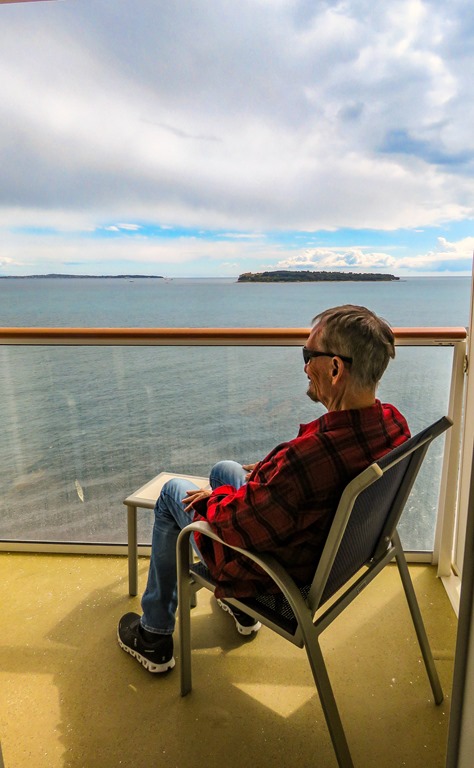
As it turned out, it was delayed by almost five hours. It was a little after eleven in the morning when we pulled into the Golfe de la Napoule, the Bay of Cannes. The weather was surprisingly quite cold for the Riviera. Even though John normally dislikes chilly weather, he sat out on our balcony and looked at the world.

IMG_8991

IMG_0720

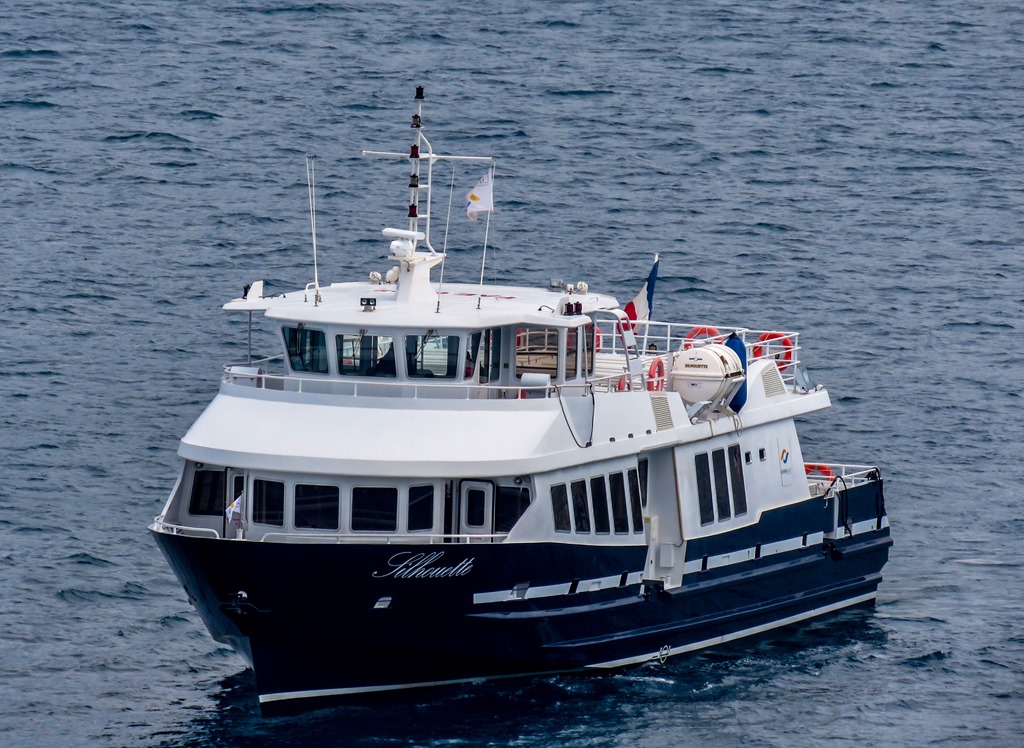
Cannes is our only “tender port,” that is, a port where passengers have to be shuttled from the boat to the shore in small boats. Tendering was no big deal last summer when we were in Scotland because all eight passengers fit on one Zodiak. Here the tenders were much larger.

IMG_8997

Even though these boats can easily hold a couple hundred people, it takes a long time to disembark over 4000 people. We boarded our tender just after two o’clock.

Because of the delay, Norwegian cancelled all its excursions. I had had a lot of difficulty finding something to do in Cannes. I had initially arranged one walking tour, but the guide cancelled it before we even left home. So, a couple days ago, playing with the Viator app, I found a new listing called Le French Bus. It promised a tour of Cannes in a vintage French minibus. It was not expensive, but since I was doing it at the last minute, the earlier tours in the day had already been filled and I just took the remaining slot at two o’clock. As it turned out, that was the luckiest thing I did.

I received a cheery text from the guide telling us that he was delaying the tour until 2:30 and he would meet us at the port. And as soon as we walked off the pier I saw a white van and a guy with a straw hat and a white and white striped French sailor shirt standing there.

IMG_9017

We waited a couple minutes and another couple from Ottawa joined us. As we left the port, Daniel, our guide, told us about the bus. In the late 1960s, the Volkswagen bus became one of the most popular vehicles in the world. Hippies everywhere had one. So Renault figured that they could make one, too. Except…it was a complete flop. Nobody wanted a Renault bus. They wanted a VW bus. Renault discontinued production after making only a few hundred. So, naturally, they are now collector’s items.

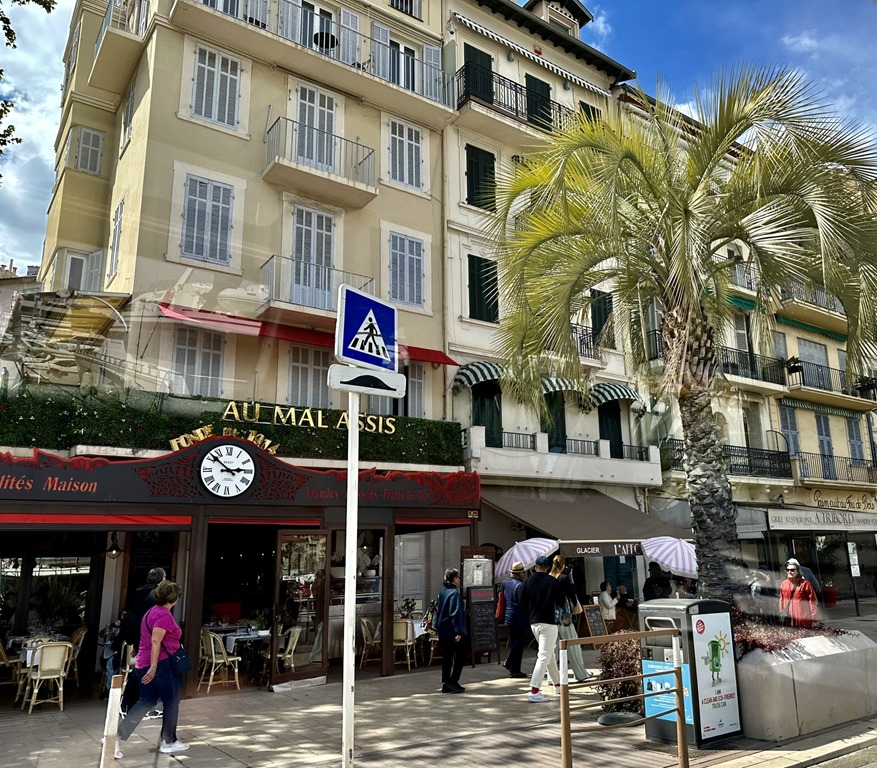
We started our trip through town. Much of Cannes looks like every little French city with only the occasional palm tree to remind you that you are in the La Côte d’Azur.

IMG_0721

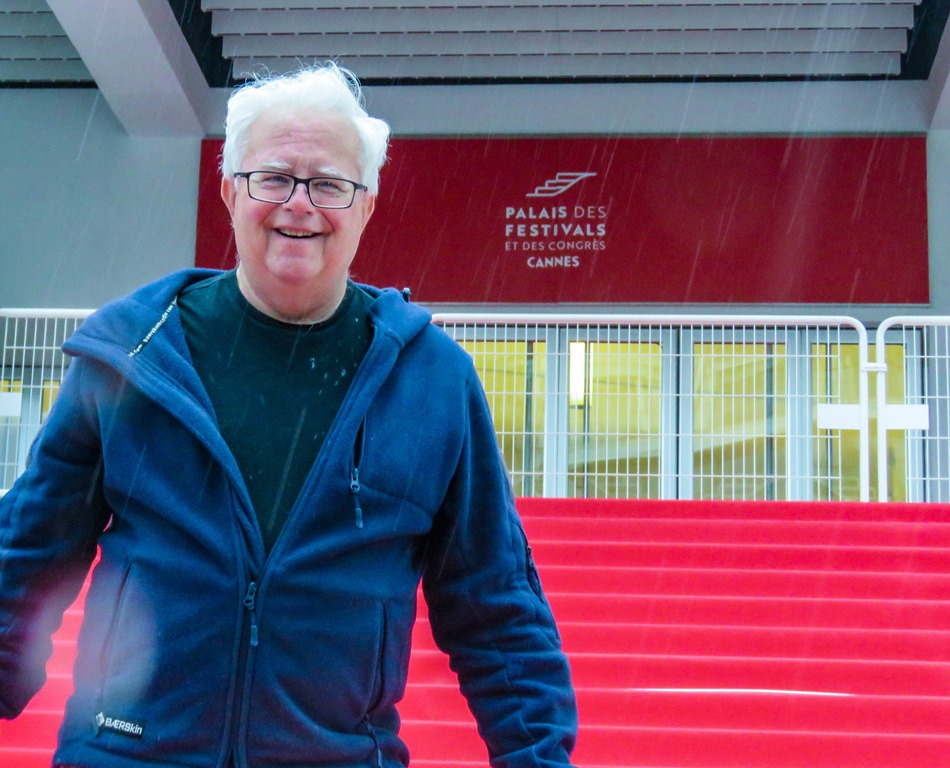
What distinguished Cannes from every other town on the coast is the film festival. It will start on May 14 this year, and preparations are already underway. The famous red carpet is already out.

IMG_9003

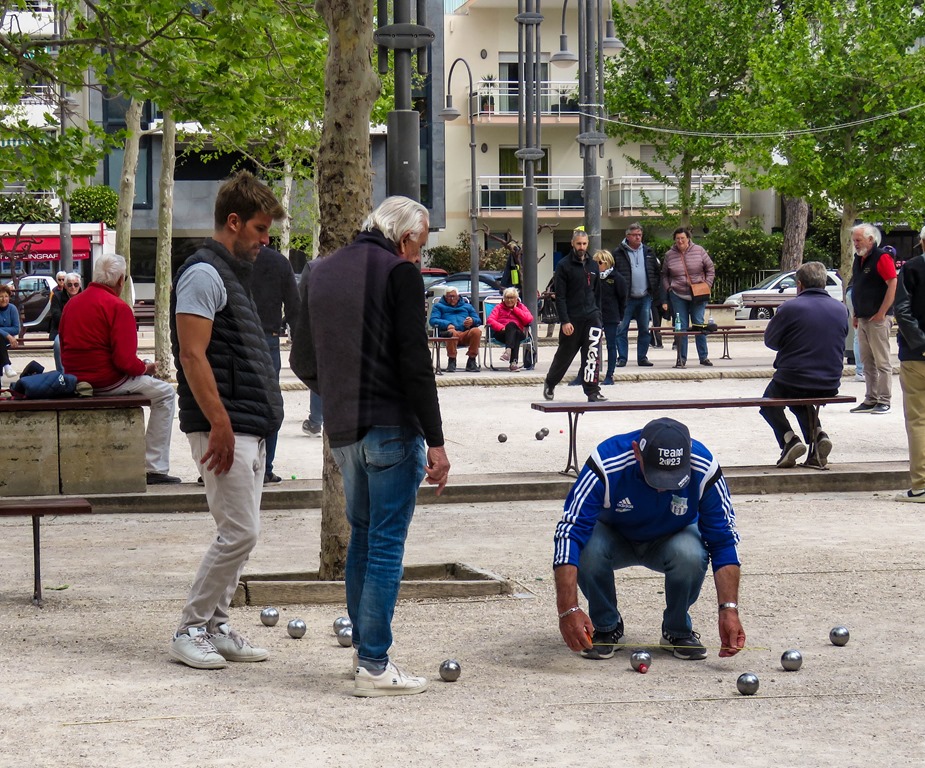
Elsewhere in Cannes, things are pretty normal. There are games of boule in just about every square.

IMG_9019

We went by the marina. There are two small islands in the harbor here. One of them is famous because it was on the Île Sainte-Marguerite in a small prison where the “man in the iron mask” finally died.

IMG_9013

Daniel explained that Cannes was just a tiny fishing village until the mid-nineteenth century when a wealthy Englishman stopped here en route to Italy. He was searching for a warm dry place for his daughter who suffered from some respiratory problem. She liked the town so much that they stayed here. Word got out, a rail line was built … and well, the modern Riviera was born.

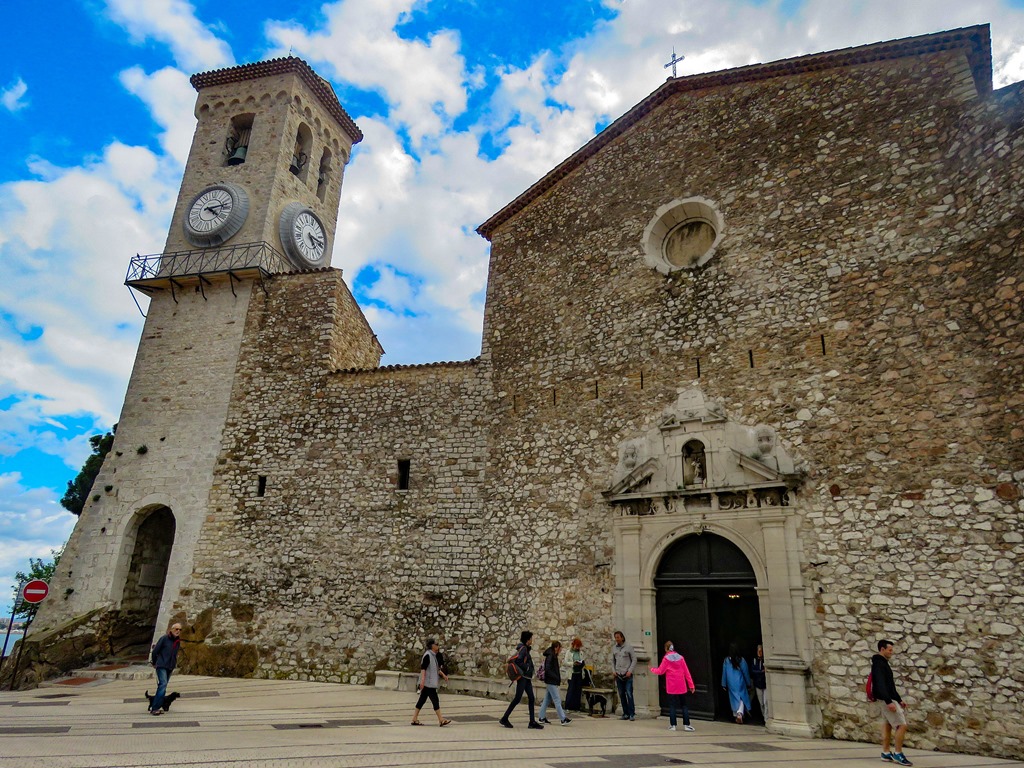
There are only a few remnants of that older Cannes. One is the Church of Our Lady of Hope on a bluff overlooking the town.

IMG_9030

The shell of the building is quite old with a Romanesque stone vaulted ceiling. The interior of the church was obviously redone in the nineteenth century, and it looks as hideous as if it were in Lawrence, Massachusetts.

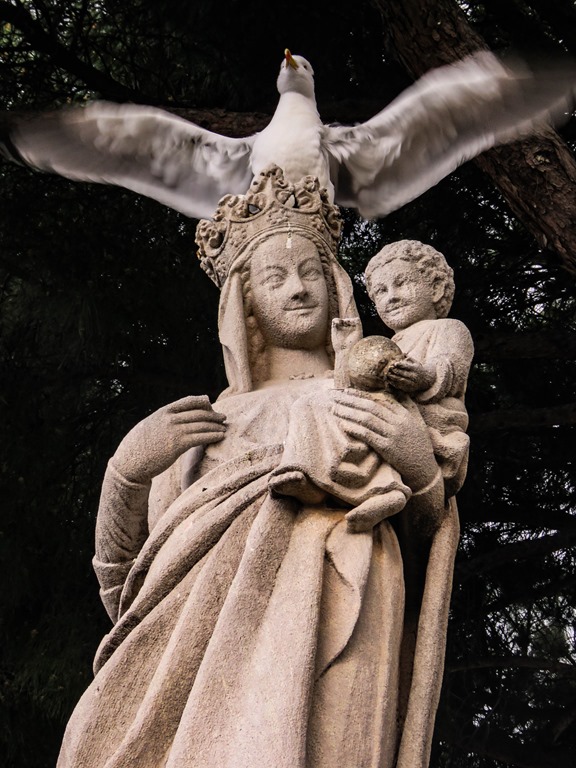
There is a little garden outside the church, just by the bell tower. It was here that I snapped my favorite picture of the trip so far.

IMG_9043

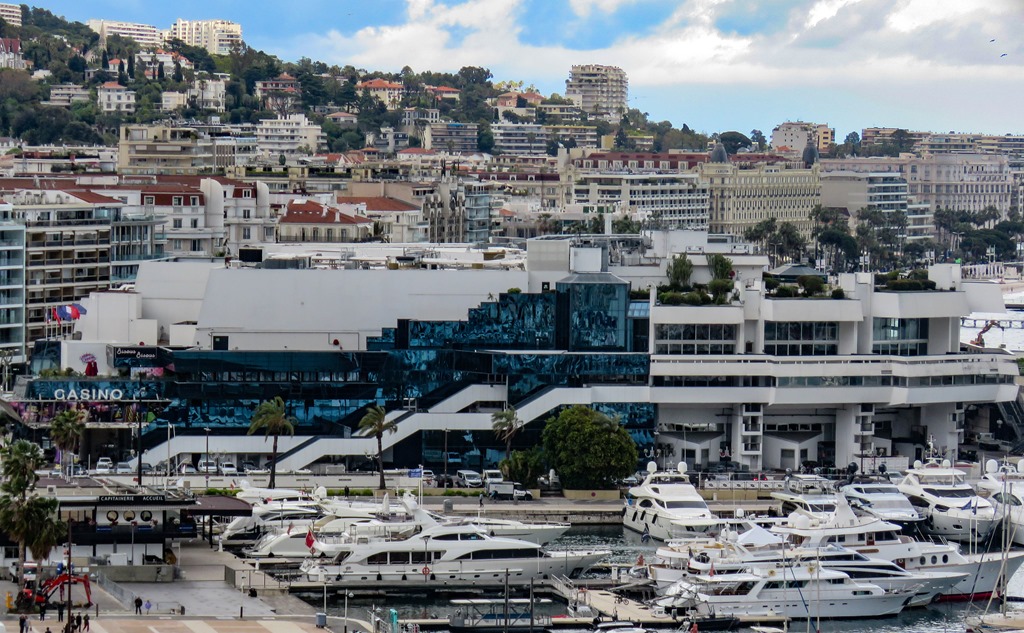
From the bluff on which the church is situated, there is a stunning view of the area. On a clear day, Daniel told us, the snow-capped Alps are visible. This was not one of those days. But we could see the theater-casino complex where the film festival is held

IMG_9036

and this odd mural on the side of a house.

IMG_9040

I never did get an explanation for that one.

By this time, it was no longer gloomy and threatening to rain. It was raining fairly hard. Daniel whipped us by the red carpet so we could get our pictures. John stayed in the van, but I braved the rain drops.

IMG_9046

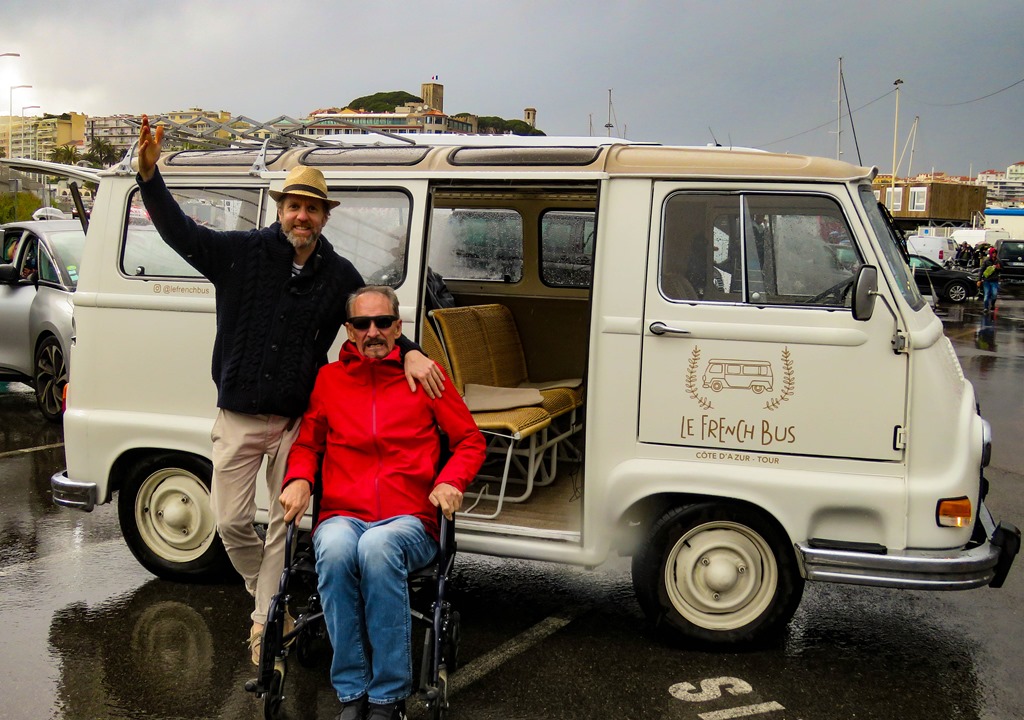
As the tour came to an end, we had some time for pictures. I took one of John and Daniel

IMG_9049

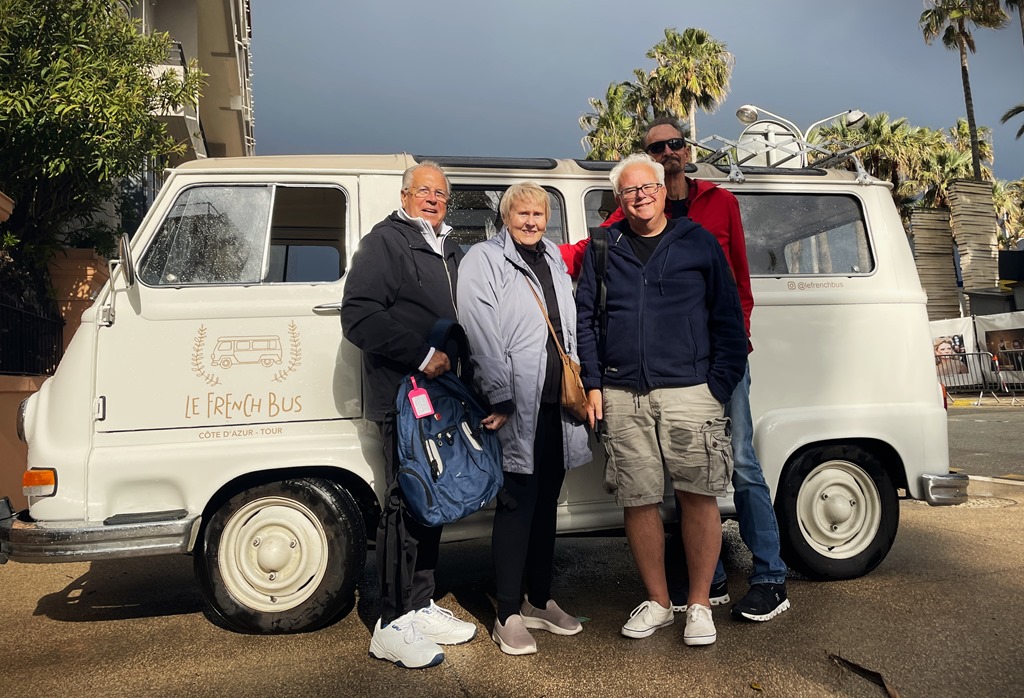
And Daniel took one of the whole group.

IMG_1244 (1)

The line was atrociously long to get back on the boat, so the four of us went, at Daniel’s suggestion, to the rooftop bar of the nearby Hilton where we could monitor the line while we had a drink. We caught the last tender back to the ship.

A Most Gaudí Day

We pulled into Barcelona this morning just around dawn. Most people can hear the name of this Catalan city without breaking into song. But John and I are not among them, so we immediately started singing “Where you going? Barcelona. Oh.” This is what happens when you’ve seen every Sondheim show.

On a cruise like this, you have two options given the limited time. One, you can opt for a superficial tour that checks off all the major highlights in the city or region. Or, two, you can find deeply explore one particular site or topic. We chose the latter course here in Barcelona, choosing to spend the whole day looking at the two most famous works of the Catalan architect Antoni Gaudí.

When we showed up at the tour office this morning, John was in his wheelchair. This caused some immediate consternation with the guides. I assured them that John could walk, but that he found it difficult to stay standing in place and had some problems with stairs. We were told that there were many, many stairs in Park Güell, our first stop, and maybe that he would just have to stay in place while the rest of the group did the tour. I said that we would do our best to keep up with the group. And then something curious happened. Our guide came over and said that he had thought of a way to do the tour which would involve some ramps, but only one short flight of stairs, and he thought that I was strong enough to push John. This was a welcome vote of confidence after the taxi driver in Ibiza, so I thanked him, and we went off.

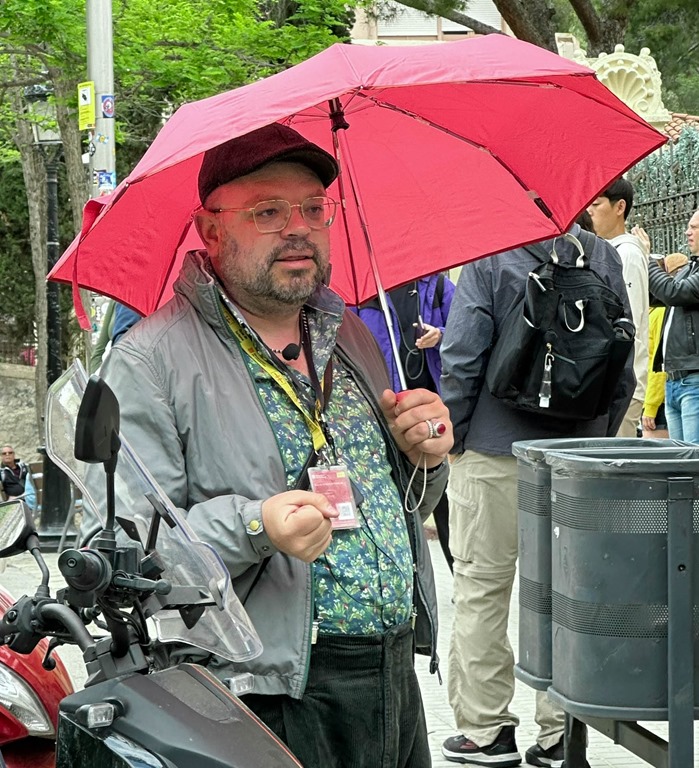
I have to say our guide was absolutely great. He gave his name as Joseph, though it was probably Josep in Catalan.

IMG_0715

We walked over to the entrance of Park Güell from the tour office. Joseph gave us some background about the park.

Towards the end of the nineteenth century, as the remnants of the Spanish empire began to slip from the control of the Spanish crown, many Spaniards who had made their fortunes in places like Cuba or the Philippines, returned to their ancestral homes. This included the Güell family. Eusebi Güell was possibly the richest man in Barcelona with an enormous fortune made as a textile manufacturer. However, the Catalan nobility regarded Güell and his wife as vulgar nouveau riches. Those ancient families also loathed almost every modern trend particularly “modernisme,” the Catalan expression of the art nouveau style. So, it was only natural that haut bourgeois families like the Güells adopted the trends that the aristocrats had rejected.

Eusebi Güell met Atoni Gaudí in Paris at the 1878 Exhibition. Gaudí was up-and-coming designer and architect. Güell was impressed by his talent and began giving him a number of commissions including one to build a house for the family on their estate in the Serra de Collserola, a range of hills, somewhat reminiscent of the Santa Monica Mountains, to the north and west of Barcelona. The house is still standing, though it has been converted into an exclusive primary school.

IMG_8943

As one of the wealthiest men in Europe, Güell may have been drawn to this isolated location because he felt it was safer for his wife and ten children. But apparently his wife Francesca, born to a rich Milanese merchant family, was not happy with such a lonely life. She insisted on driving herself into town to meet with her friends, even though it was not legal at that time in Spain for women to drive. Gaudí created a kind of garage for her car, and since she did not like to back up, he created it as a circular space. Here is John standing there.

IMG_8938

So to keep his wife and children happy, and perhaps to make even more money, Güell hit upon a scheme to subdivide his vast estate into a community for other wealthy Barcelona families like his. He hired Gaudí for the project.

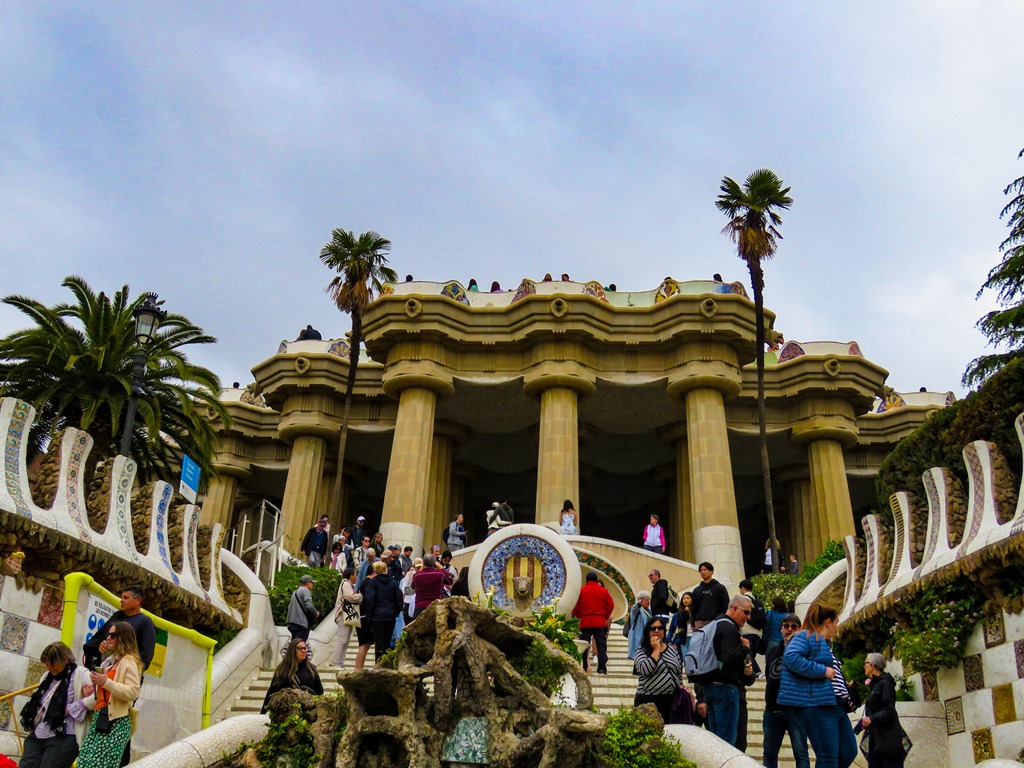
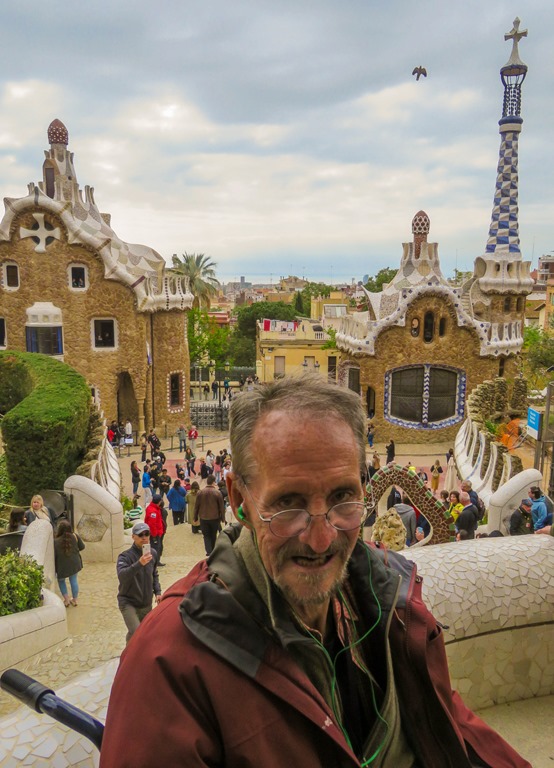
Gaudí faced a number of obstacles. He had to level much of the hillside to create the sixty buildable lots, one of the biggest engineering projects in the history of Barcelona. To attract new buyers, he built an impressive, yet whimsical entry way with two gate houses. Here is one of them.

IMG_8942

The lack of an adequate water supply for these homes was also a serious problem. Gaudí decided to create a central cistern to collect rainwater and to distribute it to the homes and for landscaping. He created a building modeled on the Temple of Apollo at Delphi.

IMG_8941

The enormous cistern was below the building. There interior of this temple was designed as a farmer’s market so that the wives and servants would not have to leave the community to do basic shopping.

IMG_8957

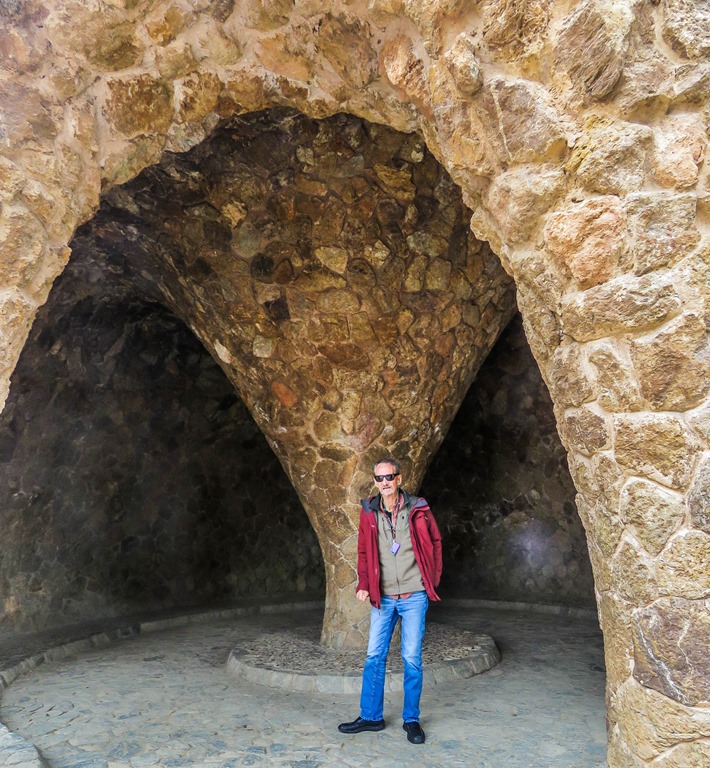
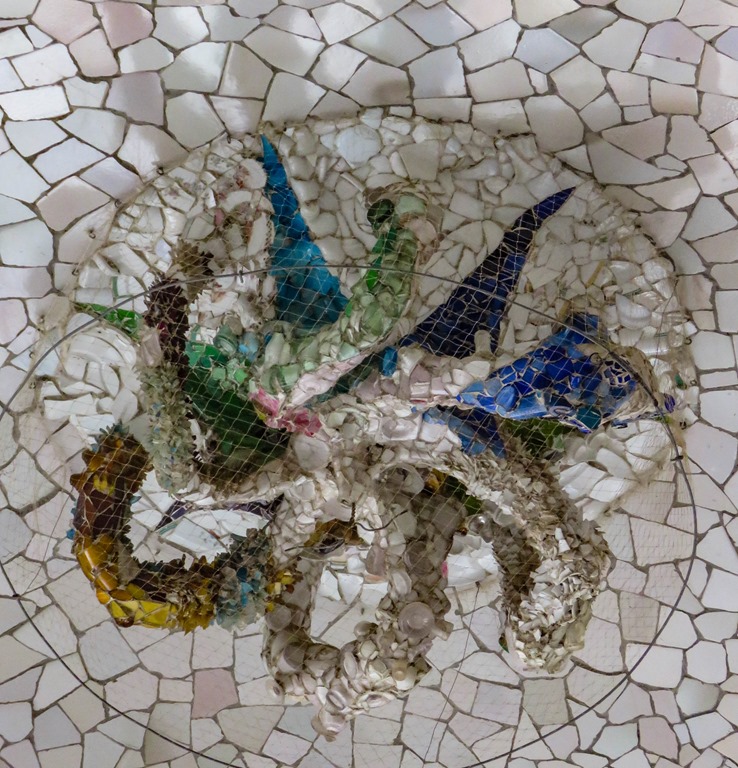
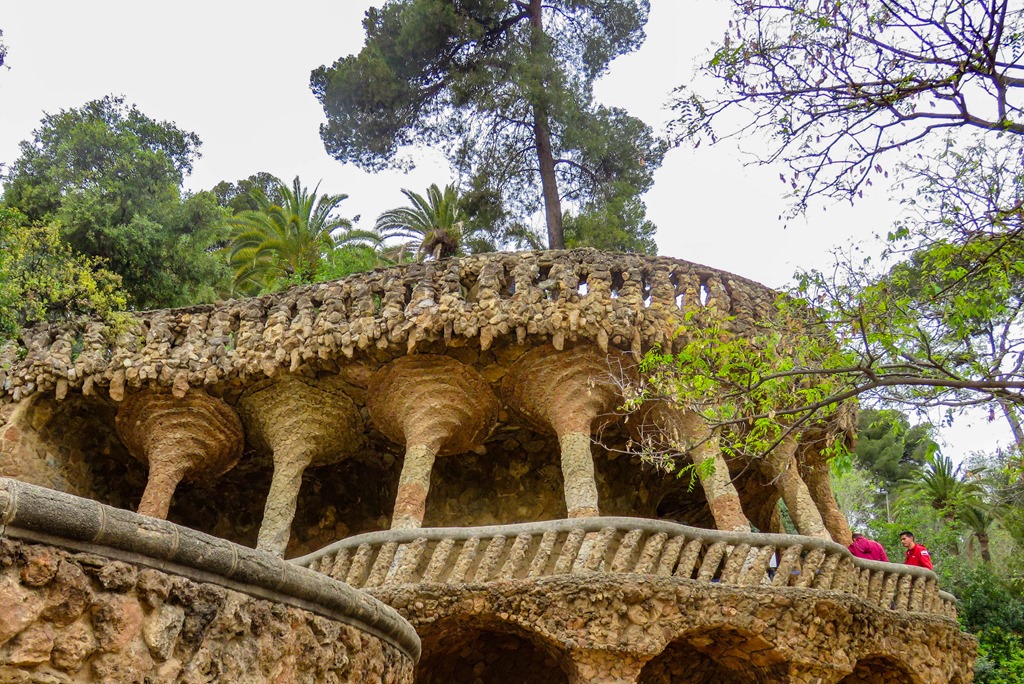
These columns not only support a roof, but each also contain pipes to funnel the water from above into the area below. And since Gaudí could not resist decoration, the ceilings of this area are filled with fanciful bits of decoration, often devised from the detritus from other construction sites.

IMG_8950

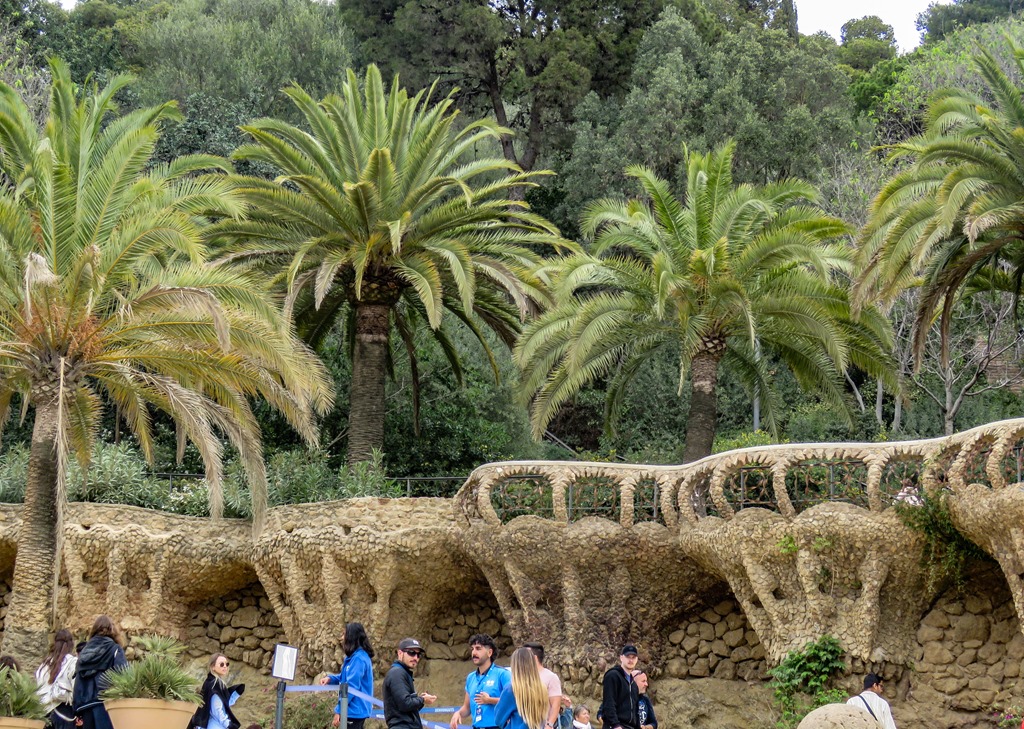
The rooftop area is enormous and open. The grates to collect the water are covered with a meter of sand dredge from the bay. The open space was intended as a playground and as a concert space. Along the edges, Gaudí created undulating tile-covered benches. It was hard to get a picture of them with all the tourists. After waiting a while, John found a seat. Notice the superb view of Barcelona and the sea that these benches offer.

IMG_8959

Despite all Gaudí’s artistic brilliance, the project was a complete failure. After 10 years, only two plots had been sold, one of them to Güell’s lawyer who may have just bought it to make sure he kept his best client. Most people apparently felt that it was just too far away, too isolated. So Güell decided to turn it into a park and donate it to the City of Barcelona.

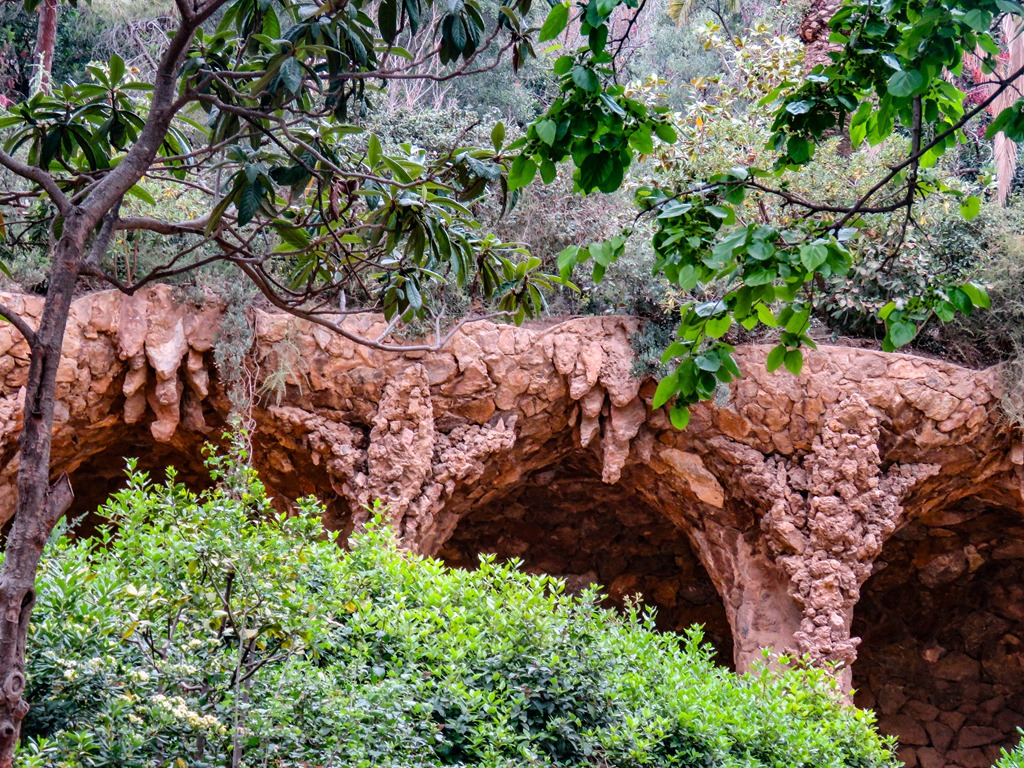
Today it is the most popular open space in a city filled with charming open spaces. The gardens are nicely maintained. I was delighted to be able to name about half of them as the climate is so similar to Los Angeles. But the real attraction in these gardens is Guadi’s whimsical hardscape.

IMG_8945

IMG_8946

IMG_8962

Many years before he was hired to work on Park Güell, Gaudí had another commission, one that would become his life’s work and his greatest obsession. The residents of a new, working-class neighborhood in Barcelona petitioned the archbishop for a parish church. He replied that he had no funds for this and suggested that they form an association to build it themselves. They formed the Asociación Espiritual de Devotos de San José and began raising funds. They hired Francisco de Paula del Villar, a respected local architect who planned a traditional neo-Gothic structure. But shortly after work commenced, del Villar withdrew from the project, and Gaudí was hired to continue it.

Gaudí was a devout Catholic, and his religious and political leanings were conservative even if his artistic sense was not. He devised a radically different new plan for the church, one that would look different from any other church in the world. And he definitely achieved this.

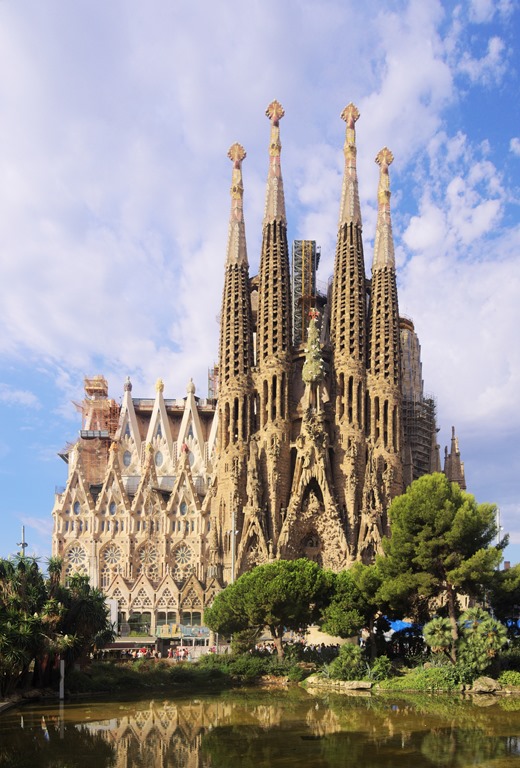
It’s hard to get a good picture of Sagrada Familia on the crowded streets of central Barcelona. So here is a stock image.

Σαγράδα_Φαμίλια_2941

Much of the crypt had already been done when Gaudí look over, and there are still elements of the original neo-gothic style that can be seen. Gaudí decided to start work on the north transept and the choir. Probably for that reason, the tours start in this location.

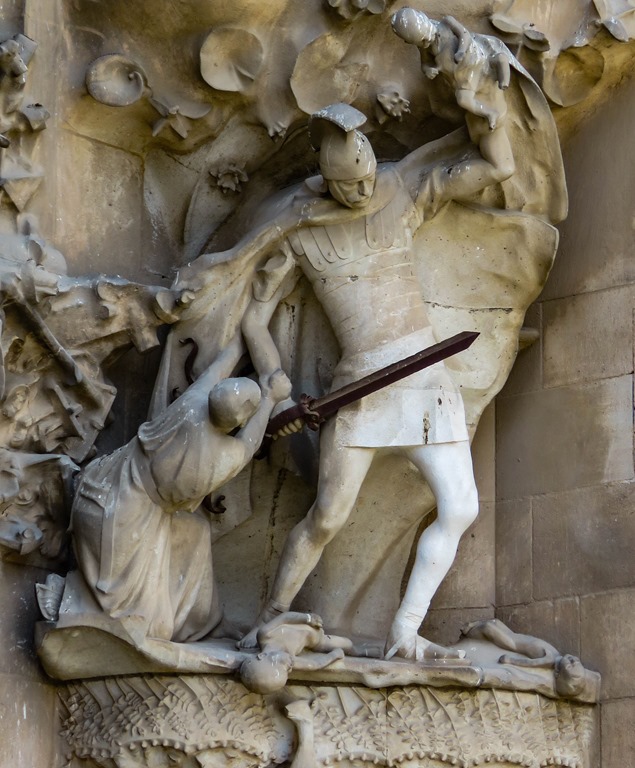
The façade of the north transept focuses on the birth of Jesus and his life with his family in Nazareth. The statuary is somewhat traditional, though elements of Gaudí’s later, more abstract style can be seen. Here is a depiction of the slaughter of the Holy Innocents.

IMG_8974

It was so crowded with tour groups in this area that John and I lost sight of Joseph many times, though we could hear him talking on our headsets. We finally went into the interior of the church.

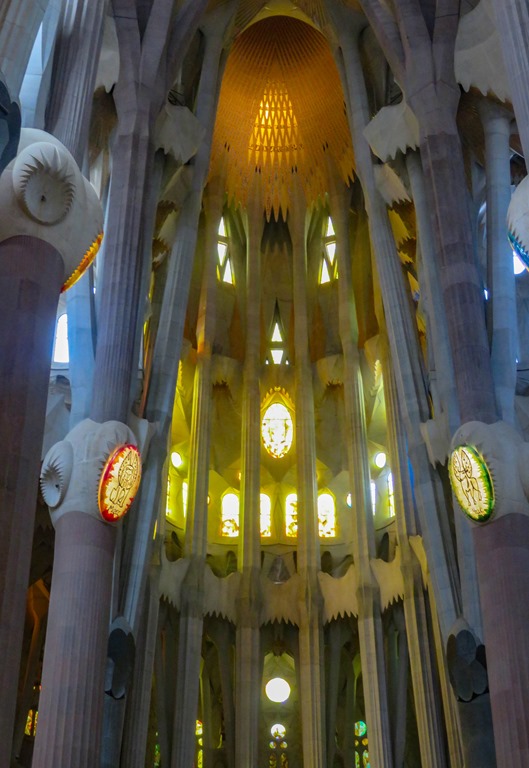
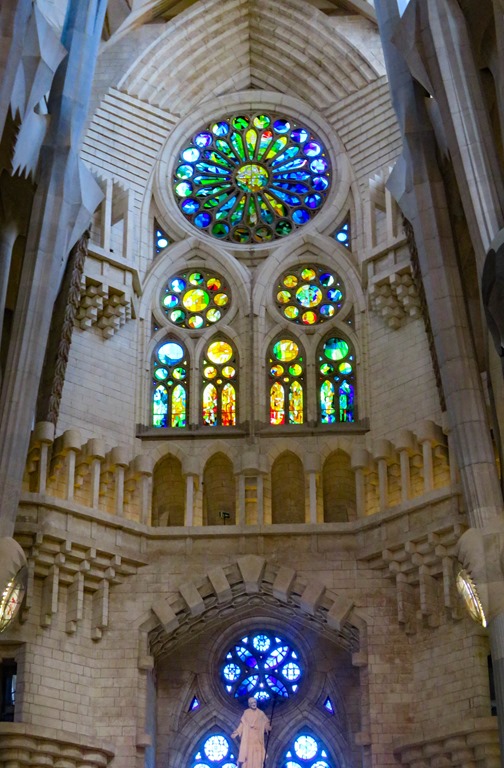
In contrast to the exuberant exterior, the interior of Sagrada Familia is simple, even start at times. There are only a couple statues, and neither are that large. The windows are all abstract color collages. Here is the apse.

IMG_8975

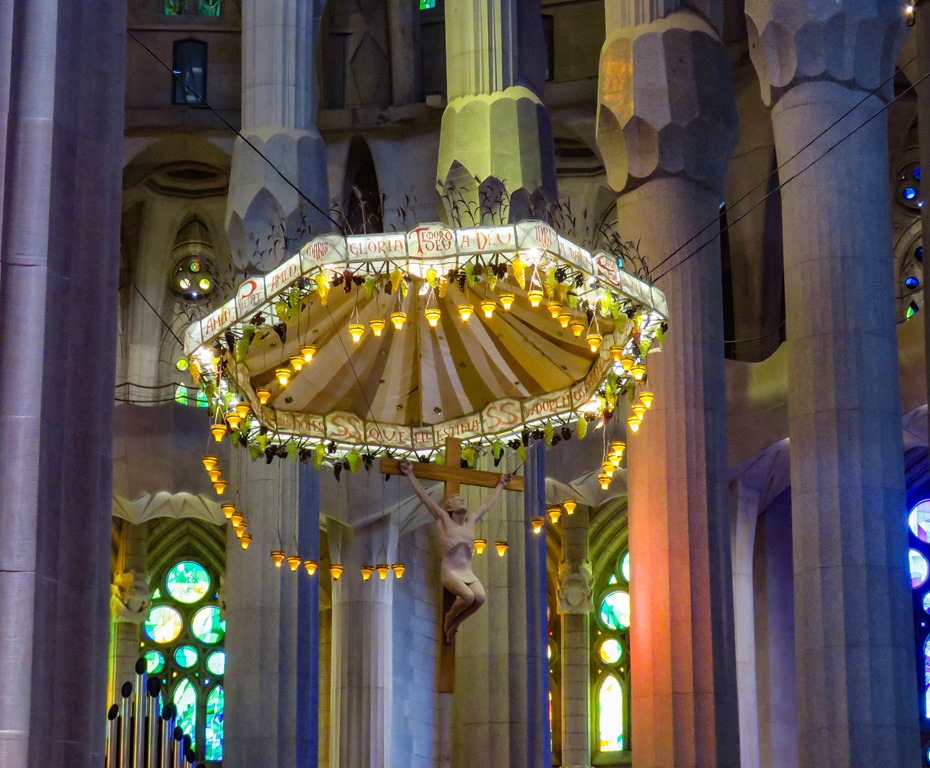
The baldachin over the altar looks to be a new creation, and I think Gaudí would have done something better. Both John and I thought it seemed vaguely like something from the New Orleans section of Disneyland.

IMG_8989

Here is the interior of the north transept.

IMG_8990

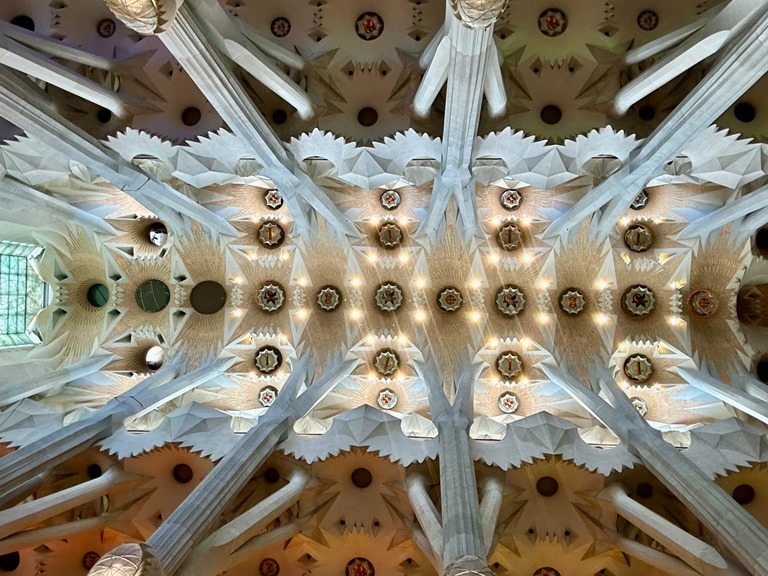
Probably my favorite part of the interior is the ceiling.

IMG_0719

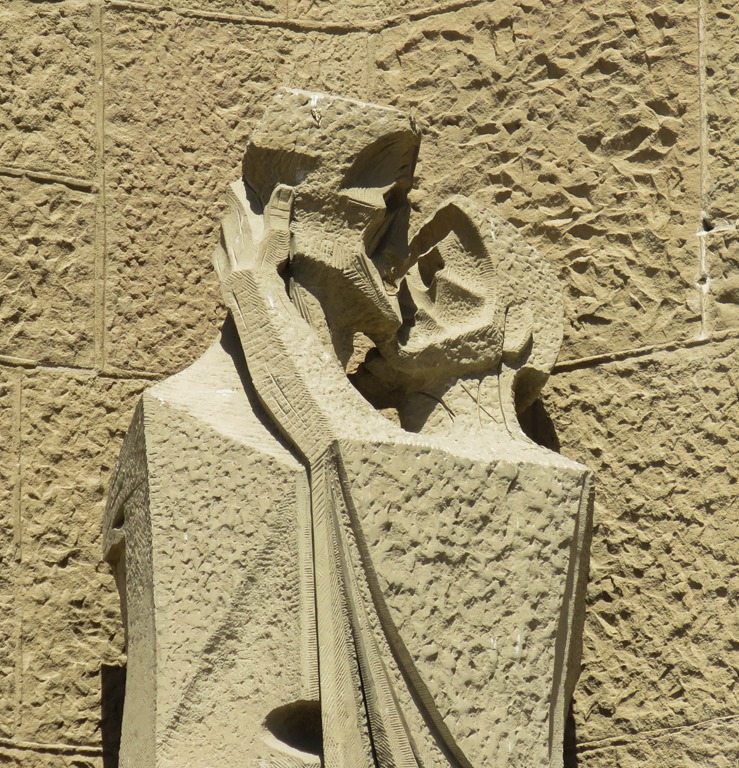
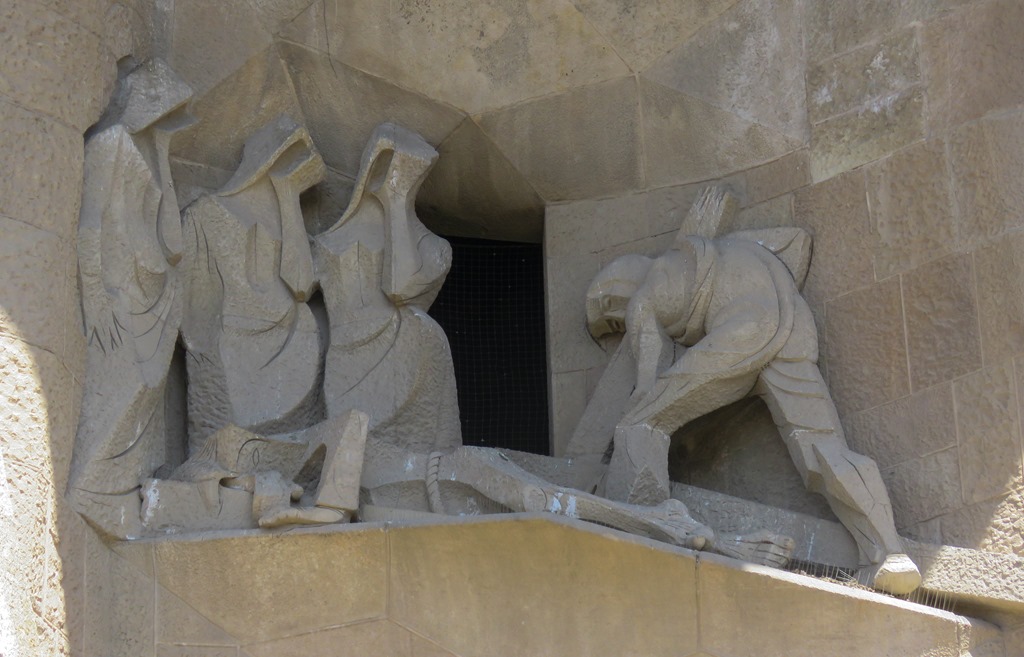
Gaudí died in 1926. Very little of the church had been completed by that time, and some of his plans for the church were destroyed by an anarchist group during the Civil War. Subsequent architects have relied on notes and sketches to try to complete the work. The east facade—for some reason the church traditional east-west orientation of churches is reversed here—is among the least completed. The plans call for extending it another 100 meters or so but there are apartment buildings on the land there and many of the owners refuse to sell. The south façade, dealing with the death of Christ, has recently been finished. The style of the statuary here is far more abstract than those on the north side. Here is the betrayal by Judas,

IMG_8984

and here is the deposition from the cross.

IMG_8986

By the end of tour, I felt I had really learned a lot about Gaudí and had an appreciation for his genius. I gave our guide a generous tip and we took a cab back to the ship, a little tired, but definitely smarter.

Spring in a Summer Town

In the musical Grey Gardens, Little Edie has a melancholy ballad about life in the Hamptons after all the tourists leave. “Because its winter,” she mournfully sings, “in a summer town.” Even more than the Hamptons, Ibiza, on the island of the same name just off Spain’s northeast coast, is a summer town. In July and August, tens of thousands of tourists, most of them young and very wealthy, descend on this island. It becomes a club scene bacchanal, with all night dances fueled by Veuve Clicquot  and cocaine. That was not the Ibiza we saw today. It may not be winter in this summer town, but it definitely was not summer. The Ibiza that John and I visited was almost as dull as Kennebunkport.

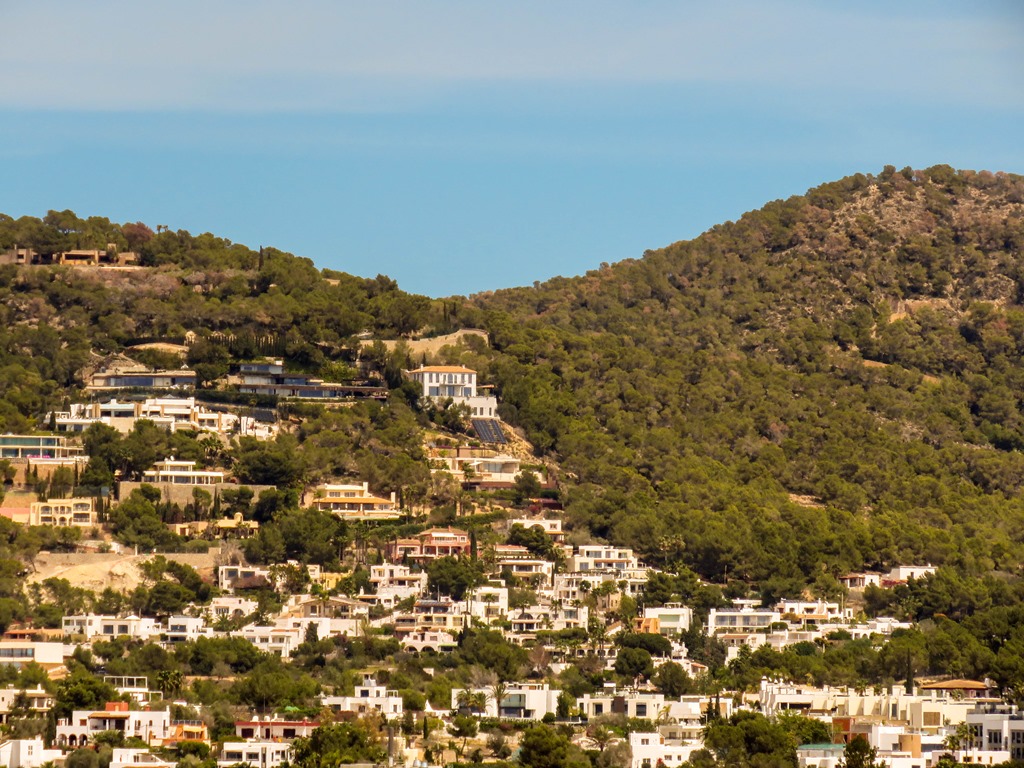
But first, it may help to get a picture of what the island and the town look like. This whole part of Spain eerily resembles Southern California. Looking at the photo below, if I had not told you that it was here in Ibiza, you probably would have thought this this hillside of homes was somewhere in Orange County.

IMG_8928

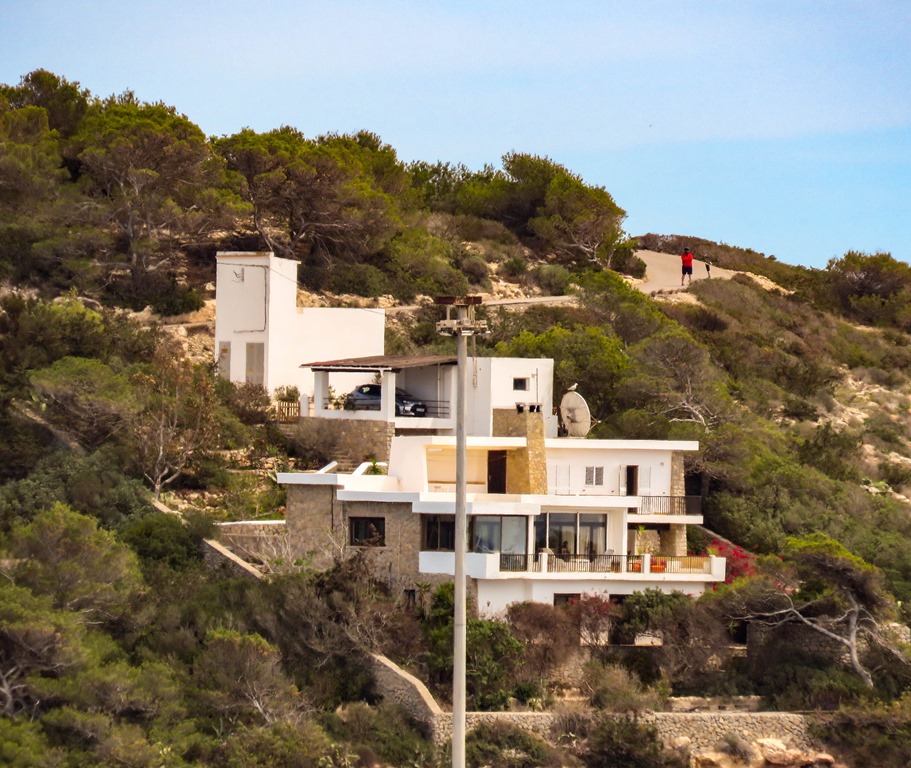
And this house could easily have been in Malibu.

IMG_8926

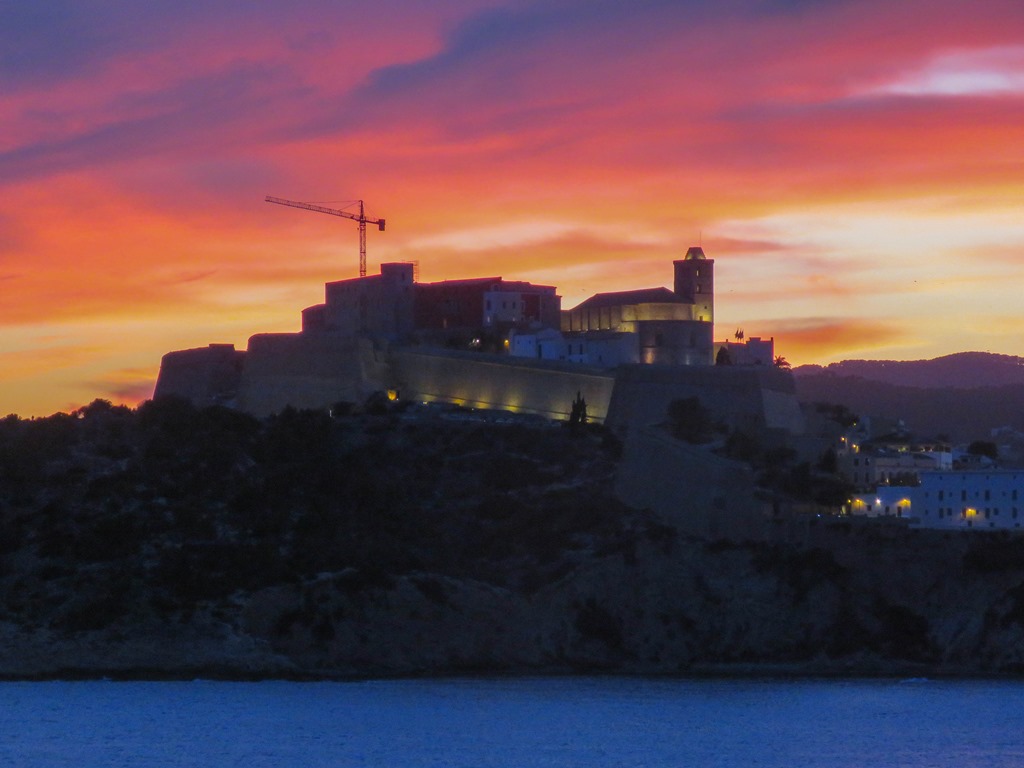
The only thing that would have made you certain that you were not looking at some place in California was the enormous medieval fortress and cathedral overlooking the old town.

IMG_0700

John and I had our heart set on visiting that castle. But the cab driver who picked us up at the cruise terminal crushed that idea. “No se permite entrar con auto. Hay una rampa…pero muy epinada” – “very steep.” He looked John’s wheelchair and he looked at me. “Aunque tuvieras veinte años,” he observed. “Even if you were twenty you couldn’t do it.” Ouch.

He suggested we spend our time in the old port district instead. It was good advice. The section of the Ibiza at the base of the tower is a largely nineteenth century neighborhood. The houses are painted either white or lovely pastel colors. The ground floors house cafes and shops. All the shops sell expensive clothes, housewares, and gifts. Almost all the merchandise seems aimed as an affluent female shopper. John and I barely lasted 30 seconds in any of them.

There was some kind of festival going on this weekend. It included a half marathon. I think that will take place tomorrow, and they were getting ready for it today. I did not have the courage to snap the photograph of the race official standing around smoking a cigarette. But that’s Spain for you! As part of the festivities, they had a rock band playing in one of the open squares. It appeared to be a quite well-known group, A large crowd gathered, and they knew all the words to all the songs and often sang along. There was almost a mosh pit scene going on before the stage so John could not get a good picture of the group close up.

IMG_0702

I think the names on the backs of these shirts were actually the names of band members, but I did not ask. Speaking of backs, John snaps this shot of these rocks star derrières.

IMG_0703

While they played, John and I nabbed a front row table at a nearby café where we had a very traditional tapas board and a couple of mineral waters.

When the concert was over, we were just about finished with our food. We wandered a bit more around the old port area, and then we crossed the street into the new town. Most of Ibiza looks like it was built in the sixties and seventies. There appears to be some kind of height limit of six or seven stories, and almost every building is exactly this tall. For a city with a reputation for style and glamor, the central section is depressingly drab and institutional. There were many shops and offices on the ground floors of the buildings, but on a Saturday afternoon only a couple ferry services were open.

We went back to the ship. John napped, while I started work on my photos. We pulled out just after nine. But right before we did, we were treated too this sunset from our stateroom balcony.

IMG_8933

Tomorrow we are in Barcelona.

Tales from Outside the Alhambra

We pulled into Málaga this morning. This Spanish city is the southernmost part of the “Costa del Sol,” a section of the Mediterranean that has been for several decades the destination for bargain flights from Germany and the UK. John and I drove through it years ago, and he dubbed it the “Costa del Condo.” So when I was planning this trip I wanted to find a place with history and culture. So I booked us an “On Your Own” trip to Grenada, the capital of Moorish Spain, and the home to the fabled Alhambra.

I probably was unfair to Málaga as I learned more about it.  This city was Picasso’s childhood home, and there are a couple museums here with some of the largest holdings of his works in the world. There’s also a branch of Centre Pompidou, quite close to the cruise port, and it is vastly more attractive than the main museum in Paris. There’s also a castle here from the Arab period and a knockout Baroque cathedral.

So, this morning, knowing John had some reservations about being in Grenada, over an hour from the ship, I offered him the choice of sticking with the original tour or staying here in Málaga. To my surprise, he said that he wanted to go to Grenada. And I am really happy he did.

This was the only excursion we booked from Norwegian. As usual for cruise ship tours, we had colored stickers with the number of our bus on it. We were on the usual newish, air-conditioned coach with a capable driver and a voluble guide. “Voluble” is really a little kind:  she never stopped talking. Most of it was just  babble, but there was a little helpful information. Naively, thinking that we were still quite early in the season, I had not even thought to buy tickets to the Alhambra. I discovered that you not only need to buy them in advance, but you need to buy them months in advance. Our guide did tell us that there were a few areas outside the walls that we could visit for free and that there was a nice walk from there down to the center of town. And that’s what we did.

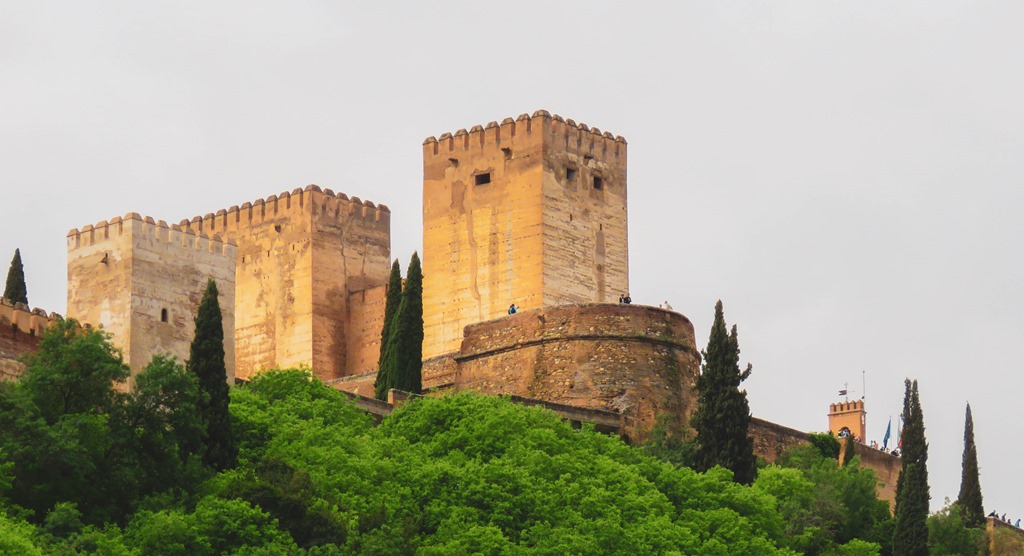
The Alhambra was the great citadel of the ruling Moors and within its walls were several spectacular palaces, now regarded as the greatest achievement of Islamic architecture in Europe, and perhaps the greatest anywhere in the Arab world. It was not always so highly esteemed. After the defeat of the Moors by the forces of Ferdinand and Isabella, the Alhambra was largely left to decay. It suffered significant damage at the hands of Napoleon’s forces, as well as more damage in an 1821 earthquake. It was the American author Washington Irving, best known for Rip van Winkle, who is responsible for a new appreciation of this building. His collection of stories, Tales from the Alhambra, based partly on history and folktales, was an international sensation.

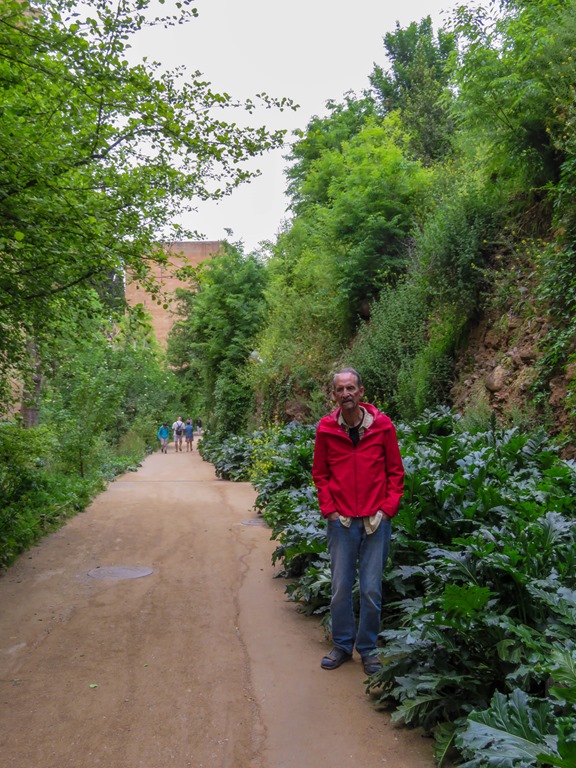
But, as I said, we did not have a chance to see the interior of this fabled complex. But following our guide’s advice, we followed the path along its walls. We entered through a series of arches.

IMG_8880

There were wild-looking but actually well-tended gardens along the way.

IMG_8896

The acanthus plentiful, but not variegated like mine.

IMG_8886

From the path, we could see the many towers

IMG_8892

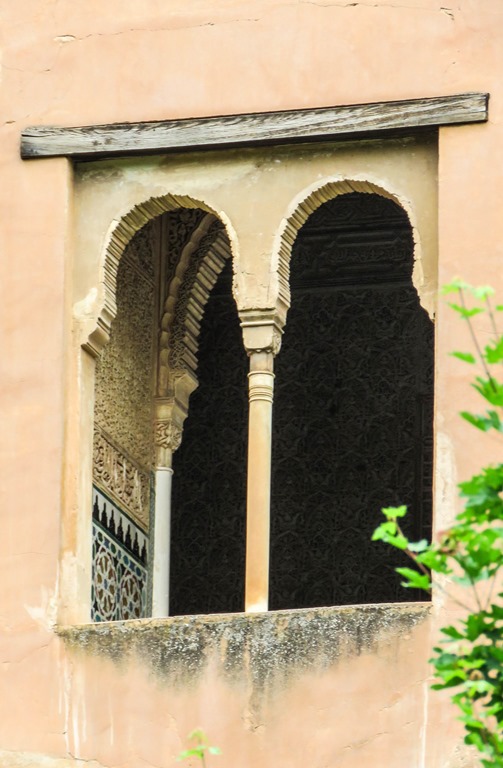
and get an occasional glimpse of the wonders inside.

IMG_8891

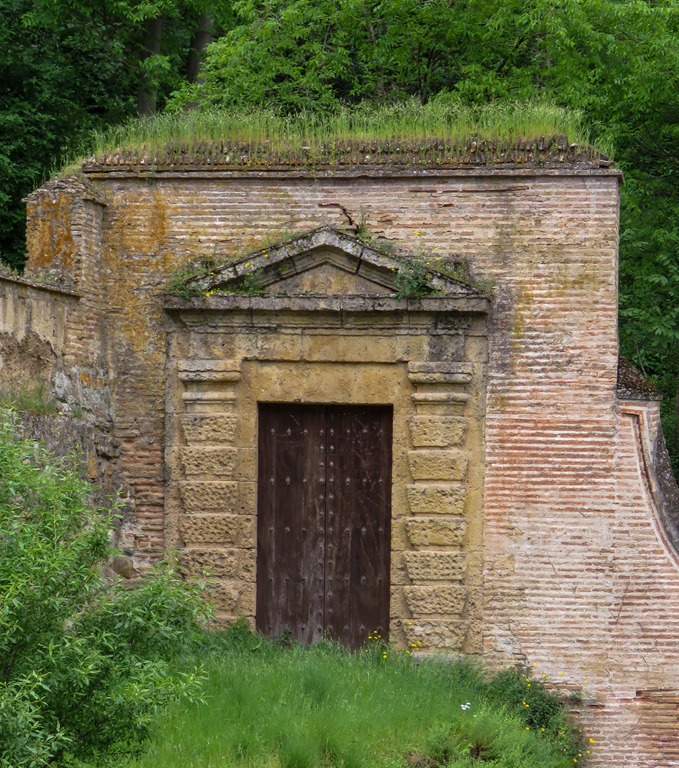
I decided that the great landscape architects like Capability Brown were right to see the importance of ruins in a garden.

IMG_8905

Perhaps I should build some in my backyard!

It was far too bumpy to use the wheelchair, so John had to walk. And he did extremely well.

IMG_8902

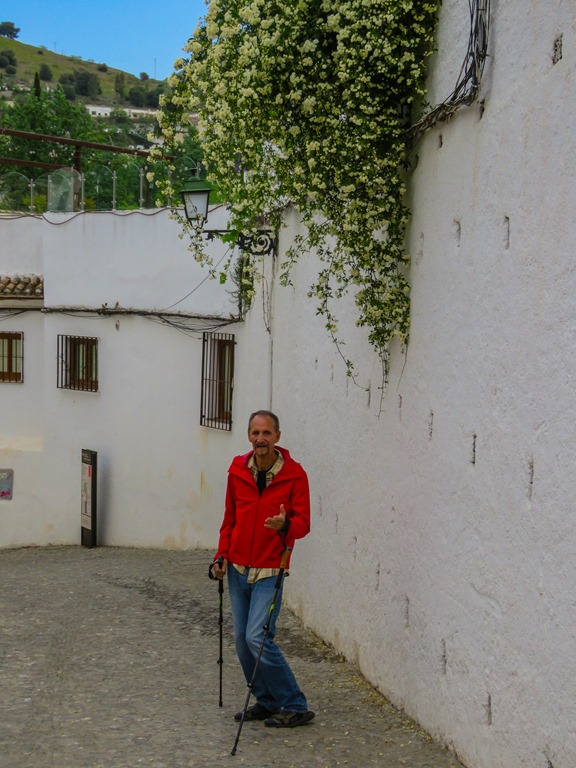
As we reach the end of the path, the gardens gave way to the whitewashed walls of the old city.

IMG_8910

Once we reached the end, we were on a narrow city street. We had to contend with the occasional taxi as we walked along. There was a parklike area with outdoor tables and stalls selling handicrafts. John suggested we stop and have lunch. It was a great idea, maybe the most magical meal of the trip. As we sat there, we looked up at the Alhambra towering above us.

IMG_8915

We had a tapas plate for two, an ample meal for only 28 euro.

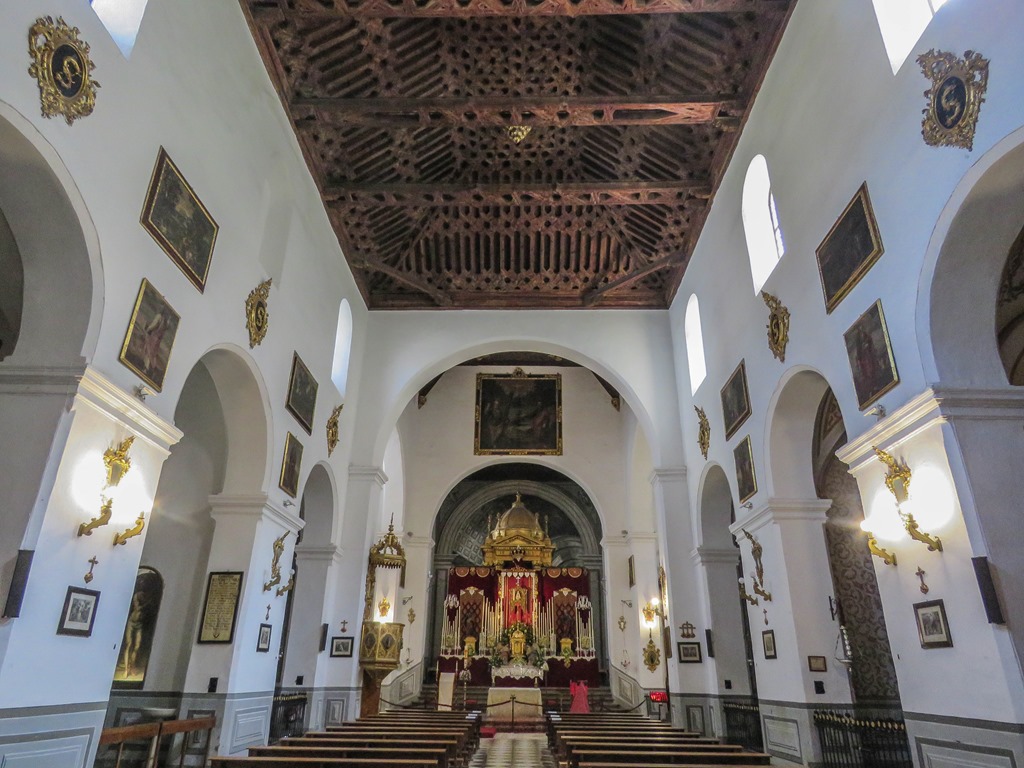
After lunch, we continued on to the town center. Along the way we stopped at a church.

IMG_8919

Looking up at the intricate wood carving on the ceiling, I figured out that at one time this had probably been a mosque.

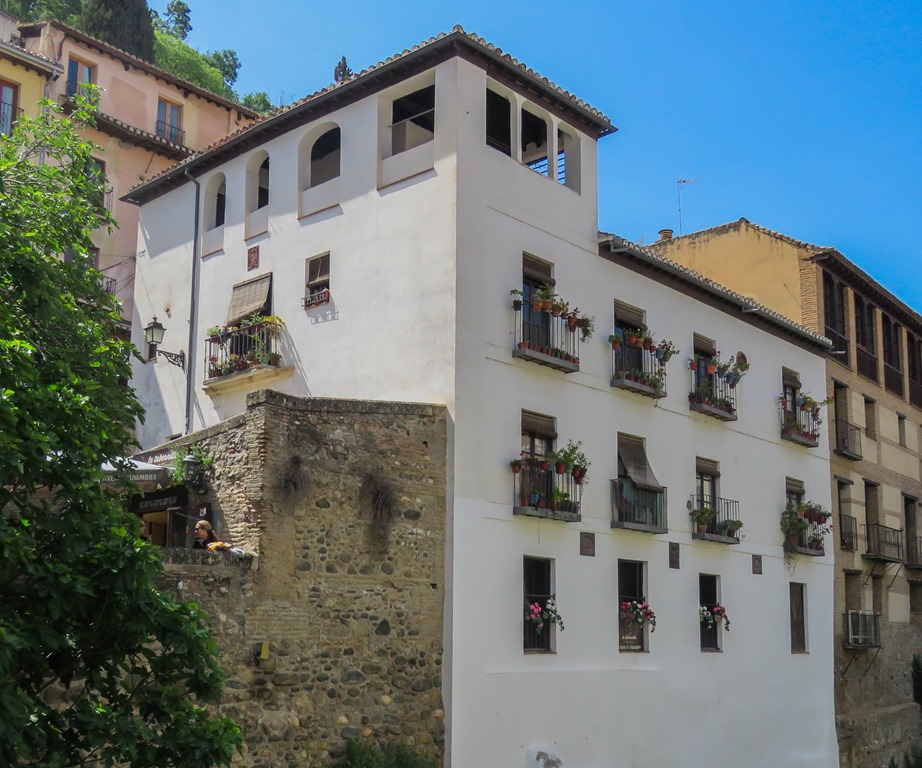
We also spotted a hotel that looked like it would be a great place to stay in Grenada.

IMG_8924

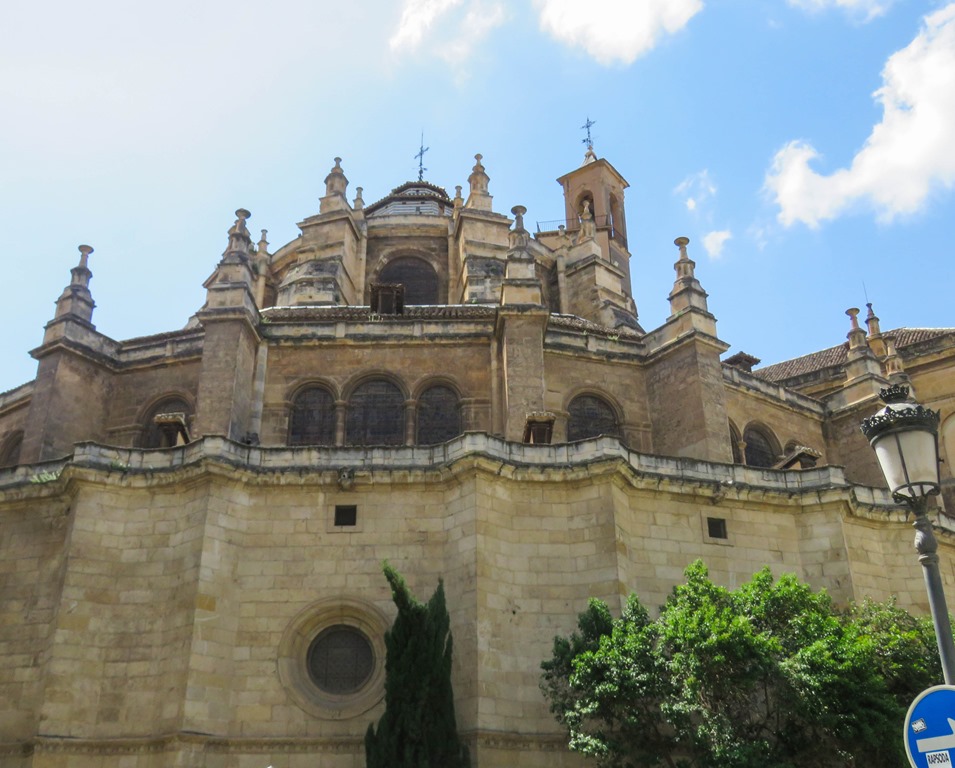
By the time we reached the cathedral, another converted mosque, we had run out of time and could only look at it from the outside.

IMG_8925

We rushed around trying to find a cab, and in doing so lost one of John’s trekking poles. Fortunately, Amazon delivers worldwide, though the shipping was extra and the VAT was painful. The new ones will be waiting for us at our hotel in Rome.

I would definitely like to come back to Grenada. This time I will plan in advance and make sure we have plenty of really see the Alhambra.

Cádiz

This morning, after yet another time change, we sailed in Cádiz harbor, the very same harbor from which Columbus sailed.  I was feeling rather excited to really see Cádiz. I had seen this city briefly once before. In the summer of 1989, John and I studied Spanish for three weeks in Seville. All teachers in LA were supposed to become bilingual, and studying Spanish in Spain seemed a lot more interesting than doing it at Long Beach State. Our homestay situation was just miserable, so we tried to escape Seville on the weekends. On one of those escapes were went to the Algarve in Portugal, and we drove through Cádiz on the way. I remembered a bridge and a tower.

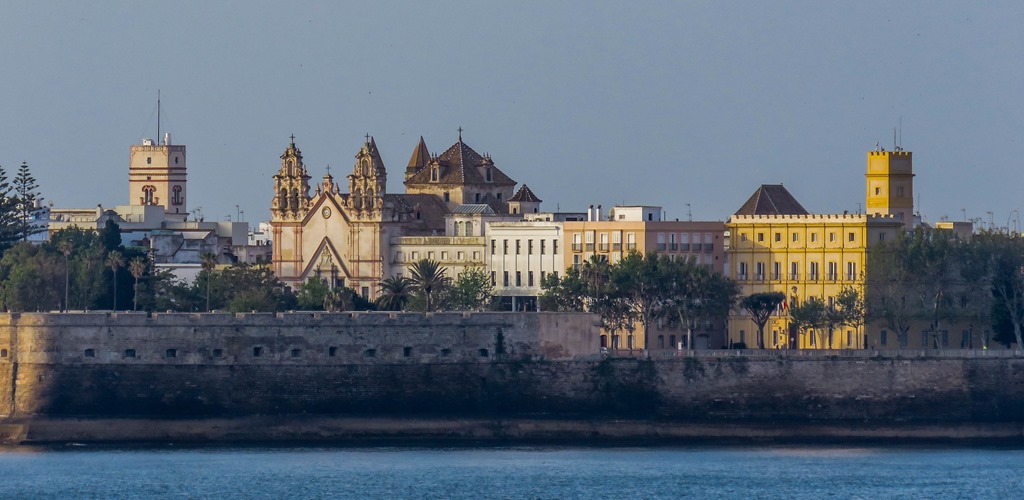
As we sailed in, I could see the remnants of the ancient city walls.

IMG_8838

I could also see the Andalusian roofs and spires that had made Byron fall in love with this city 200 years ago.

IMG_8849

I also saw some less lovely modern architecture. This telecommunications tower is not quite as bad as the Postal Tower in London, but it’s close.

IMG_8848

The glorious eighteenth century Catedral Nueva floats over the old city.

IMG_8851

As we pulled close to the dock so did a fire boat. I didn’t know if it was a salute or whether I should be a little nervous.

IMG_8846

John and I had bought tickets in advance for the hop-on, hop-off bus. But so had a lot of other people, and the line to get on the first one that pulled up was over a block long. So I pushed John to the Plaza San Juan de Dios, which was the starting point for a walking tour in one of my guidebooks.

The plaza was a pleasant open area. There were a number of stalls selling local handicrafts.

IMG_8853

We bought a couple things for the grandnephew’s birthday next month. We continued on to the cathedral, but the lines to get in were pretty long and it did not look accessible for a wheelchair. So John just said, “Maybe we can do it later.” I was a little disappointed, but I understood.

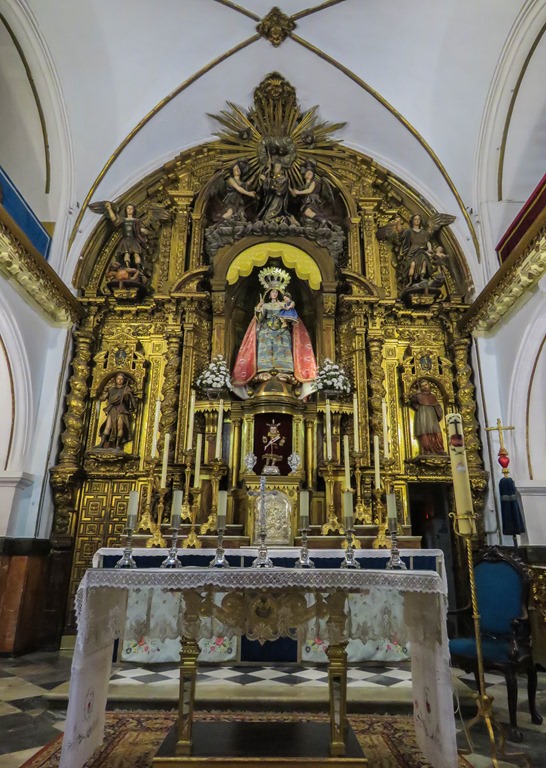
The Jesuit church of Saint James the Apostle was just across the plaza, so we went in there instead. There was the usual two-story baroque reredos behind the high altar.

IMG_8855

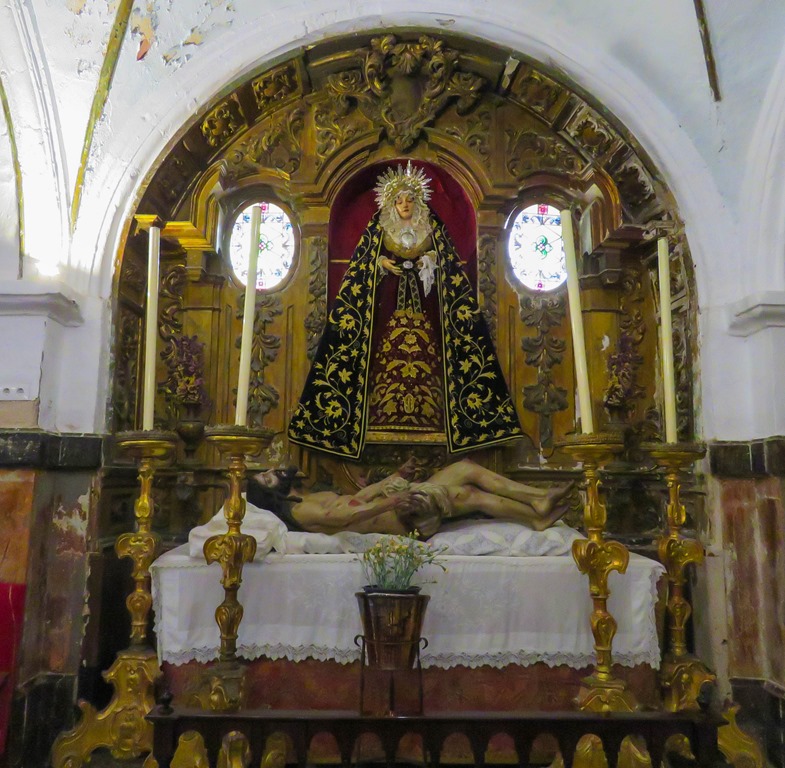
In one of the side aisles, there was a particularly gruesome depiction of the Virgin of Sorrows.

IMG_8856

Most intriguing were the grilled galleries. These were built to allow some people to attend Mass without being seen by the people below.

IMG_8859

Is that a carved crown? Was this for visiting members of the Royal family? Was this some kind of chapel royal after the suppression of the Jesuit order? I had lots of questions, but there was nobody there to answer them.

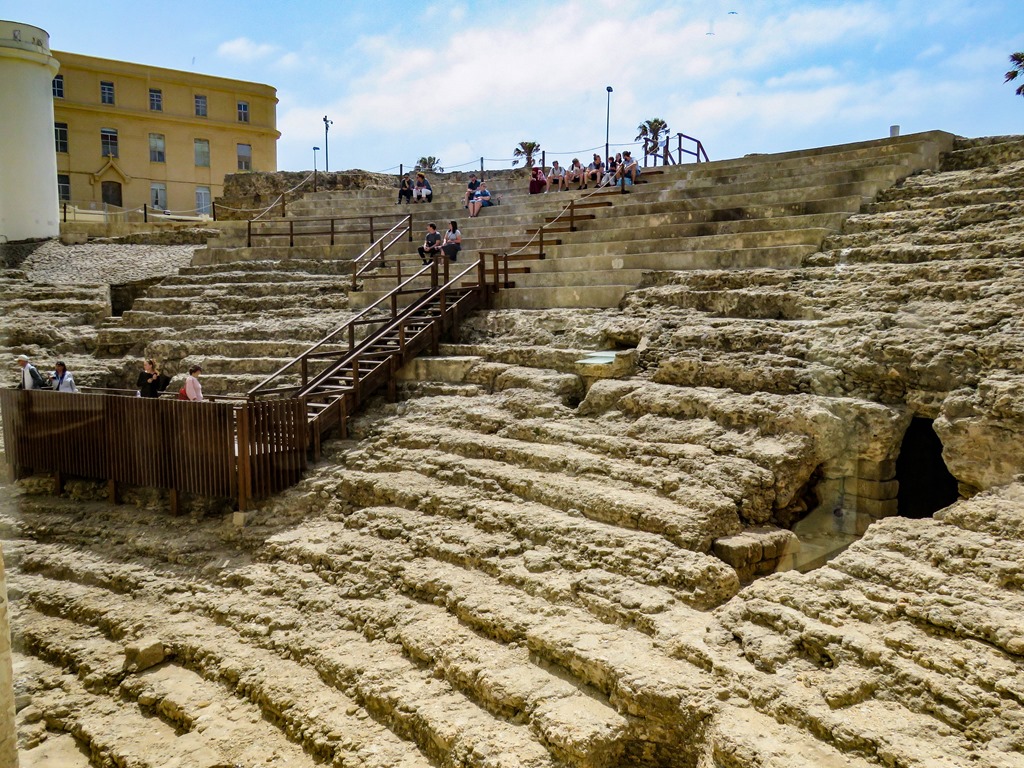
Continuing on we saw a site which appeared to be an archeological dig. There were what I recognized as Phoenician letters displayed. Cádiz is the oldest settlement in Western Europe. The Phoenicians settled it around 1100 BCE. The Romans later conquered it and made it one of their most important settlement in the Iberian peninsula. The remains of a Roman theater have also be excavated.

IMG_8863

There was a really excellent museum attached to these ruins, and I learned a surprising number of new things about Roman theater.

From there, we walked down lovely little narrow streets. There were shops and cafes on the ground floor, and apartments above.

IMG_8867

I see why so many urban planners in America want to reproduce this pattern, but it seldom works. What is romantic in Cádiz is sterile in Redding.

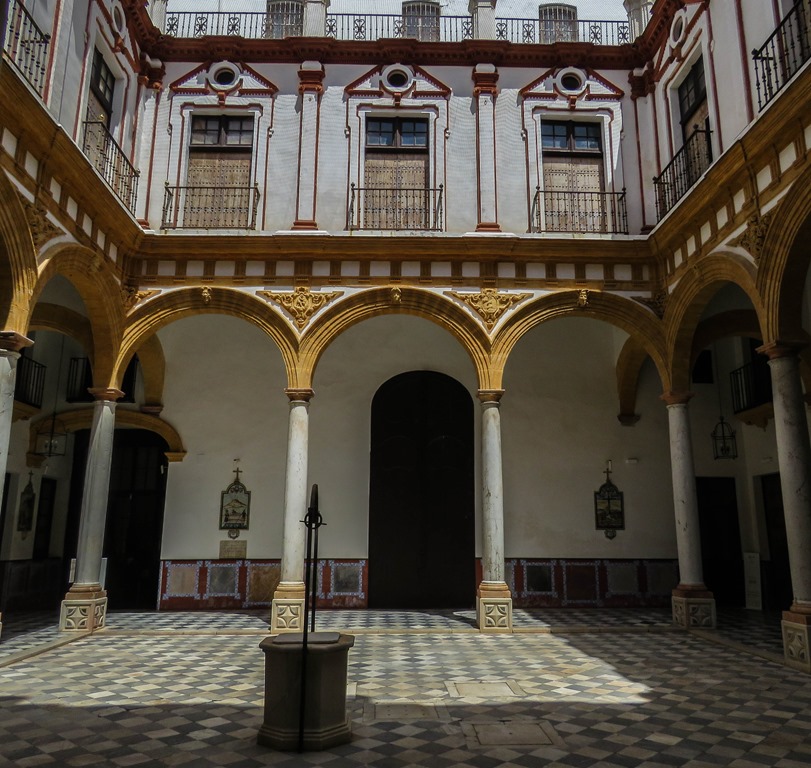
We pushed on to the Hospital for Women. This looked so unappealing on the exterior that we almost skipped it. Fortunately, we did not. It is a lovely piece of eighteenth century architecture with a beautiful open courtyard.

IMG_8872

All the hospital rooms opened up on this courtyard, and there was probably a cistern and a garden where the tiled floor is now.

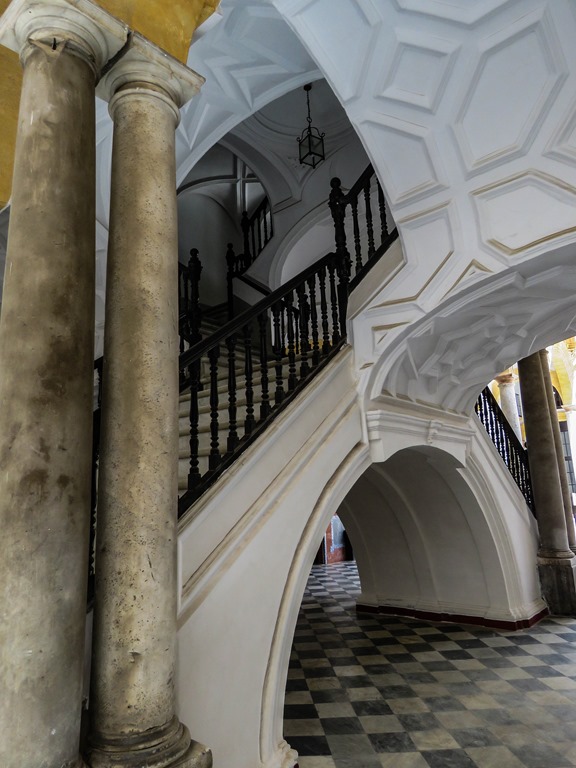
An elegant staircase leads to the upper floors.

IMG_8871

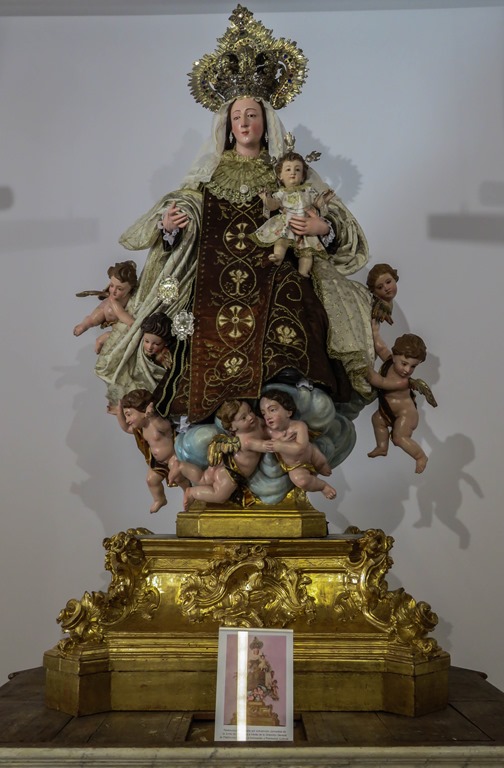
The chapel was exquisite. There is a beautifully restored image of the Virgin of Carmel.
IMG_8870

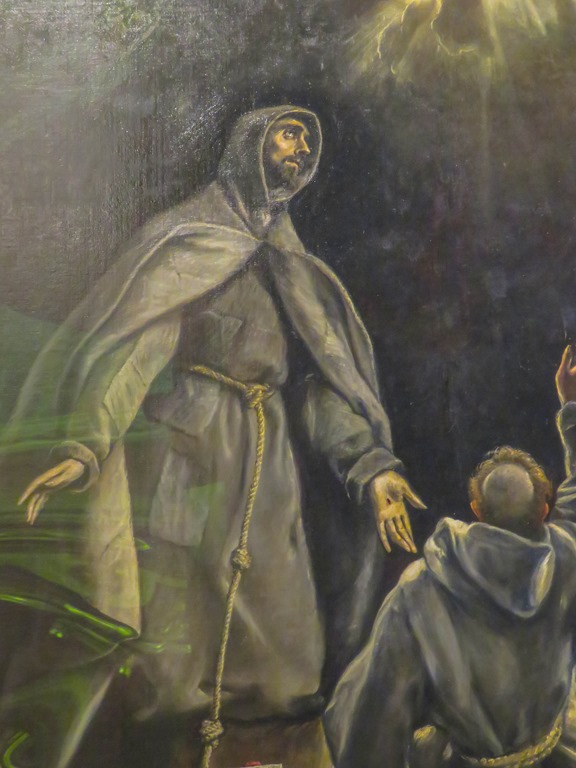
But the real treasure is El Greco’s Eustasy of Saint Francis above one of the side altars in the rear of the chapel.

IMG_8874

By this time John was getting pretty tired and he wanted to go back to the ship. We were not far from the Escape, so that was pretty easy to do. We thought we might rest a little bit and then go out again. But he was so tired that he napped for close to two hours. We never did use those bus tickets.

Tomorrow, off to Grenada.

Lisbon by Tuk Tuk

The Atlantic Ocean is behind us, and we are now sailing along the Iberian peninsula, soon to be in the Mediterranean Sea. And our first stop today was in Lisbon.

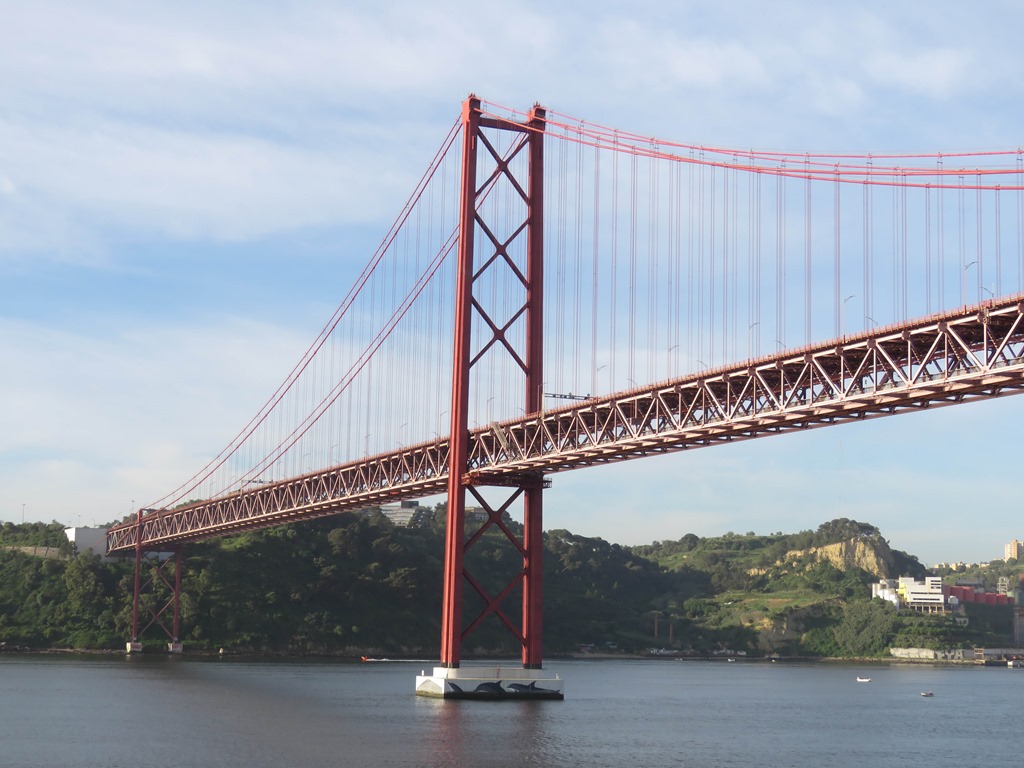
It was a little before eight this morning as we sailed into Portugal’s capital city. We sailed underneath a bridge that reminded us both of one we had seen in California

IMG_8793

and we also passed a statue of Christ that look a lot like one we had seen in Brazil.
IMG_8794

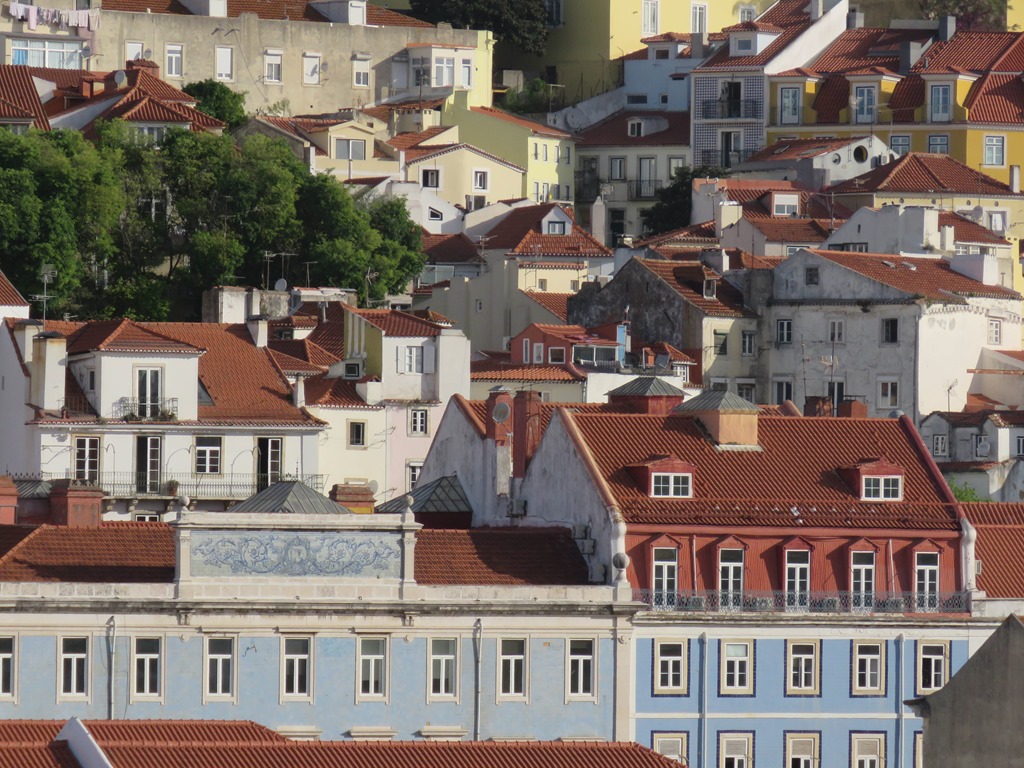
We docked right in the downtown area. From our stateroom balcony we could see the old city
IMG_8796

and some famous buildings.

IMG_8795

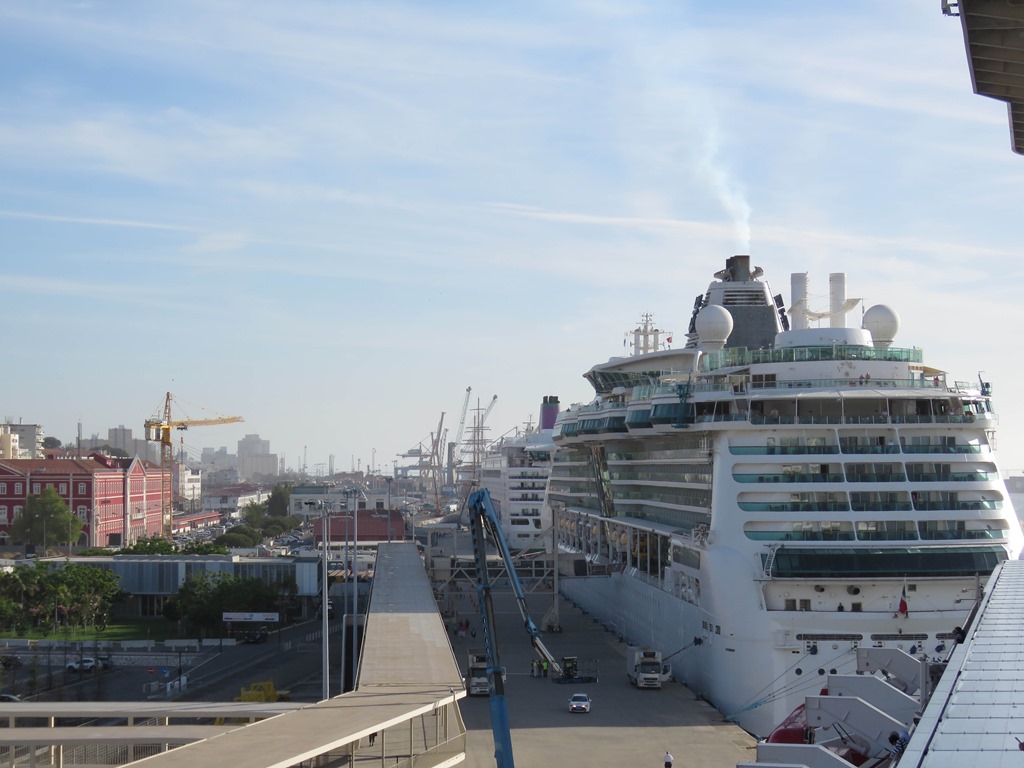
I could also see that we did not have this town to ourselves. There were two other ships, apparently just as mammoth as this one, lined up behind us on the quay.

IMG_8797

We will be coming back to Lisbon later this month after our cruise is over. This whole adventure started when John talked about how much he really wanted to see Portugal. And when we return we will rent a car and drive all over the country. I asked John what he wanted to do for this short initial visit. He said that just wanted some kind of overview of the town. So I search around on the Internet and decided that a tuk tuk tour would be just the thing.

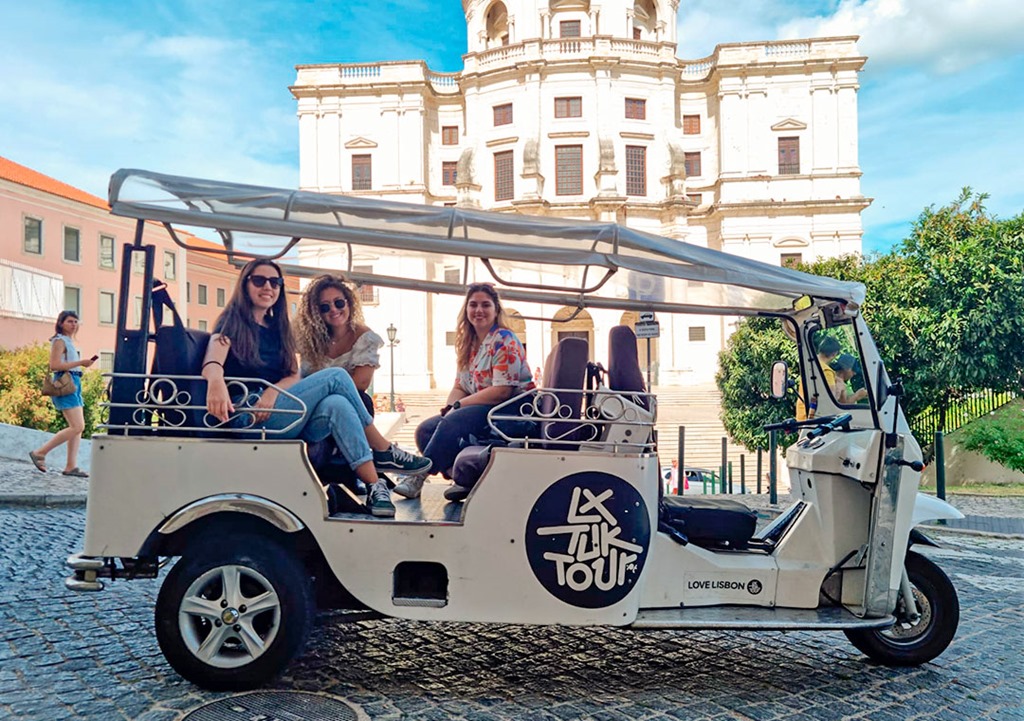
Tuk tuk is a Sinhalese term for a auto rickshaw, that is, a rickshaw not pulled by a runner or a cyclist but by a gas or electric motor. How the Sri Lankan term became nearly universal throughout the world is a little unclear to me, but everybody calls them tuk tuks. And they are almost as ubiquitous in Lisbon as they are in Bali. I somehow never took a good picture of our tuk tuk, so here is a stock photo of one.

Dw4OKASo0ptuk-lisboa-cris

Notice that it has three wheels, not four, and that it can seat up to 6 people, though four is much more comfortable.

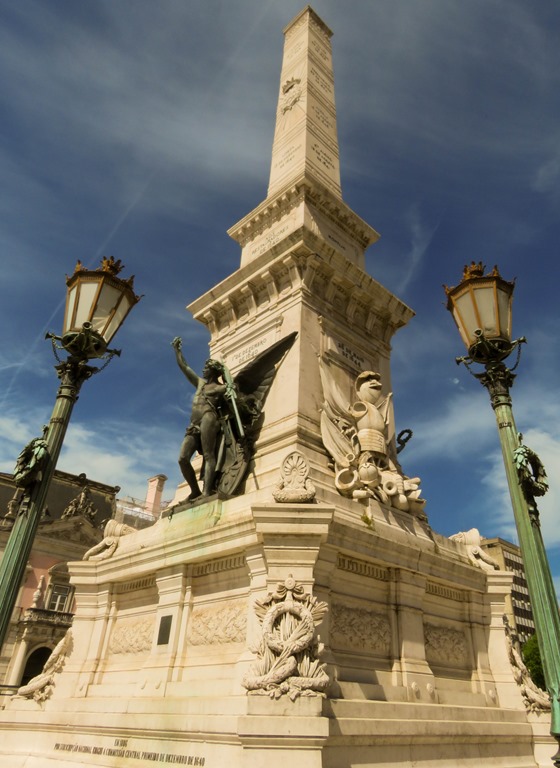
We took an Uber from the cruise port to Avenida da Liberdade, the grand boulevard of Lisbon. We arrived a little early, so we walked around. There are many beautiful art nouveau and art deco buildings on this famous street, but I did not have much luck taking photographs of them. The best of my efforts was this 1879 memorial. I think it celebrated the expulsion of the Moors.

IMG_8802

At noon, we met with with Francisco, our driver. He was personable, helpful, and spoke superb English. He took wonderful care of John.

IMG_8804

We cruised down Avenida da Liberdade, and up to King Edward VII Park at its far end. This is named for the British monarch. The English and the Portuguese have a long history of amicable relations, probably based on a common hatred of the Spanish. It looks nice, but it is clearly not intended as place for picnics or football games.

IMG_8807

There is a starkly ugly modern fountain at the far end of it. It would not be attractive even if the water was running, but with the water off it looked even more hideous.

IMG_8805

The fountain was erected to celebrate the end of the military dictatorship in April, 1974. I fail to see how this conveys any joy or love of freedom.

We went on through Bairro Alto, the “upper town.” This neighborhood was for decades considered kind of the Rive Gauche of Lisbon, the bohemian district of bars and brothels, artists and intellectuals. It is now probably some of the priciest real estate in Lisbon.

IMG_8820

You can also see classic Portuguese love of tile on many of  the buildings here.

IMG_8816

We stopped at the Miradouro de Sao Pedro de Alcântara. This is a small park with a magnificent view of the Liberdade neighborhood and the Bairro Baixa, the “lower town.”

There is a lovely fountain in the middle, though it too seemed to be having some mechanical issues.

IMG_8809

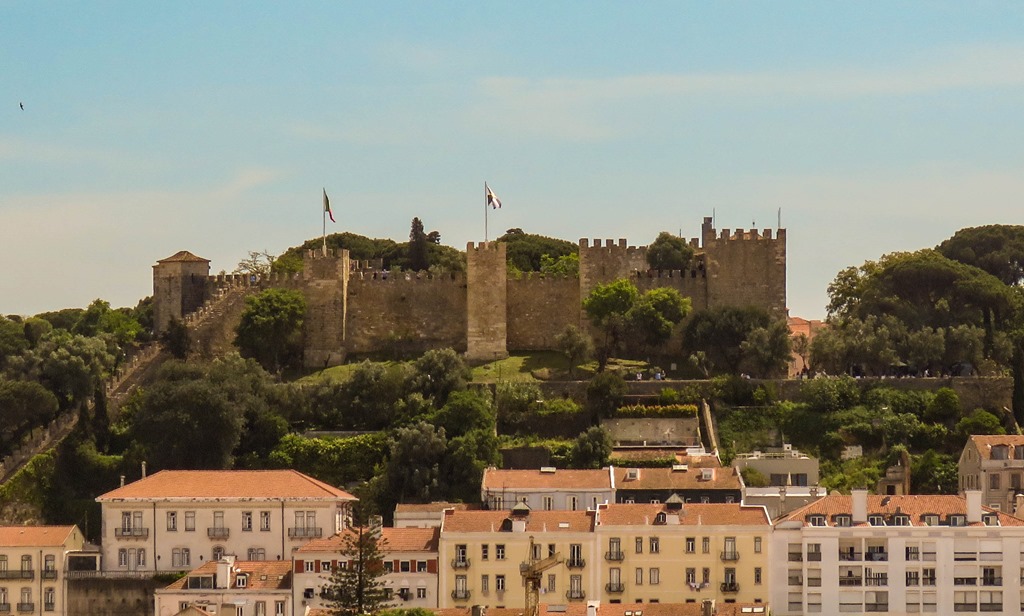
From here you can also see some of most famous sights of Lisbon including Castelo de São Jorge, Saint George’s Castle on the hill high above the rest of the city.

IMG_8811

Lisbon’s ancient cathedral is also partly visible from here.

IMG_8813

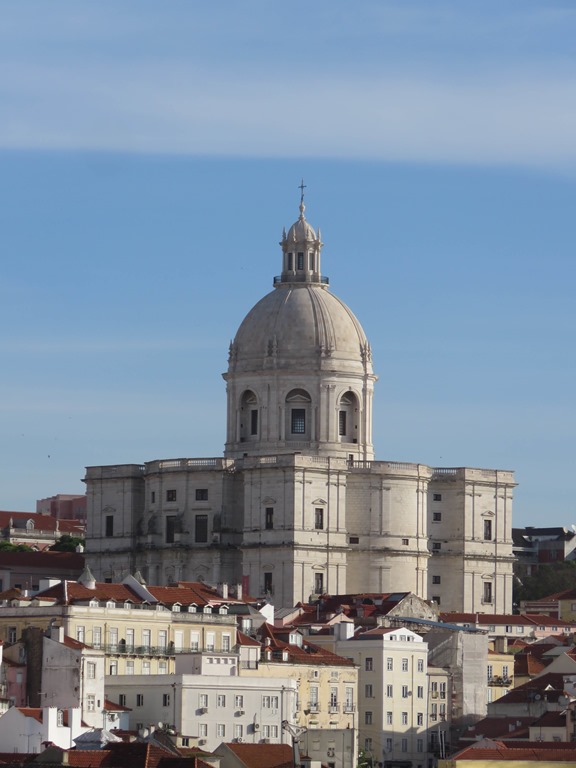
The cathedral was one of only a handful of buildings to survive the 1755 earthquake that destroyed most of the city on Easter Sunday morning. It’s a building I definitely plan to visit when we return.

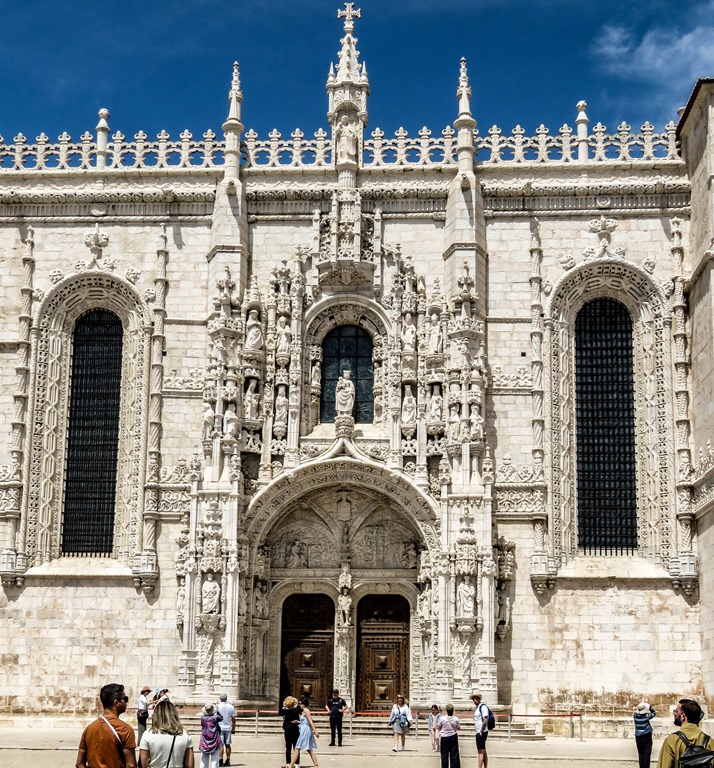
Our final stop was in Belém. This area was the summer home of the Portuguese monarchs. The former royal palace is now the residence of the president of the republic. That building is impressive, but it is not the main reason people visit here. The real draw is the Jeronimos Monastery.

IMG_8824

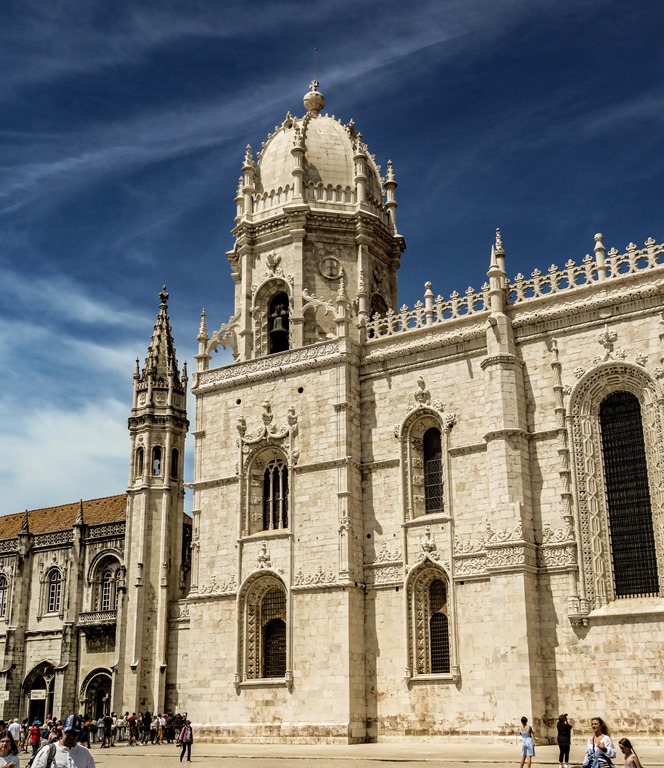
King Manuel I built it in 1502 on the site of a hermitage founded by Prince Henry the Navigator, where Vasco da Gama and his crew spent their last night in Portugal in prayer before leaving for India. It was built to commemorate Vasco Da Gama’s voyage and to give thanks to the Virgin Mary for its success. The building is the finest example of late Gothic architecture in Portugal, a distinctive highly decorated style called Manueline.

IMG_8825

Another famous building in the neighborhood is the Belém Tower. This was placed at the mouth of the Tagus River to repel invaders attacking Lisbon.

IMG_8834

All these grand building are worth visiting, but the lines were excruciatingly long and we only had three hours with our tuk tuk driver. So instead we went to a bakery and sampled some of Portugal’s famous pastries.

After about two and a half hours, John was exhausted. We were supposed to go up by the castle, but he just asked to be taken back to the ship. We passed a new monument on our way there.

IMG_8835

It was erected as part of some kind of World’s Fair in the 1950s. Famous Portuguese sailors like Vasco da Gama are carved on the side.

We sail out of Portugal tonight and tomorrow morning we will be in Spain.