War and Peace and Driving

This was a pretty exhausting day of tourism. We had some great moments, but there was more time in the car than we planned on, and for quite a bit of it we were not sure if we were even going in the right direction. We never did get lost, but endless French roundabouts loaded with signs for every destination possible, and toll roads where you have no idea how much you need to pay until you arrive at the agent’s window made driving exhausting.

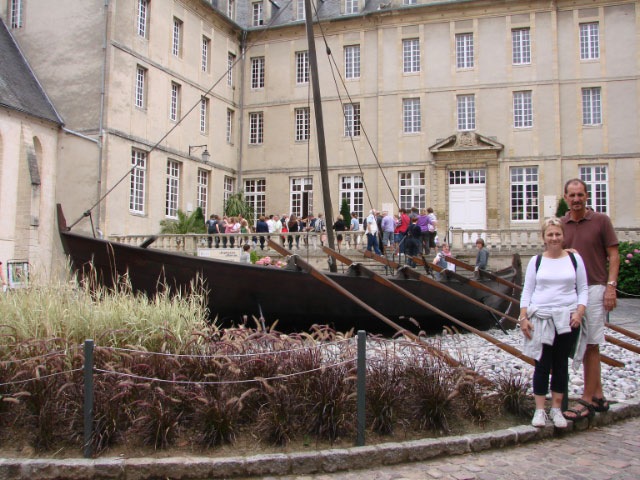
Our first stop, after about an hour on the road, was the small city of Bayeux. The main attraction here is the famous tapestry which depicts the conquest of England by William of Normandy. It one of the oldest depictions of life and warfare in the early middle ages, and, though done with relatively primitive materials, has some astonishingly great artistic touches. There is no photography of any kind anywhere around the tapestry, so you will have to Google some images later. This is John and Vicki standing outside the building where it is housed with a replica of one of William’s ships behind them.
DSC06205_0527

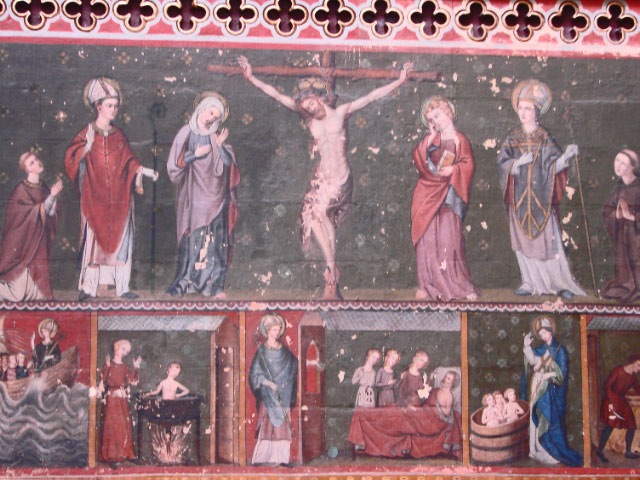
The other major tourist sight in the city is the Cathedral. Michelin describes it as a “harmonious blend of Romanesque and Gothic” which is largely pretty accurate. There are also some less harmonious 18th and 19th century additions. But the best parts for me are some of the 15th century frescoes in some of the chapels like the one below. The photograph, taken in dim light, does not quite capture all the expressive details of the faces.
DSC06212_0534

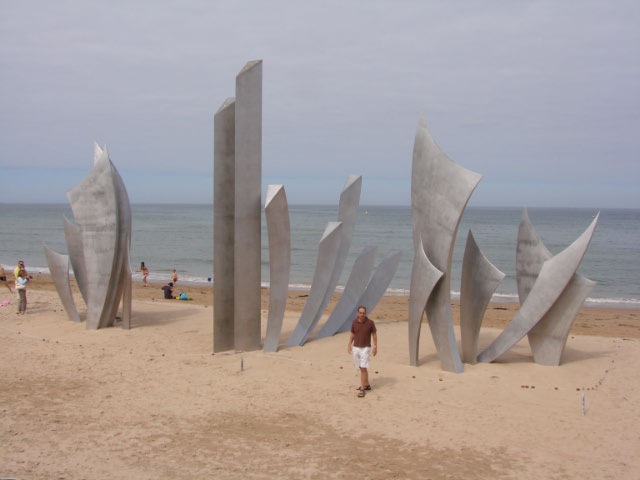
From Bayeux we continued north to Omaha Beach. There are a number of monuments to the landing. This is one of the newest and largest called “Les Braves”.
DSC06219_0540

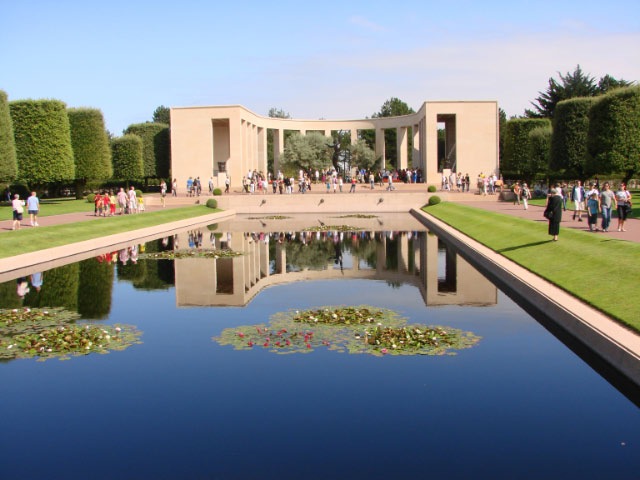
Just a little to the east of this sculpture, about a mile or so, is the American Cemetery. For some reason, this place was absolutely packed with people when we were there. We were afraid it was going to seem like Disneyland, but the solemnity of the place seemed to work despite all the people.

DSC06252_0571

DSC06250_0570

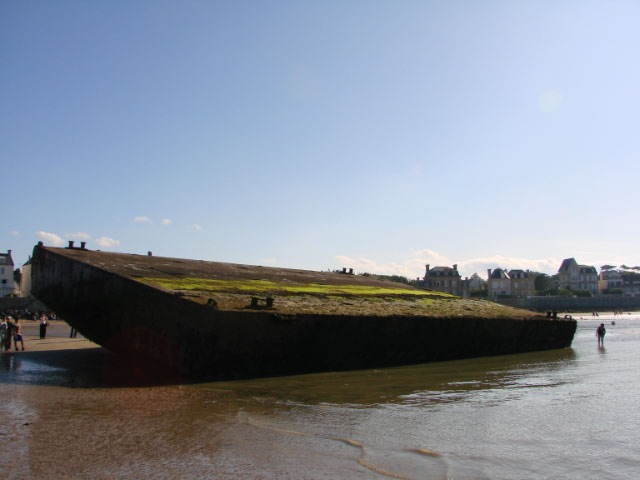
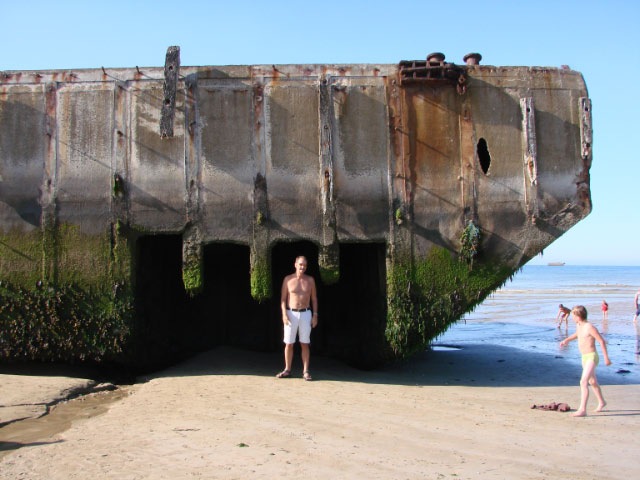
From there we continued on to Arromanches. Here you can still see the remnants of the artificial harbor created by the allies to bring war supplies from England to Normandy. The allied war commanders understood that a reliable supply chain was essential. So, once the coast had been secured, massive concrete breakwaters were hauled across the channel to protect from the bad weather. They then installed huge steel piers. These went out quite a distance as the Channel shore is quite shallow and has big tides.
DSC06287_0602

DSC06281_0598

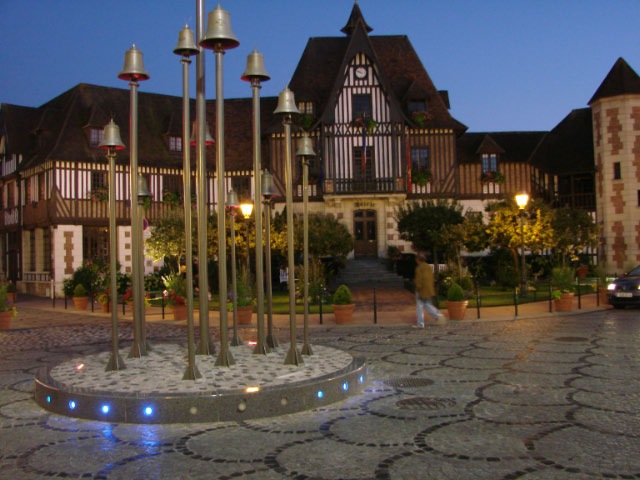
From Arromanches we went back to the motorway and went to Deauville for the evening. I do not really get the attraction of these famous Normandy seaside towns like Deauville or Le Touquet. I can understand why they were popular in the 19th century, but they seem over developed now with endless blocks of condominiums on the beach. Once you are off the boardwalk, you scarely have any sense of being at the shore. Still, with their casinos and expensive shops, they remain popular summer destinations for the French.

Here is the Marie – town hall – at dusk.
DSC06308_0623

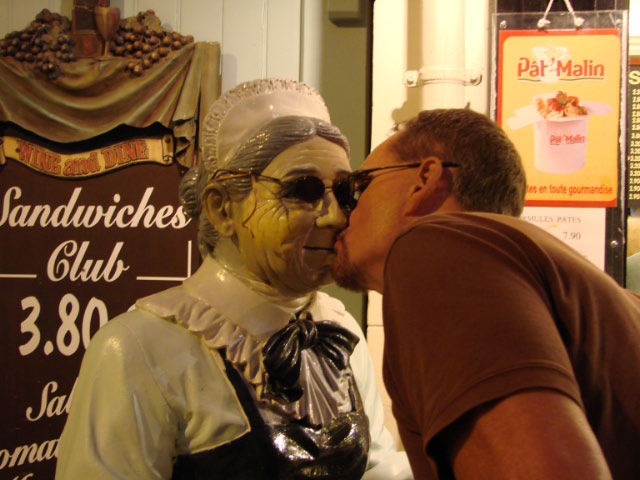
I noticed a statue outside a confectioners shop which looked a lot like Jonathan Winters dressed up as granny. John dared me to give her a kiss while I took a picture. I was too embarrassed, but, as you know, John is never shy.
DSC06309_0624

Not sure what adventures tomorrow holds. The weather has been better than the Cotswolds, but still cool and cloudy.
Modern to Medieval

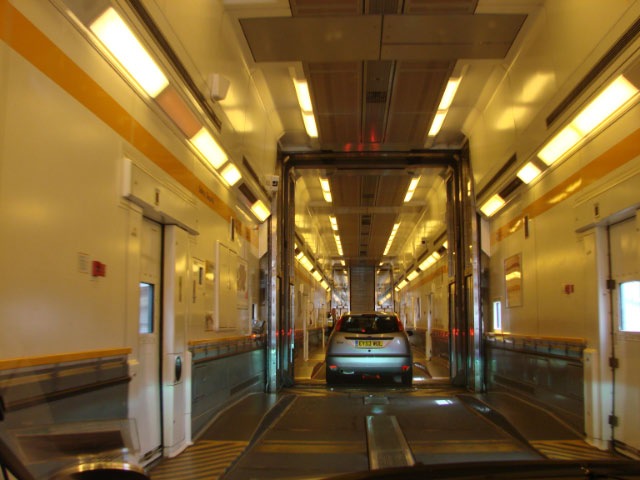
Monday we drove to Dover to catch the Euro Tunnel train. There are two ways to take the “Chunnel”. You can catch the train as a passenger in London and arrive in Paris about two and a half hours later. Or you can drive your car to near Dover, have it loaded on a special car train, and then be taken off just a few kilometers south of Calais. We did the latter. Vicki is traveling with us this week, and she did the driving. This is the view from inside the car train.

DSC06164_0484

It only takes about 20 minutes and suddenly you’re in France. The stations on either side of the Channel are not attractive. They look like a combination of a high-security prison and an electrical power substation.

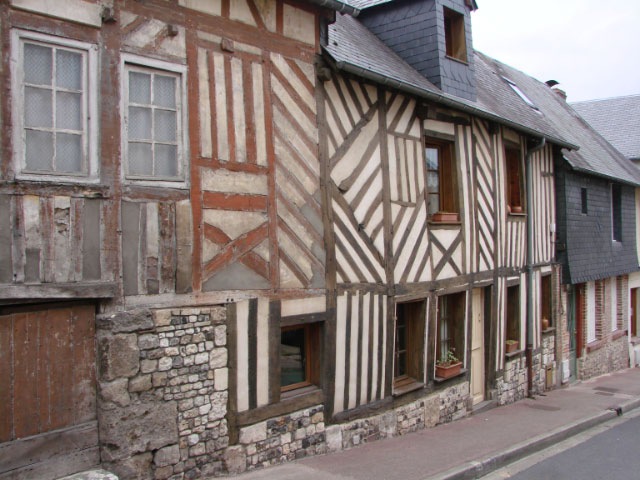
But once you are in France, the countryside seems more open than in England. The farms and much larger, and suddenly you can see for miles in any direction. We drove on the wonderful French highways for a couple hours until we arrived at our destination, Honfleur. Here is shot from the street where we are staying here. You can see some typically Norman features:  half-timbered houses and the use of slate shingles on the sides of houses as well as the roofs.

DSC06172_0492

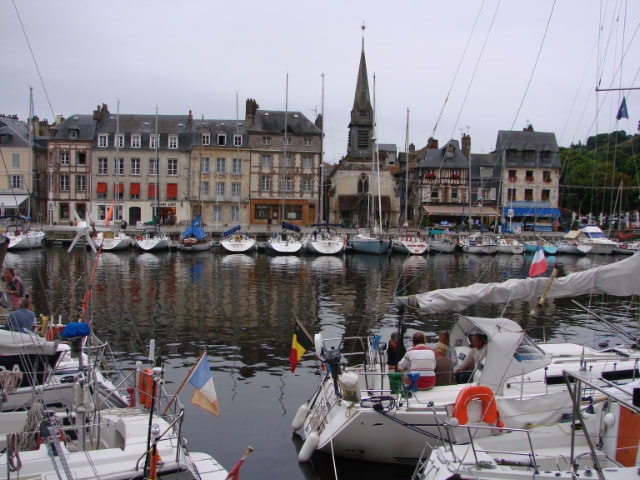
Our house is pretty plain, but for 80 euro a night, who  can complain? I’ll send some pictures of it later. The town center of Honfleur is incredibly cute. Below is a view of the boats in the Vieux Bassin, the old port.

DSC06194_0514

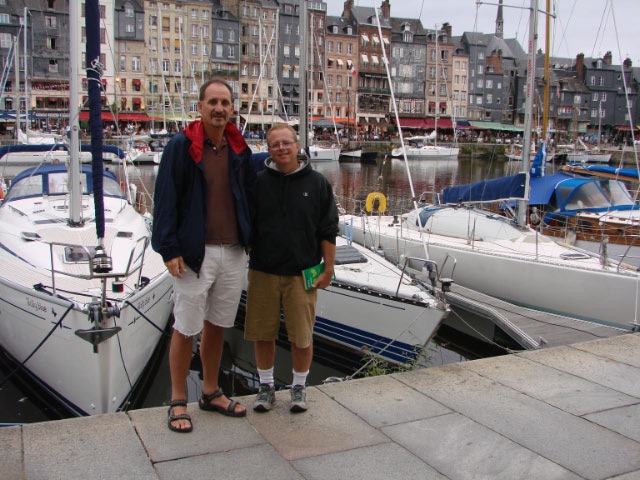
And here is John and I on the other side of the Vieux Bassin with the Quai Ste-Catherine in the background.

 DSC06179_0499

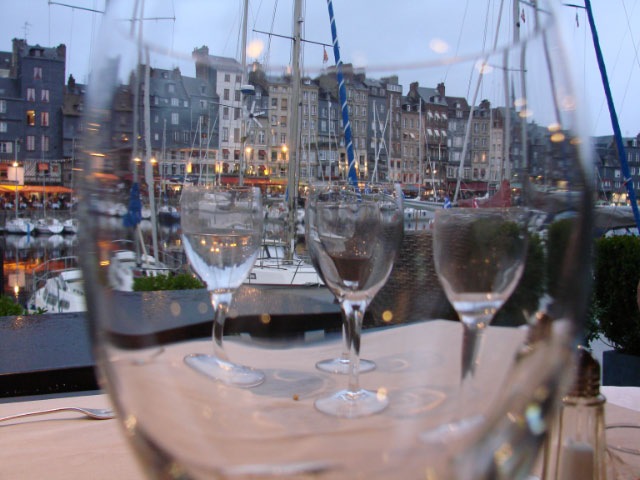
We had a pricey but absolutely outstanding meal that evening at a restaurant there. Vicki took this picture of several water and wine glasses through another wine glass. The service at provincial French restaurants is not fast. They assume you are making an evening of your meal and that you plan to spend the entire night there talking. So our meal took well over two hours.

DSC06201_0521

More on our Normandy adventures soon.

A Day of Rest (sort of)

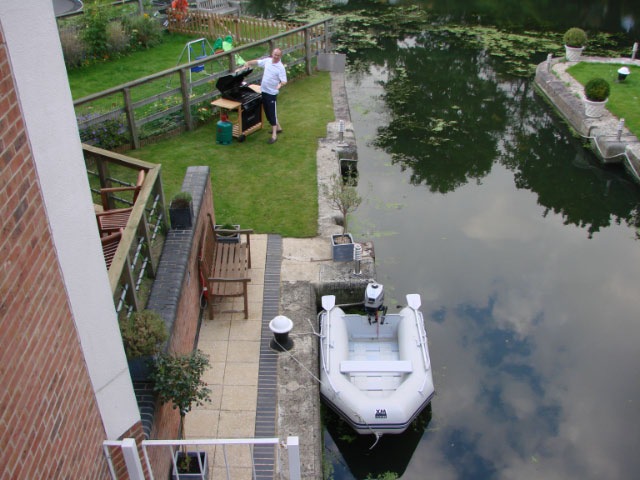
After three plays in one day and a late night, we were lethargic tourists on Sunday. We didn’t get up until late. Jerry and Vicki had celebrated their anniversary on Saturday, and unfortunately the seafood Jerry ate did not agree with him. So nobody felt like having big adventures. But little ones were possible. Jerry pulled the boat our fro m its storage place and suggested that John and I have a turn around the canal. Here’s a picture taken later in the afternoon when Jerry was cooking dinner of the boat and the dock.
DSC06153_0476
Jerry and Vicki’s house is located on the Grand Union Canal. For the English, this was their equivalent to the Erie Canal. It linked Birmingham to the Thames and from there to the sea. It was a crucial part of the Industrial Revolution, but the railroad and then the motorways made it economically irrelevant. For most of the 20th centuries these canals were open industrial sewers. They are slowly being reclaimed for recreation, nature preserves, and for housing. Their house is a part of a development called “The Island” which cleaned up the site of a former dry dock and replaced it with a combination of townhouses and apartments. It is way, way nicer than most of the neighborhood – Brentford, London is not exactly Brentwood, Los Angeles.
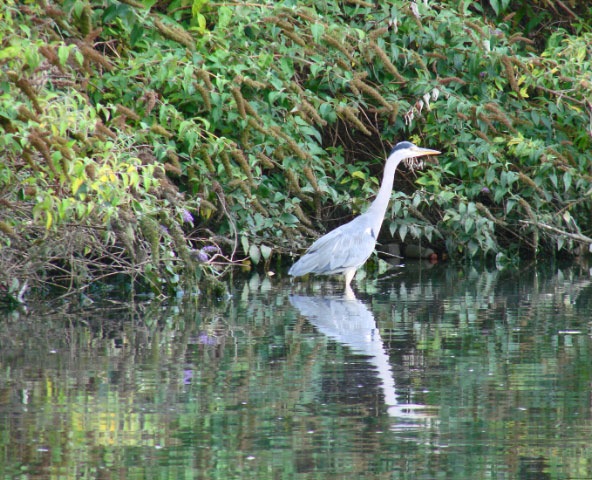
The natural environment is a lot cleaner than it was, though there is still a lot of old garbage in the waterway. I would hardly want to swim in the water. Despite this, it is becoming home to a fairly large number of different types of waterfowl.
DSC06091_0414
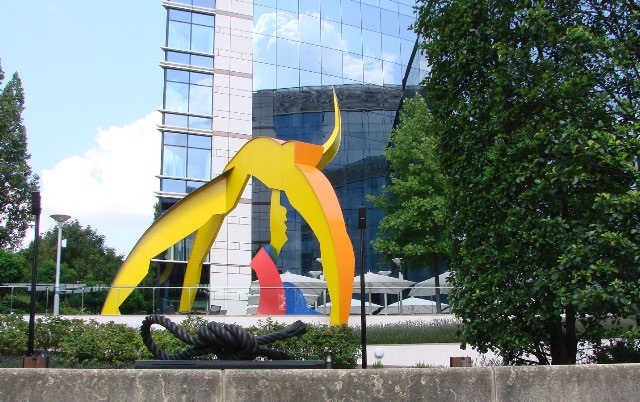
Where the canal crosses under the A4 (which turns into the M4, the main highway from central London to Heathrow), it is also prize real estate for expensive office buildings for large corporations like Glaxo-Smith-Kline. I am not sure which corporation owns this building. I assume the public art is Alexander Calder. I have no idea who did the knots. You can see ones of them in the foreground.
DSC06082_0405
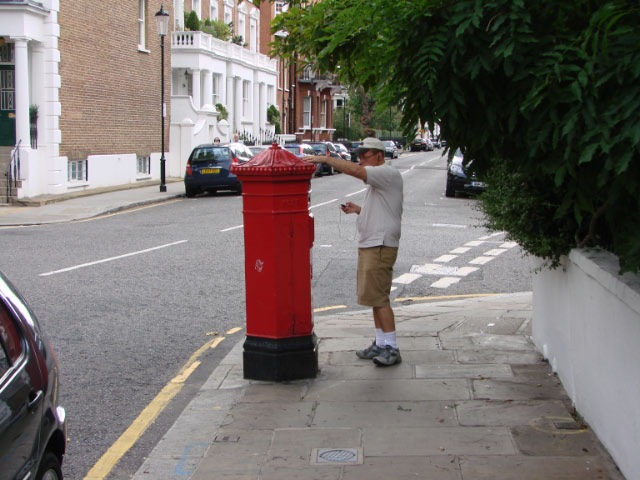
John decided that he wanted to try driving into London. There is no congestion charge on Sunday, and there is some amount of free parking available as long as you are nowhere close to Leicester Square or Covent Garden. We had not done the audio walking tour of Chelsea, so we drove towards Sloane Square and found a legal, free spot just off King’s Road. This audio tour – one of the “Londonwalks” available on Audible – was not a revealing as some of the other ones, but we have spent some time in this neighborhood before. Still I learned a few things. The Victorian postboxes below are beloved by everybody except the Royal Mail. The design has no flap on the letter slot and snails climb up them, enter the box, and eat mail. The government wants to rip them out and replace them with something snail-proof, but the Londoners love the design and protest whenever this is proposed.
DSC06123_0446
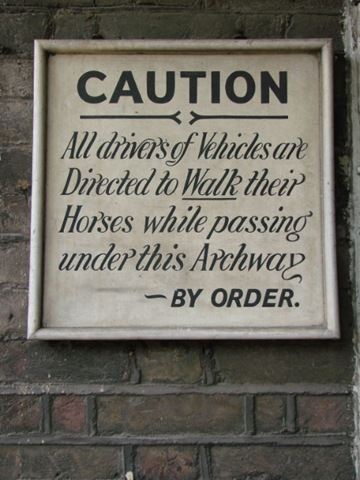
I found this sign in an archway on Cheney Mews. I did learn what a “mews” is. These little alleys were not always the most fashionable addresses in London. “Mew” comes from the Old French word for molting, and they were originally barns where hunting falcons were kept when they were molting and therefore useless for sport. As keeping birds of prey lost favor, these barns were turned into stables, and the upper floors became servants quarters. With the advent of the automobile, the ground floor stables became garages. The mews are the most fashionable places to live in London because they resemble suburban tract houses with an entire ground floor devoted to storing the automobile.
DSC06142_0465
On my walk I saw places where people like George Eliot, Dante Gabriel Rossetti, Laurence Stern, Henry James, Mick Jagger, and Keith Richards had lived. The tour took me down Paradise Alley and advised that whenever streets have wonderful names in England they were usually horrible slums at one point. Paradise Alley, behind the fashionable lane where Oscar Wilde and his wife lived, was an open sewer with people living on it in conditions of unbelievable filth. Wilde had a special screen built to hide the back neighbors from his view.

John went to his meeting while I poked a little while further around the neighborhood, then we drove back to Hounslow.

Tomorrow, we leave with Vicki for Honfleur.

A Most Tragical, Historical, Comical, & Pastoral Day

In the second act of Hamlet, Polonius divides the parts actors play into “tragedy, comedy, history, pastoral, pastoral-comical, historical-pastoral, tragical-historical, tragical-comical-historical-pastoral, scene individable, or poem unlimited“. We had a bit of all of those in our day in Stratford. Still, first let me assure you, gentle readers, that the “tragical” parts were all upon the stage.

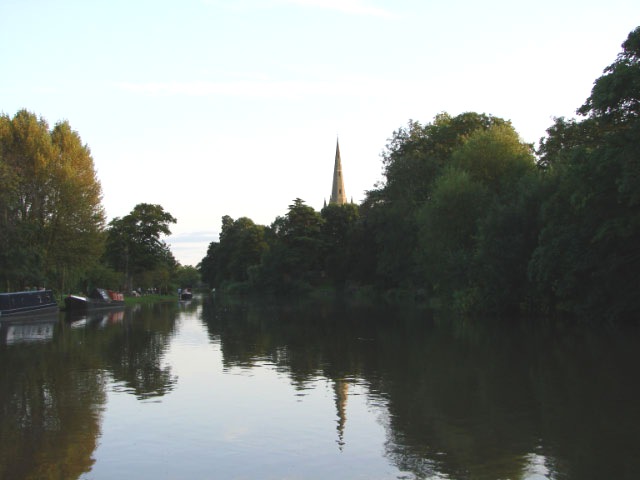
First, the pastoral. We went into Stratford for the first time Friday evening. It was pretty quiet, and we were even lucky enough to find a free parking space. In the “golden hour,” as director David Lean called it, just before sunset, the town seemed lovely. Here is the river Avon with the Most Holy Trinity Church’s spire in the background. Shakespeare is interred in that parish church.

DSC05996_0372

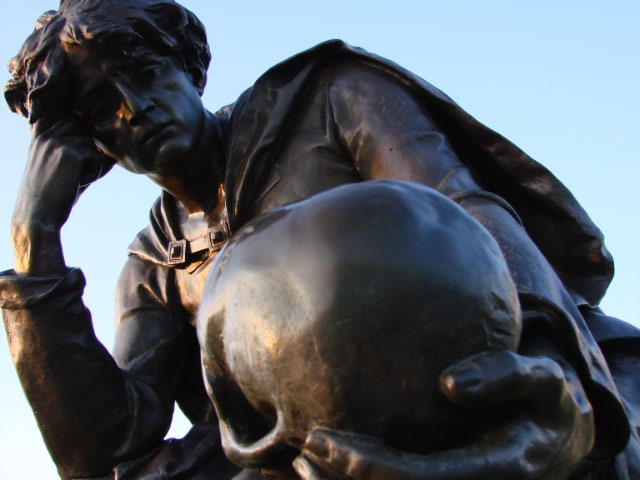
And, speaking of Hamlet, here is Hamlet looking at Yorick’s skull. It is a portion of a large Victorian sculpture in a park on the river.

DSC06012_0388

We had dinner in a nice Indian restaurant which seemed to specialize in the cuisine of Goa, the former Portuguese colony in India. It was quite good – such an improvement from the awful fish and chips we had in Winchcombe the night before.

Returning to Stratford Saturday morning, things were not quite so pastoral. By 10 in the morning, the sidewalks were already so thick with people it was hard to walk. Most of these people were not here to see Shakespeare. On summer weekends, Stratford becomes Anaheim-upon-Avon, the Myrtle Beach of the Midlands. I did not see anybody with a huge cotton candy, but they would have fit in well. The river was covered with small rowboats and powerboats, and the swans had beat a retreat to the nature preserve on the other side of the bridge. Two motorcycle groups, including the local Hell’s Angels chapter had converged on the city for the day, prompting the Warwickshire Constabulary to issue dire warning about possible violence. There was none, but it was a opportunity for the English to think about something other than their favorite obsession, Swine Flu.

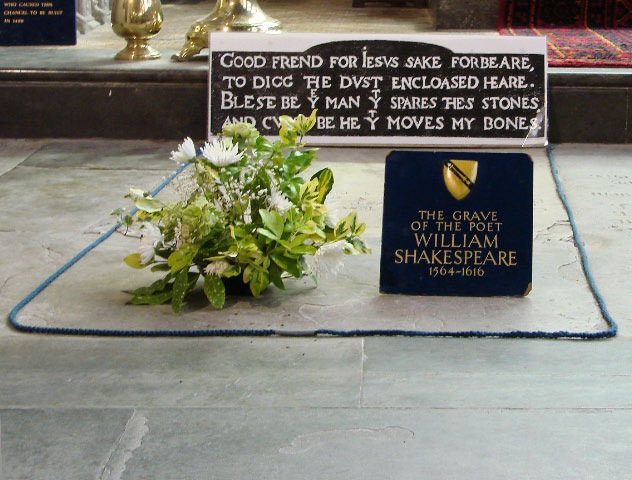
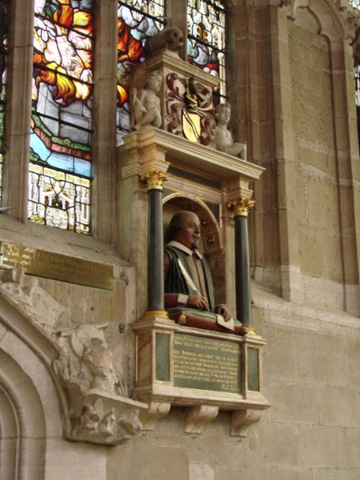
We wanted to take a walking tour, but we either missed it or it was not schedule. Too bad – I would have loved to have seen the sights of Stratford with Harley-riding, heavily tattooed motorcycle mamas. Instead, we did some some of the sights on our own. Here is Shakespeare’s grave in Holy Trinity and the monument placed to him on the wall about twenty years later.

Shakespeare's grave in Holy Trinity Church, Stratford-upon-Avon

DSC06022_0309 

Leaving the church, we stumbled upon a free production of Hamlet done by the Gloucestershire Youth Players. We were prepared to think, “Oh, how sweet! They’re trying their best.” But it turned out that some of the actors were very talented indeed and brought a lot of energy to their roles. Even I was impressed. Here is Hamlet, on the right, confronted by the ghost of his father.

DSC06028_0315

We could not quite stay to the end, because we had tickets for the Royal Shakespeare Company’s production of All’s Well That Ends Well. We had not planned on seeing the play, but on a whim we asked if there were seats to the afternoon performance. The lady at the box office sold us “view restricted” seats in the orchestra stall for 15 pounds. The seats were not perfect. The RSC is performing in a temporary facility as they build their new theater, and this theater does seem to have a lot of steel support beams to hold up the balconies. But the play was good – much better than we expected. Neither of us is a big fan of the comedies, and All’s Well has a particularly convoluted and ludicrous plot. But the staging, the costumes, and, above all, the acting, were outstanding. That was definitely the comical part of the day.

And now for more tragical and historical. We had about a three hours to spare before the performance of our third Shakespeare play of the day, Julius Caesar. Since we had missed the final 30 minutes of Hamlet in order to arrive at the RSC production on time, we knew they were doing a second afternoon show. So we returned to the park and saw the end of the play.

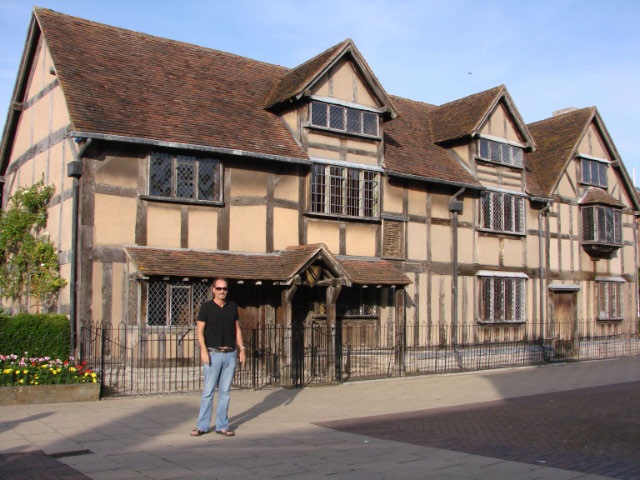
But we still had a couple hours. So we decided to see a few more sights which we had missed. Here is the big one, Shakespeare’s birth place.

DSC06066_0353

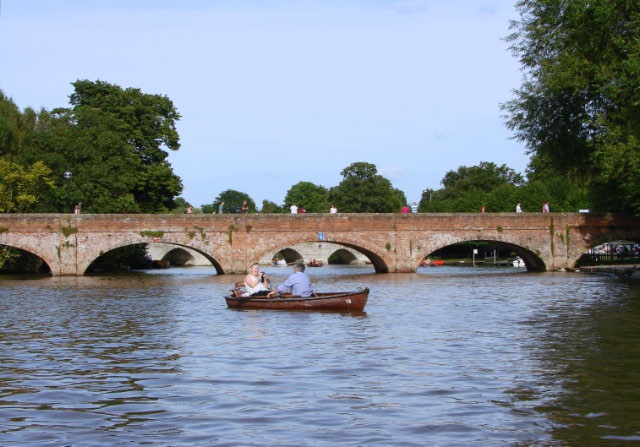
Down by the river, the crowds had thinned a bit and there were fewer people out in boats.

DSC06055_0342

We had a quick snack at the RSC’s Cafe, and we watched Julius Caesar. There were some interesting things about the production including a percussion and brass ensemble performing newly-composed incidental music. The historical consultant had also worked on HBO’s Rome, and it had that same kind of interpretation that Rome was a nasty place filled with despicable people. True, no doubt, but it made it hard for me to care when any of them were killed or killed themselves.

We drove by to London late at night. Getting from the M4 to Vicki and Jerry’s house proved more complicated than expected, but we arrive safe and even found a parking space. All’s well, indeed, that ends well.

Here Comes the Sun

“Here comes the sun, her comes the sun, and I say, it’s all right,” the Beatles sang. I never had the slightest idea how profound those words were until I started cycling through the Cotswolds. Today the sun came out, and I too say, “It’s all right.”  This was our last day in the Cotswolds, and I was so happy it ended with such perfect weather.

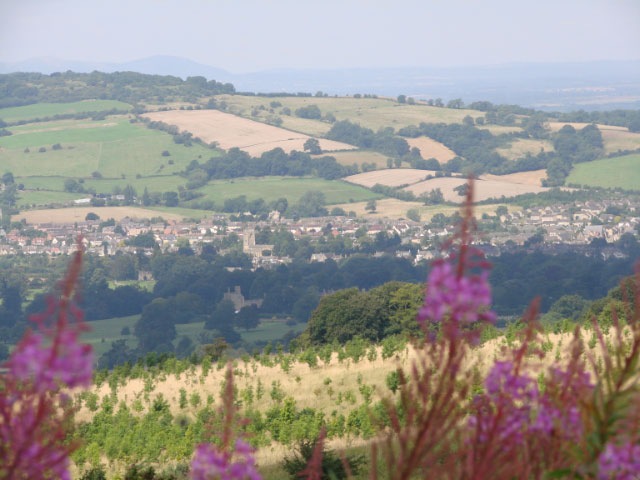
After breakfast we took our final bike ride. We headed south from Winchcombe and went through some of the most rural countryside we have seen so far. There is definitely real farming going on in this part of the country – not just rich people and cash-out retirees pretending to be farmers – and some of the farms are pretty large. As you can see, the day was beautiful. Here’s a view of Winchcombe from the top of a hill.

DSC05939_0262

The sun seemed to bring out all kinds of life everywhere. I thought this picture was one of John’s best so far.

DSC05934_0258

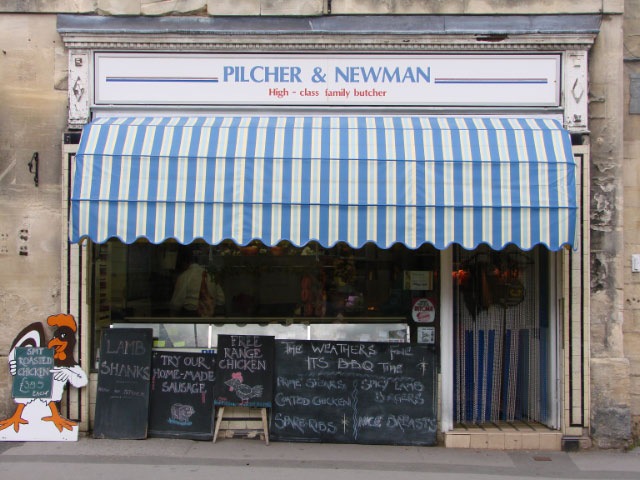
But after three hours of riding we were back in town. We still had a while before we our bicycles and our luggage would be collected and our Cotswold adventure would be over. We walked around Winchcombe and John took some pictures of places and people. This was my favorite shop. After all, if someone were to butcher my family, I would want them to be “high-class”.

DSC05941_0264

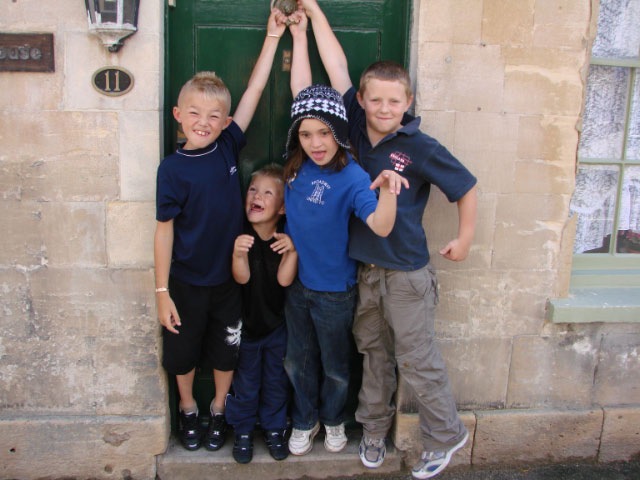
John found some kids playing with a door knocker. It did not take too much effort to get them to pose.

DSC05965_0288

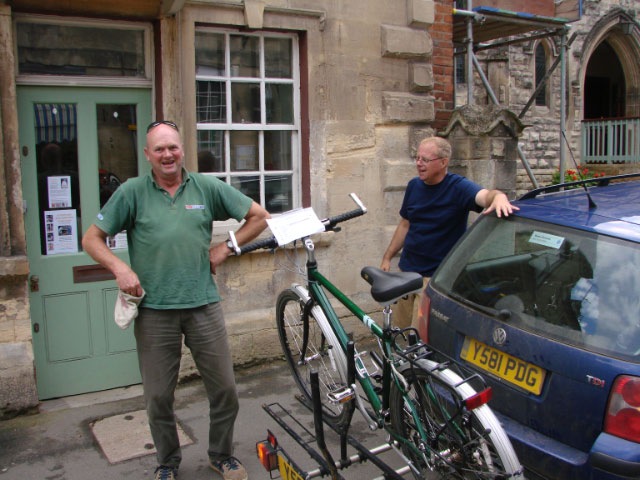
But finally it was time. Ian came by and put the bikes on the back of the station wagon. He drove us back to their farm where we said goodbye to Julia and collected our car.

DSC05968_0291

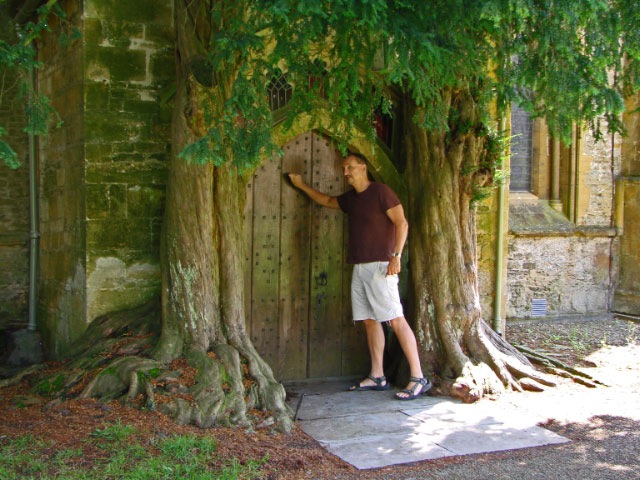
We drove on to Stow-on-the-Wold, one of the towns we had missed on our rainy days. It’s a lot more touristy than either Chipping Campden or Winchcombe. I thought it reminded me most of Sausalito without the water. We did Rick Steve’s little walking tour of the town. He said that one of the doors of the parish church was supposedly the inspiration for the picture of Jesus knocking on the door. John could not resist a little tableau vivant here.

DSC05972_0295

After leaving Stow-on-the-Wold, Ken, our Australian GPS guy, guided us toward Stratford-upon-Avon. (I used to think that all this “this-on-that” names were just pretentious, but I have learned that there are other places which would otherwise have the same name. For example, there is a Stratford, England which is actually a really poor and dangerous section of East London. It’s so awful, in fact, that the UK government decided to place the Olympics there as an excuse more or less to raze the place.)

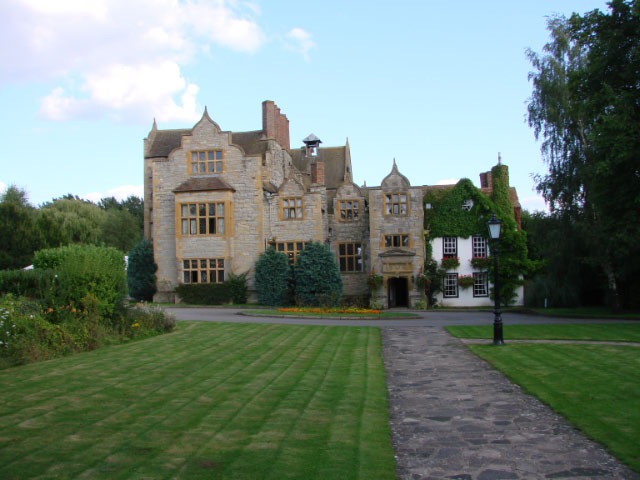
We had picked out our hotel before we left Los Angeles. We found we got the best deal by staying a little out of town. This is our hotel tonight. Looks pretty posh, doesn’t it? Actually, it is a Best Western and we got it for less than 75 dollars a night including tax. Sometimes I just love Travelocity.

DSC05981_0304

Tomorrow we have adventures in Shakespeareland including a performance of Julius Caesar by the RSC.

“For the rain it raineth every day”

At the end of Twelfth Night, Feste, the fool, sings a strange song with the repeated lines “With a hey, ho, the wind and the rain … For the rain it raineth every day.” Scholars have pondered the meaning of this song, but after a few days in the Cotswolds I think Shakespeare was just describing summer in Gloucestershire. It rained today, just like yesterday, and the day before yesterday, and the day before the day before yesterday….

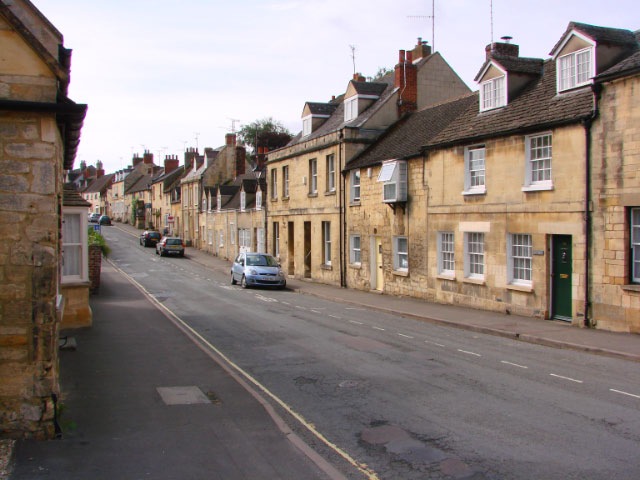
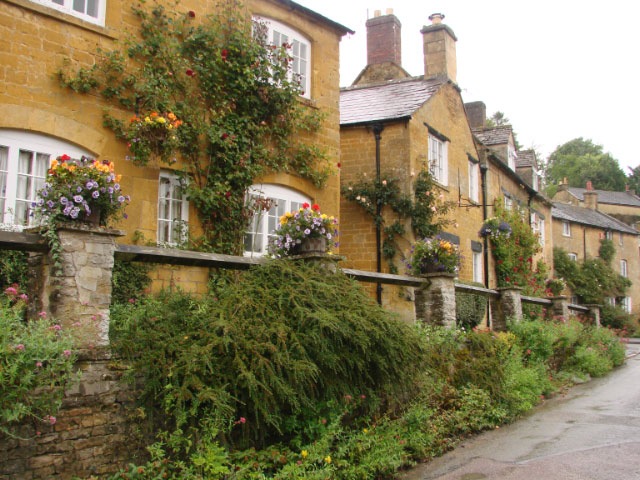
The da y did start out on a sunny note, giving us a false sense of hope for the day. We decided to explore Winchcom be and its modest attractions. We learned a bit about the town. Winchcombe is a really old town, already well established as a Saxon borough by the time of the Domesday Book. There is not much of that ancient town left. Most of Winchcombe dates from the 18th and 19th centuries. Like Chipping Campden, the houses are all made of sandstone. But the stone here is more tan and the town lacks the glow of its more affluent northern neighbor. Here is a typical Winchcombe street.

DSC05797_0128

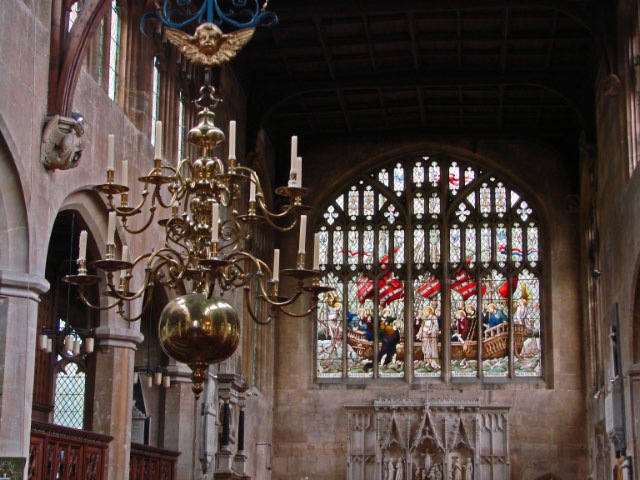
Probably the oldest building in the town that is open to the public is – no surprise here – the Anglican parish church. John Pratt liked the somewhat kitschy Victorian stained glass above the altar.

DSC05874_0202

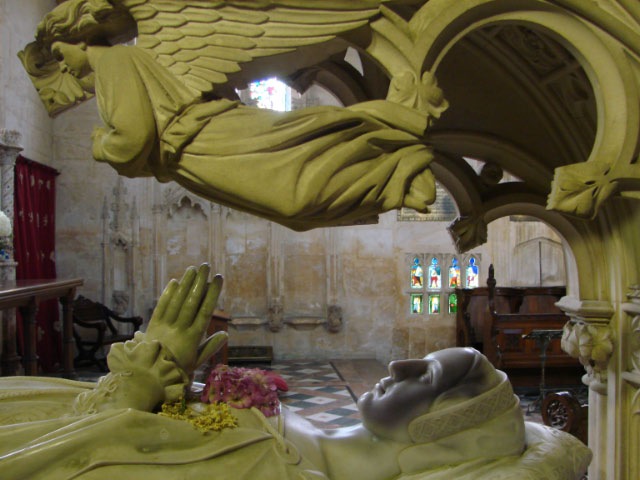
The biggest tourist attraction in the area is Sudeley Castle, located about a mile out of town. Sudeley Castle has a lot of history. Sudeley was the place where Henry VIII and Thomas Cranmer planned the confiscation and destruction of the monasteries in England. Elizabeth I came to Sudeley to celebrate the destruction of the Spanish Armada. Katherine Parr, the sixth and final wife of Henry VIII is buried in the chapel here. This is her tomb.

DSC05829_0157

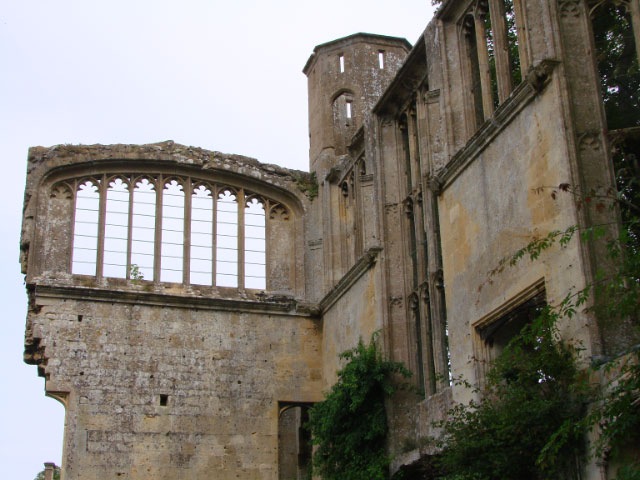
Unfortunately, the close connection between Sudeley and the royal family proved disastrous when the Civil War broke out. The Parliamentary forces attacked the house and burned it to the ground. Part of the castle, the Banqueting Hall, was never rebuilt. You can even see the burn marks on some of the windows.

DSC05842_0170

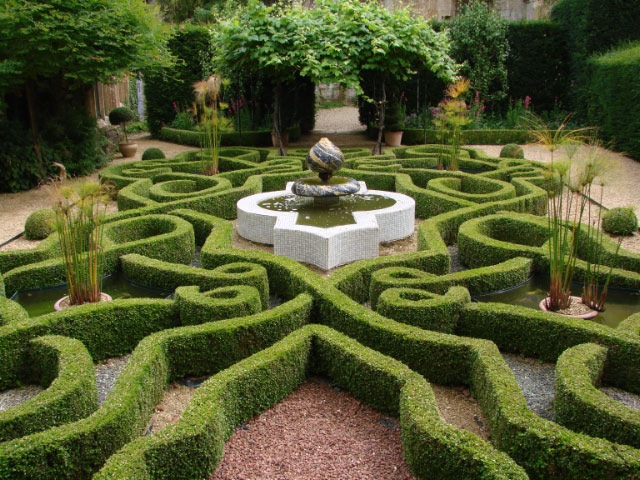
The castle lay in ruins for 200 years until the Dent family from Manchester who had made a fortune manufacturing gloves bought the home and set about restoring it. They did a pretty amazing job with the gardens. One of my favorites is the Elizabethan-style Knot Garden.

DSC05846_0174

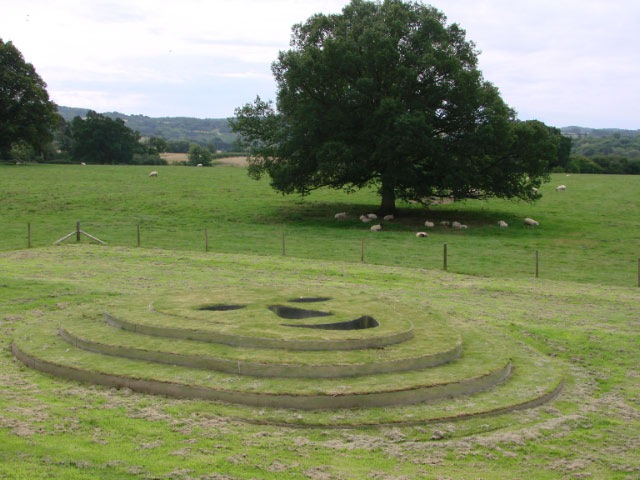
There are beautiful rose parterres and lovely borders. There is an exquisite “secret garden” and a Victorian vegetable garden devoted to heirloom vegetables and seed preservation. But the family also has filled the garden with sly bits of modern art. This one was called “The Face of the Earth”.

DSC05834_0162

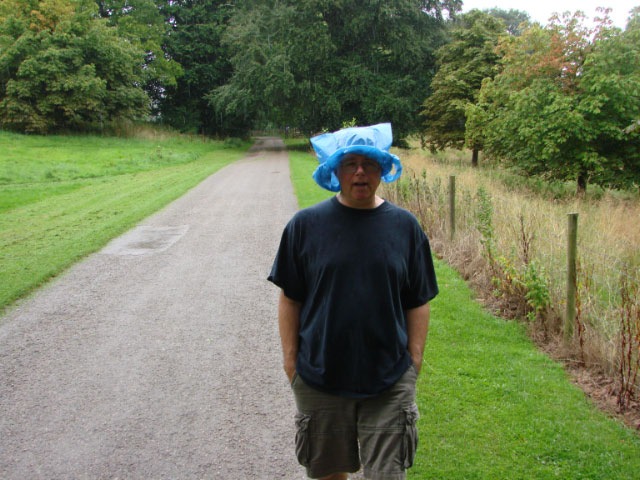
Unfortunately, as we were having a coffee at the visitor center, getting ready to walk back to Winchcombe, it started to sprinkle. And then it started to drizzle. And then it started to seriously rain. We waited for a while for it to stop, but when we realized this was delusional, John convinced one of the sour females in the gift shop to part with a couple of plastic bags and he made little rain hats for us.

DSC05871_0199

When the rain diminished to a drizzly mist, we got on our bikes and started to ride. Unfortunately, we were not on our bikes for more than a mile when it started to pour again. We stopped at the Winchcombe pottery facility. It created some of the most famous pots and plates and pitchers during the heyday of the Arts and Crafts Movement. Today, however, you can find something which looks pretty similar to all of their stuff at Target.

Our next stop was the ruins of Hailes Abbey. There is a good story here. Hailes had been a small monastic community until the monks claimed that they had a really important relic — the blood of Christ which had fallen from his veins into a chalice. Moreover, this relic was miraculous. Christ’s blood, the monks claimed, had never actually coagulated after all those centuries. Wow! Within years Hailes was the biggest pilgrimage site in England. The monks grew rich. But not everybody believed it. Henry VIII’s commissioners investigated the claim and discovered that the relic was actually duck blood which the monks regularly changed.

There’s not much left of the Abbey now. There are a few arches and the remnants of a wall. The National Trust wanted to change 3 pounds to look at this rubble, and we decided it was not worth it and rode on. But, as we were leaving, completely on a whim, we stopped at a small church across the street. I am so glad we did.

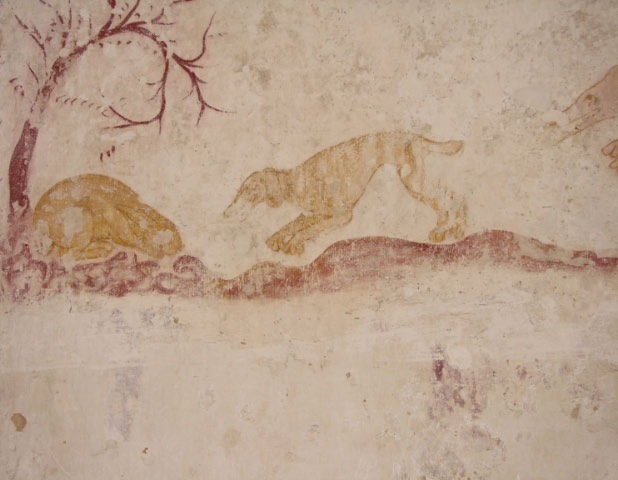
This little church was never restored and the walls show the remains of the frescoes which once covered the interior of the church. There was an image of Saint Christopher, one of Saint Michael weighing the souls of the righteous, and this one, my favorite, of a hunting scene. The little pamphlet suggested that this may have served as a warning against Sabbath violations.

DSC05890_0218 

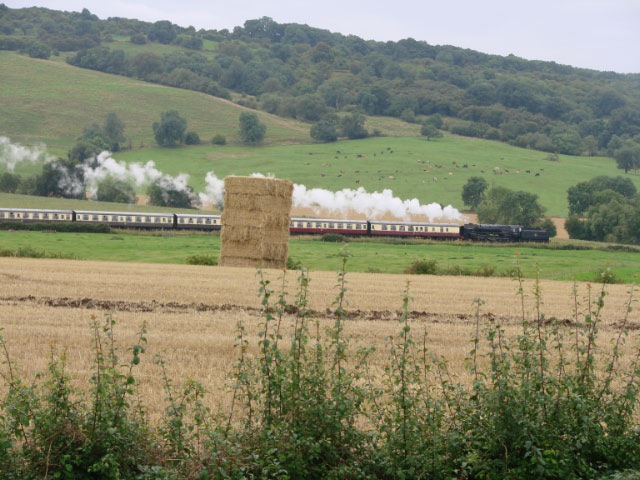
As we were riding away from the church, we saw the train run by the Gloucestershire-Warwickshire Steam Railway. The picture somehow misses the mist of the scene, at least as I remember it, which made me immediately think of Turner.

DSC05885_0213

Our next stop on the bike tour was the Stanway House. This is another great estate from the time of Elizabeth I. But it was not destroyed in the Civil War nor has it ever changed hands. The same family still owns it and lives in it. And that’s the problem.

DSC05919_0247

After all these hundreds of years, this family is flat broke. It’s too bad that they did not let us take pictures inside. The place is a disaster. There are the usual rooms with pictures of dead relatives, but what strikes you is that the floors are bare unfinished wood or covered with carpets which would have looked frayed a century ago. The walls are stained by leaks. The springs in the sofa are have been broken by use. Cats have stratched the upholstery in what is not broken. Everywhere there are piles of books and papers.

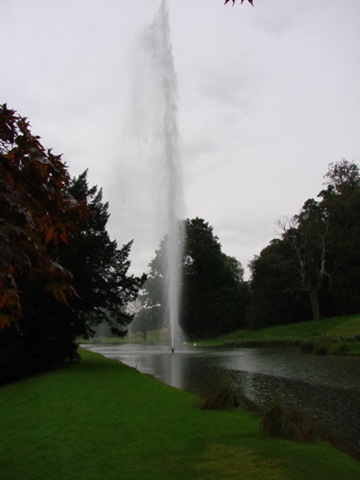
The big attraction on the estate is a gravity-fed fountain which shoots water about 300 feet into the air. But by the time we left the house to take a look at the fountain more water was pouring down from the skies than shooting up from the pond.

DSC05897_0225

We hid from the rain for about 30 minutes in an odd little structure overlooking the fountain. It looked somewhat like the Albert Memorial without Albert’s statue. Finally, we then decided to brave the downpour and make it to the tea shop. We downed a big pot of tea and ate some sweets while the rain continued to pour. Around the time the house closed, five o’clock, we decided the further riding was pointless and we went the four miles back into Winchcombe.

The BBC says Friday will be nice. That’s not reassuring since they seem to have been wrong every day since we arrived. More later… if I ever get dry again.

Churches and Sheep, Mostly

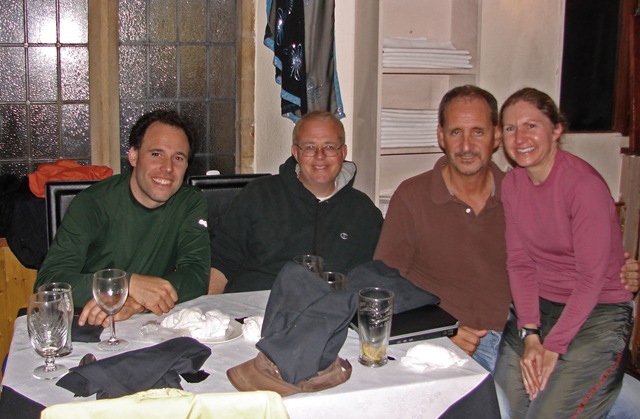
Since I’ve mentioned Aaron and Susan, over the last couple days, here is a picture the waiter took of all of us at the Indian restaurant Tuesday night. On the left you can see Aaron, on the right is Susan. It’s not a the best picture of her, but she had just spent a day riding 30 miles on a bike, changing a couple flat tires along the way.

Road to Winchcombe_0124

It was still raining Wednesday morning, so we decided to do a little tour of Chipping Campden itself. The town is quite compact, and most of the houses are on either side of the High Street. Since it was a market town, and it was not uncommon to drive large herds of sheep to and from the market, the street was unusually wide by medieval standards. The High Street curves gently following the contours of the hills. The houses in the village date from various centuries and a built in a variety of styles. But because they are all made of the handsome yellow Cotswold sandstone, and because they are uniformly two or three stories high, the building present a stunning harmony.

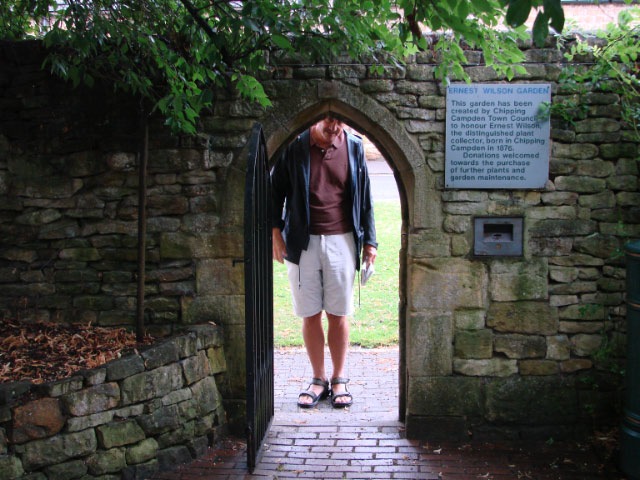
The most important building historically is the parish church. It is one of the “wool churches”. These are unusually large village churches which rich wool farmers and merchants built as monuments to their success. I took a few pictures, but, frankly, after a while most of these places start to look alike. There were some odd little things we found along the way. One was “Ernest Wilson’s Garden”, a monument to a local man who spent most of his life plant hunting in Asia. It is just a quiet little place behind a low wall and gate. John Pratt had a little problem even getting in!

Road to Winchcombe_0026

By eleven o’clock the rain had stopped, so we got on our bikes and began our ride to Winchcombe. Julia picked up our luggage at the hotel and transported it to Winchcombe for us. The ride began with another brutal hill. But when we reached the top, we were rewarded with vistas stretching from Gloucester to Stratford. The picture does not quite do justice to the sheer breadth of the view. Nor does it really capture the fact that this meadow was absolutely covered in sheep dung. The sheep look so peaceful when they are eating grass that we forget that it has to go somewhere afterwards. We walked carefully back to our bicycles.

Road to Winchcombe_0032

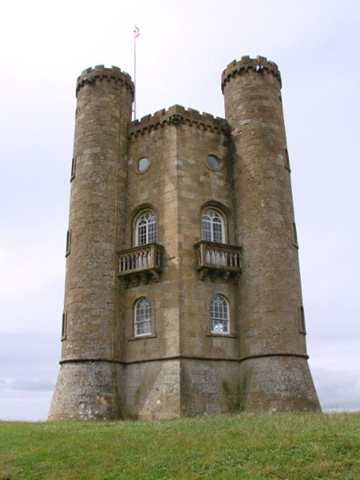
The next stop was the Broadway Tower, seen below. This was built in 1798 at the beginning of the “Pre-Romantic” movement in English arts and letters. Wealthy landowners suddenly developed an appreciation for the medieval ruins on their properties, and, if the ruin was not good enough, they happily built fake ones. This landowner built this as if it were all that were left of some ancient Saxon castle. The practical Saxons would never have put huge windows in their towers, but the builder wanted to take advantage of a site which provides an opportunity to see twelve counties when it is clear.

Road to Winchcombe_0036 

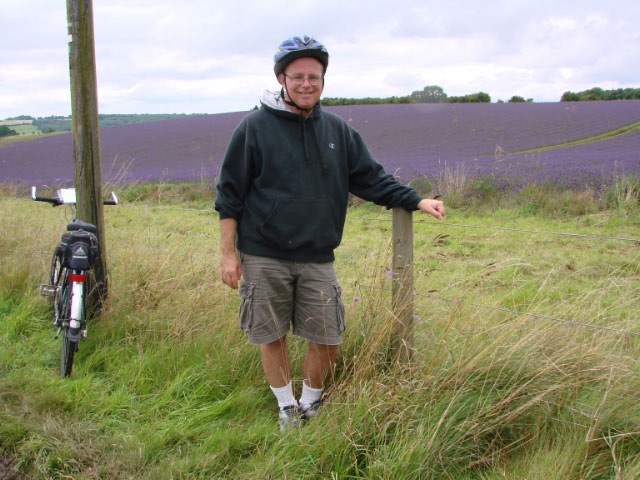
We decided that the view from the base of the tower was good enough, and decided not to spend the four pounds on walking to the top. We got on our bikes and pushed on towards Snowshill. Along the way, we stopped at a lavender farm.

Road to Winchcombe_0054

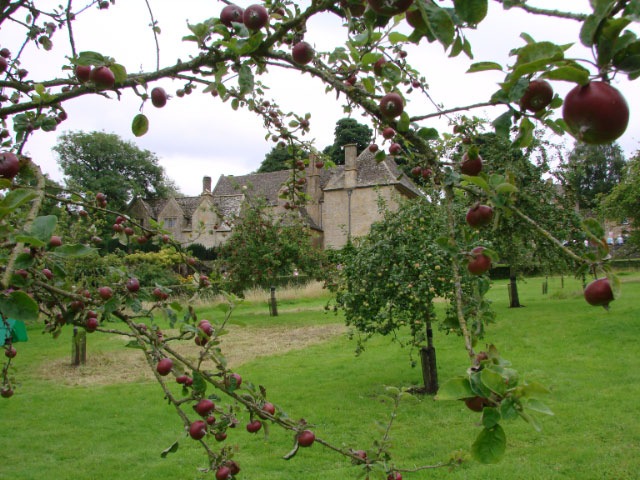
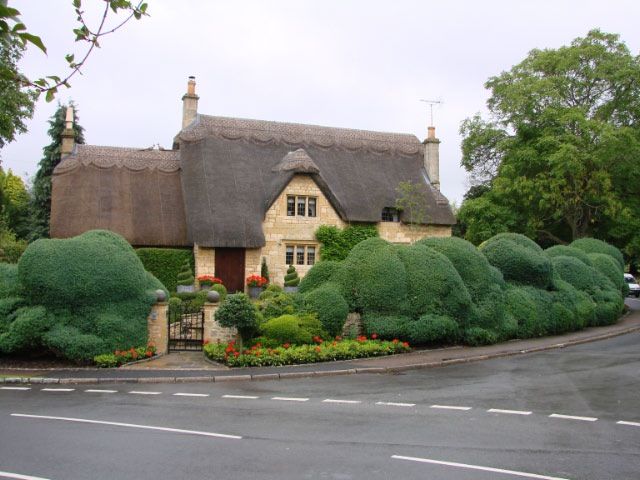
The village of Snowshill is so cute you are sure that it had to be a creation of the Walt Disney Company. The highlight of the town, however, is Snowshill Manor and garden. You can see a picture of the house below taken artfully by John from the orchard.

Road to Winchcombe_0065

We did not actually tour the house. It is one of the more popular places for the National Trust, and we would have had to waited a couple hours for the next tour. It did seem like an odd place. Snowshill Manor is not really one of those “great houses of England.” The place was in ruins when it was bought by Charles Paget Wade. Wade had been trained as an architect, but had the good fortune to inherit sugar plantations in the Caribbean around 1910. Suddenly rich, he spent the rest of his life traveling around the world collecting things. He bought the house and restored it to house his collections. He and his wife lived in separate bedrooms in a small cottage behind the Manor. Wade’s bedroom – which we did see – was decorated to look like a Russian Orthodox monastery chapel. I have a feeling it was an unusual marriage. There were no children, and when he died he gave the house and grounds to the National Trust.

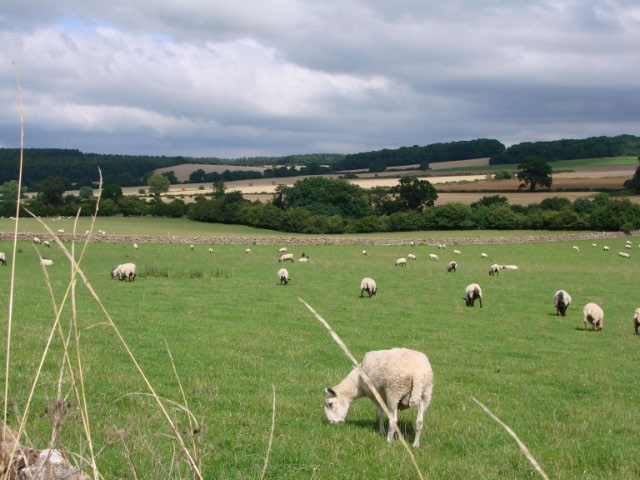
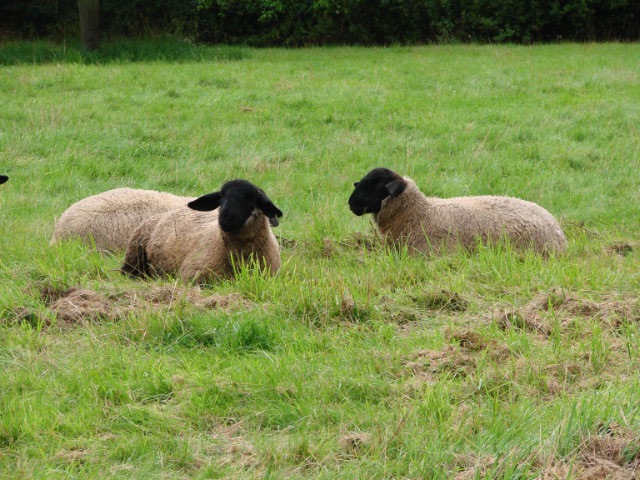
The sun came out and “England’s green and pleasant land” never looked better. Everywhere we looked there were sheep.

Road to Winchcombe_0085

Road to Winchcombe_0028

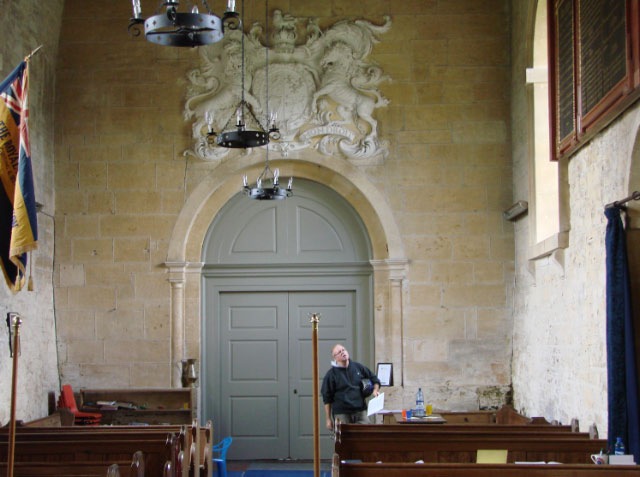
We detoured a bit from Julia’s recommended route because we wanted to see the village of Temple Guiting. Another one of those Cotswold murder mysteries – I haven’t finished listening to this one yet, though John did – is set there. Part of the plot seems to involve the village church which was built originally by the Knights Templar of DaVinci Code fame. But it was a really charming little village church, and they had placed water and orange drink on a table in the church for “trekkers and visitors”.

Road to Winchcombe_0087

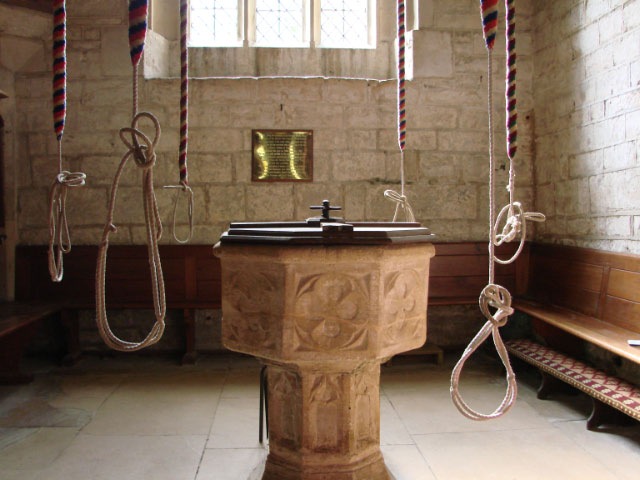
We continued on the road until we came to the village of Guiting Power. It is a bit larger than some of the other villages. It even has a post office and a dog park! But the two pubs in town were completely deserted in the late afternoon, so John and I bought some soggy pastries from a grocery and a couple of pints of milk and had a late lunch in the village green, right next to the inevitable World War I memorial. We had decided to skip the church, but on a whim went in anyhow. It proved interesting. Parts of the building still preserve some of the original Norman decoration. They had on display a sarcophagus for a child which dated from the Saxon period. This had apparently been discovered when doing some routing work on the floor of the church. And we loved the placement of the font at the base of te tower below the bell ropes. It looks like the ancient custom of change ringing has not been forgotten in Guiting Power.

Road to Winchcombe_0107

Another four miles on the bike took us into the small city of Winchcombe. We are staying at the White Hart. Again, the room is not all that nice though it appears that some of the rooms here may be a bit more posh. We walked around the town towards dusk, but we have not taken any pictures here yet.

Some Rain Must Fall

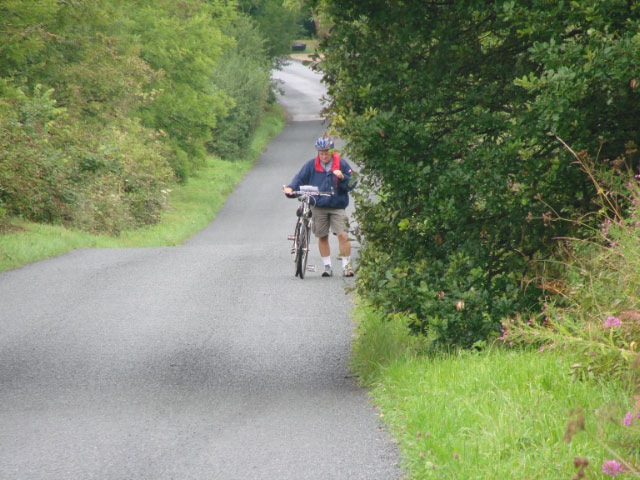
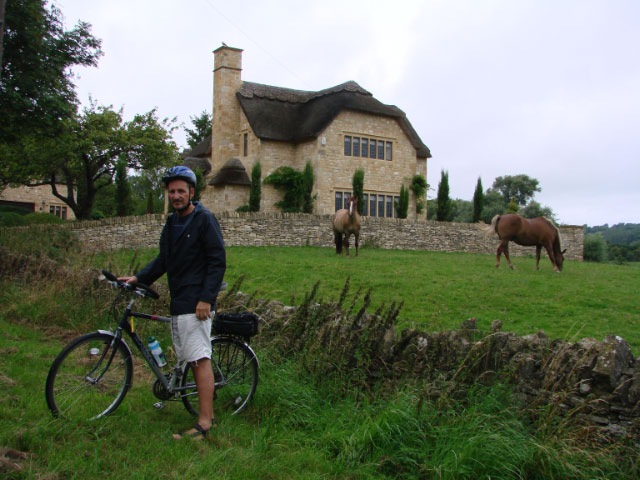
Well, it was raining today. It was not always raining heavily – in fact, most of the time it was just misty or drizzly – but there were moments when it really came down. Despite this, the vacation must go on. So we both climbed on our bikes after eating our English breakfast. That’s me below trying to figure out where to go next. The directions are on my handlebars in a plastic protector. Julia has that country sense of direction. Streets do not have numbers or names: instead, you just turn right next to this pub or by the sign for the primary school.

Chipping Campden_Aug 04 2009_0008

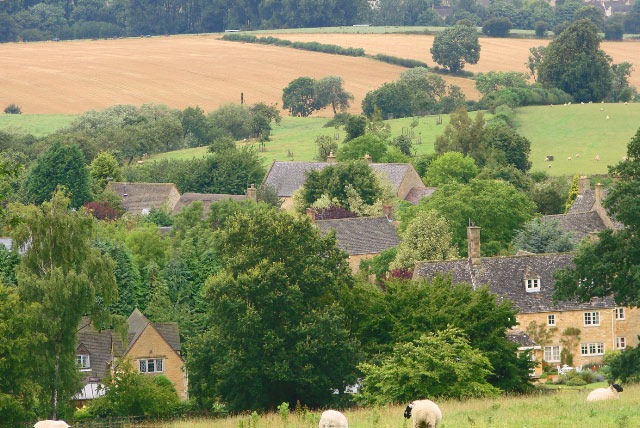
Our first stop was the picturesque village of Blockley. John and I had listened to a murder mystery set in Blockley on our trip back from Portland. I cannot really recommend the book, called something like Blood in the Cotswolds, but it did give us a lot of facts about the history of the place along the way.

Chipping Campden_Aug 04 2009_0014

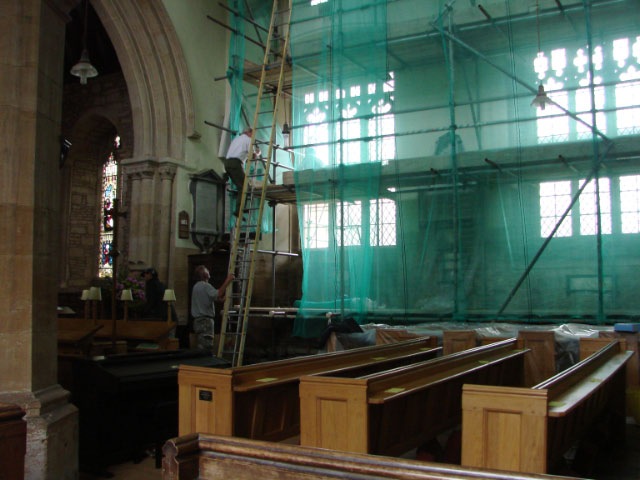
We had one of our first real downpours while we were in Blockley, so we sought refuge in the parish church there. As you can see, if was undergoing some renovation.There was a guide which explained what parts were Norman, what was medieval, and what renovations and “improvements” had been done during the 18th and 19th centuries. Unlike most Cotswold towns, which went into a severe decline after the Civil War (roughly 1640 so you don’t have to look it up on Wikipedia), Blockley was a flourishing center for silk production. So a great many homes in Blockley, as well as part of the church, date from the early 18th century. One particular  item of note:  in a glass case by the entrance of the church they have on display a first edition of the King James Bible. It was bound in wood covered with velvet.

Chipping Campden_Aug 04 2009_0013

When it finally let up a bit, we left Blockley and headed on. We went indeed “over hill and dale” and we saw some nice scenery along the way.

Chipping Campden_Aug 04 2009_0010

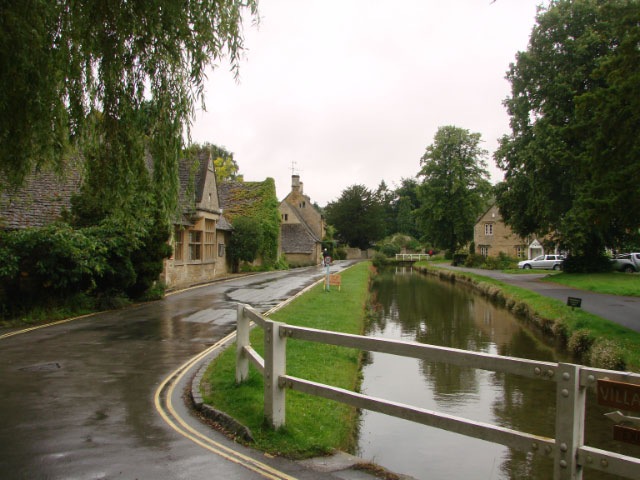
Our next stop were the villages of Lower Slaughter and Upper Slaughter. I have no idea why these villages have such a macabre names, but the sheep you see above probably are some clue. Despite the moniker, Lower Slaughter is remarkably picturesque.

Chipping Campden_Aug 04 2009_0029

We had lunch at a hotel there. The food was quite good, and it felt great to be out of the drizzle. But we could not stay too long because Lower Slaughter was only a little over halfway on our trip. So we got on the bicycles and headed back towards Chipping Campden. We stopped along the way to get out of shower, to catch our breath after a particularly brutal hill, or just to admire some of the houses.

Chipping Campden_Aug 04 2009_0038

The last few miles were the driest and most downhill of the route. Before we knew it, we were back in Chipping Campden.

Chipping Campden_Aug 04 2009_0045

We both warmed up with a hot bath, had some tea and napped. In the evening we decided to try a snack at the an Indian restaurant which Aaron and Susan had mentioned the night before. We walked in and who did we see but … Aaron and Susan! So we joined them for a remarkably good dinner and even better conversation. They had ridden their bikes to Stratford-upon-Avon for the day. We’ll be there with car on Saturday where we have tickets to Julius Caesar.

Palace and Garden

So, we continued on from Oxford this morning. Our first stop was Blenheim Palace, the ancestral seat of the Dukes of Marlborough – that’s the Churchill family for those of you who don’t stay up all night reading Burke’s Peerage. We arrived a little early and walked around the grounds before they let us in to the palace itself. 

Blenheim_Aug 03 2009_0004
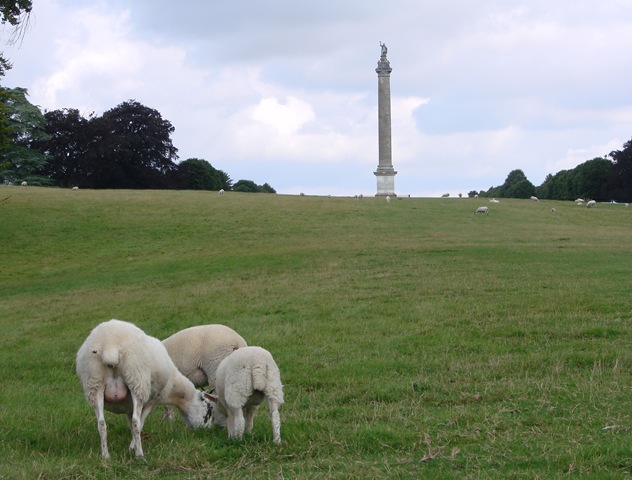
There still a bit of a farm here, though milking tourists is the main business. I somehow do not think that the sheep are particularly impressed by spending their short lives surrounded by monuments to the English victory over the French in The War of the Spanish Succession. But then again, maybe they have a great appreciation for history than we know.

Blenheim_Aug 03 2009_0008
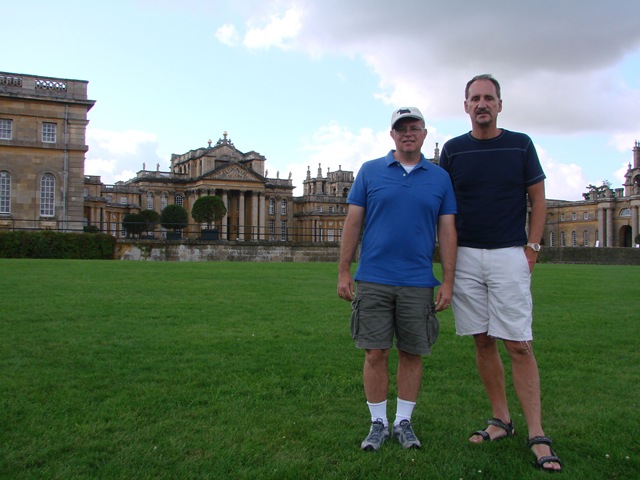
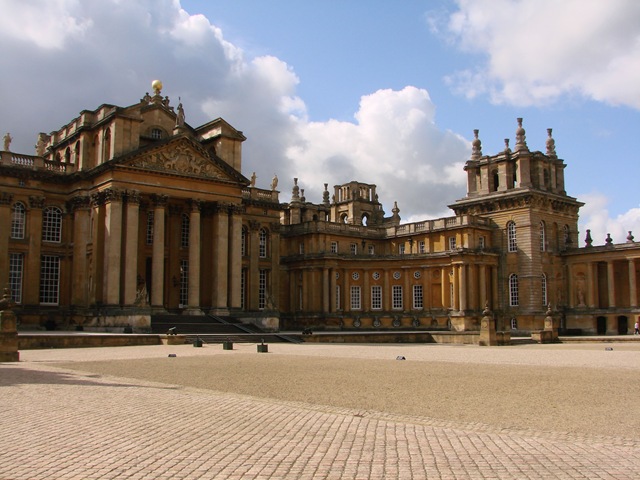
The house itself is certainly impressive. All the guidebooks pronounce it to be “the finest example of English Baroque architecture.”

Blenheim_Aug 03 2009_0016
The yellow stone is quite handsome. It’s some kind of sandstone, though, and when you think about it is should have been obvious to the architects that such a soft stone is not a good choice for a cold wet climate. Trying to maintain this place over the years bankrupted the family a couple time. The only reason it is not a complete heap of rubble right now is that the Ninth Duke, Winston Churchill’s cousin, married a Vandebilt and used the huge dowry extracted from that family to restore the building. The two evidently loathed each other and sat at dinner with an enormous silver sculpture on the middle of the table so that they would not even have to look at each other.

Inside it’s one enormous room after another covered with tapestries and filled with old English and French furniture. It’s impressive at first, but gets monotonous after a while. You also realize that the very best pieces have been sold to museums like the Met or the Getty, so the place is filled mostly with second rate art. We weren’t supposed to take pictures inside, though John did try to take a couple. The lighting is not that great, so the pictures were a little disappointing. So all of you are spared looking at Belgian tapestries or French tables.

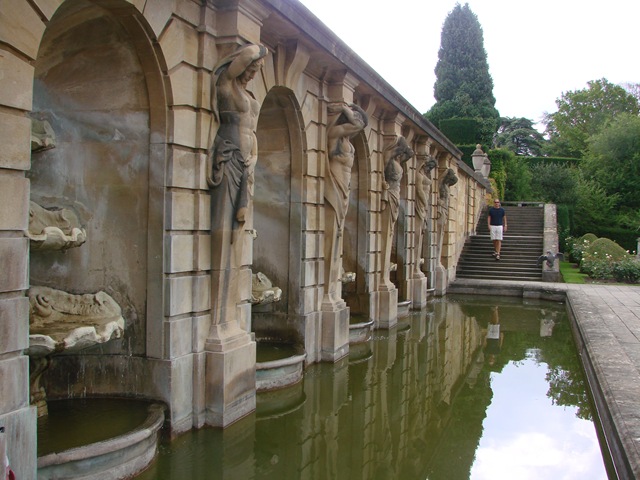
The gardens were a little more interesting, but our time was running short and we could not do more than just take a quick look here.

Blenheim_Aug 03 2009_0024
After leaving Blenheim, we headed west through Oxfordshire into the Cotswolds. The Tom Tom was pretty helpful here. Thanks to its “Search by Post Code” function, we found the farmhouse where the woman who arranged our tour lives. There was already another American couple there and we introduced ourselves and sat down to bread, ham, cheese, and salad for lunch. The other couple just recently moved to Auburn, Alabama, Both are in their 30’s. Aaron is a newly-minted Ph.D from the University of Chicago and teaches modern American history at Auburn. Susan works for The New Teacher Project, one of those foundation-funded research groups which issues hand-wringing reports over the dire state of American primary and secondary education.

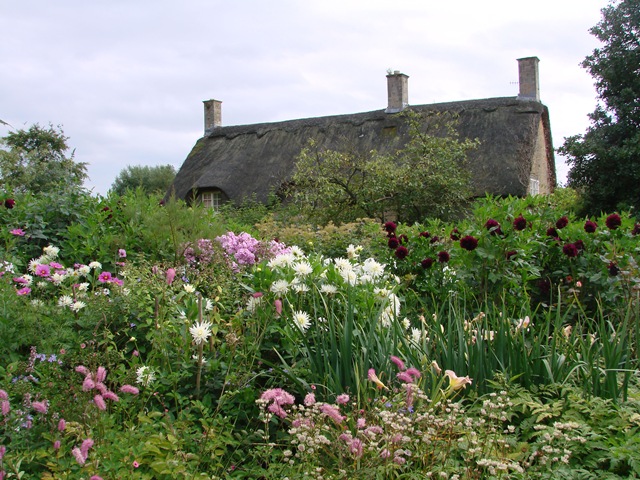
We left the car at the farm. Julia, our guide, took us into Chipping Campden where we found our bed and breakfast. The accomodations are frankly disappointing for what we paid, but I’ll see what the next one is like. But Chipping Campden is gorgeous. It’s so cute it makes Carmel look like Detroit. I’ll take some pictures today and send those tomorrow. After dropping off the luggage, we went back to the farmhouse where we picked up our bikes. Our first stop was Hidcote Manor, possibly the most famous garden in England. Again, it’s so cute it almost induced insulin shock.

Blenheim_Aug 03 2009_0051
Blenheim_Aug 03 2009_0056
The rest of our ride was fun, sometimes confusing, and occasionally grueling (there was one absolutely brutal hill though it had a stunning view of the Warwickshire countryside).

We met up in the evening with Aaron and Susan. We had dinner in the evening at the Eight Bells, one of this new generation of English pubs which have transformed themselves from smoky beer hall to gastronomic destination. The food was really quite good, and we had fun talking to those young people.

Tomorrow we have a long (30 mile) ride and it is wet and misty. Think Seattle but a little warmer. The report may be grumpy…

Oxford’s Towers

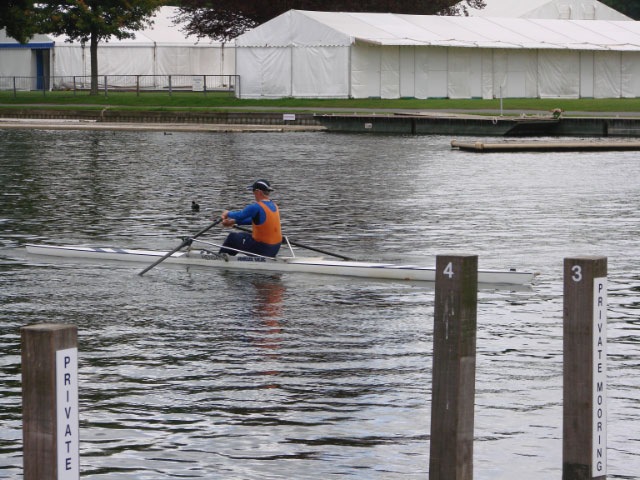
This morning we packed up the car and headed out of town. Vicki loaned us her Tom Tom GPS, and so far that has proven to be a life saver! Vicki also equipped us with an extra mobile phone for emergencies. Jerry suggested that we take the M40 out of town and get off near Maidenhead and go to Henley-upon-Thames. Henley is the site of an annual regatta. It’s a big point on the summer social calendar for the remnants of the aristocracy. It is a really cute town, however.

John on the Henley high street

Rowing on the Thames, Henley

  We went on into Oxford. The Tom Tom was not at its best here, as it led us a couple times down incredibly narrow streets which proved to have no outlet. We finally found some legal parking at the Westgate shopping center. This little mall is not like the Westfield in Shepherd’s Bush. It seemed a bit more like something out of East Germany. But we were only there to the park, not to shop. We went to the Information Center on Broad Street to sign up for the two o’clock tour. We had a few minutes so we walked around and had a quick bite of lunch in the old covered market. Returning to Broad Street, I found a cross made of bricks on the pavement which marked the spot where Cranner, Ridley, and Latimer were burned at the stake by Queen Mary.

Our guide was a French woman named Danielle. Her English was impeccable, if slightly accented, and she knew just about everything about the University and its history. She could bit a little sarcastic at times – we liked that. We went into Jesus College to examine the Quadrangle, the Chapel, and the Refectory. She knew a lot about how the system worked and explained admissions, finances, and how all these things have changed in recent years.

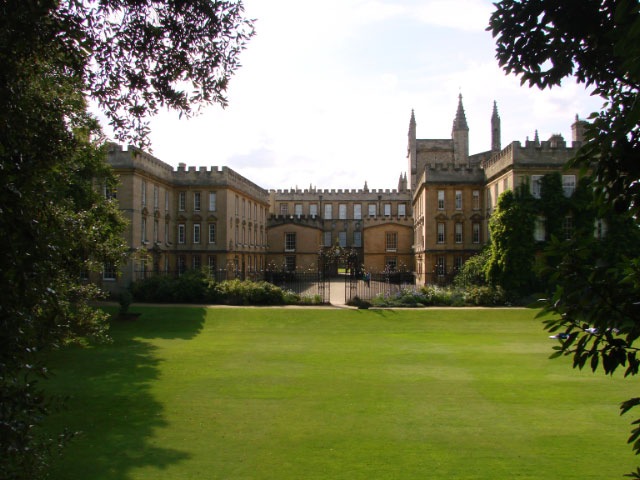
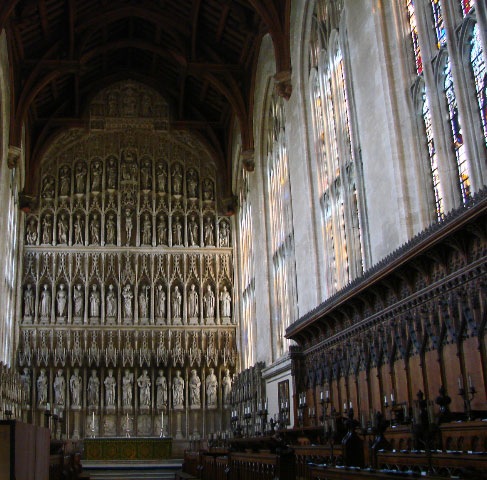
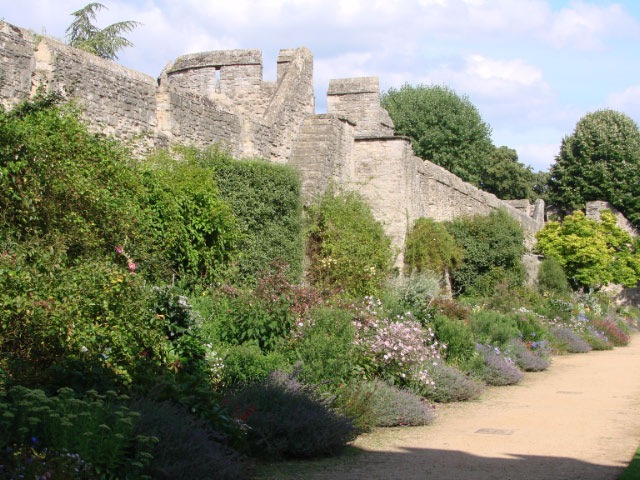
We walked by several other colleges including Balliol, Exeter, Oriel, University and New College. We were particularly taken with New College as we explored the Chapel, the lawn and the section of the old city wall which was incorporated into the college grounds.

New College, Oxford

New College chapel

Remnant of Oxford city wall

We did not do the tour of Christ Church, the most famous of the colleges, because it was late and our guide had warned us that we could not see some of the best parts. But we walked by it and admired its architecture and the lovely meadow near it.

Christ Church Meadow

Tomorrow, off to Blenheim Palace (ancestral home of the Dukes of Marlborough) and then on to Chipping Campden and our Cotswold adventures.