
Finally having escaped Tromsø, we set on for the Lofoten Islands. Before I booked this cruise, I had never heard of these islands. Doing a little reading, I learned that this area was one of the first areas in Norway to be settled, with evidence for human activity dating back almost 11,000 years. There are extensive Viking archeological sites here.
Located just above the arctic circle, there are five main islands in this archipelago, all of them now linked by bridges and a highway. There are also many smaller islands. The area is not heavily populated. There are only two towns of any size. Fishing used to be the main industry here, but tourism is increasingly important with over a million visitors to the islands each year.
I had initially planned trip up a narrow fjord in a Zodiac for us. But it involved taking a long bus ride both ways, and I knew that even though they planned to give us heavy, waterproof gear, John was going to be cold. Plus, if I the buses did not run exactly on schedule, we were going to miss the ship and be stuck in Lofoten. So, I cancelled that reservation and booked an excursion with the cruise line.
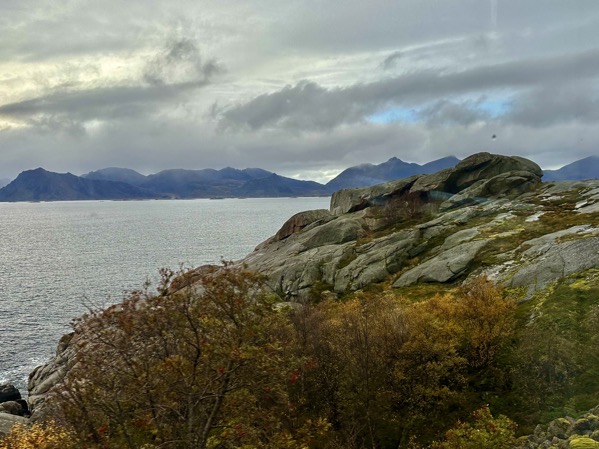
The tour was exactly what I expected. They put us in a big bus with a chatty English-speaking local guide. We had a couple of stops, but mostly drove about looking at the scenery. But that scenery is pretty impressive. Jagged mountains of black gneiss seem to erupt from the sea. Adjacent to them in places are flat plains with a patchwork of wetlands and farms.
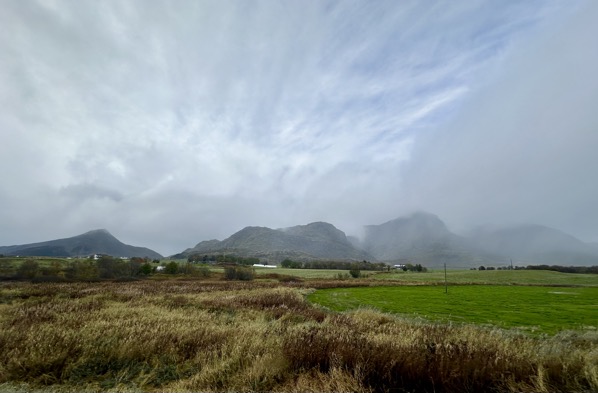
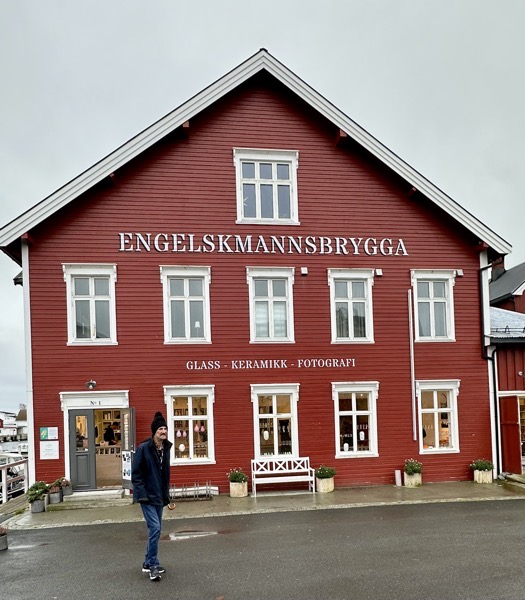
Our tour began in Leknes, one of the two main towns. It is obviously an important transit and commercial hub, but had not a trace of charm, particularly on a rainy day. We spent no time there. The bus pushed on towards the old fishing village of Henningsvær, several kilometers off the main highway. This was far more charming with lots of old houses and fish barns.
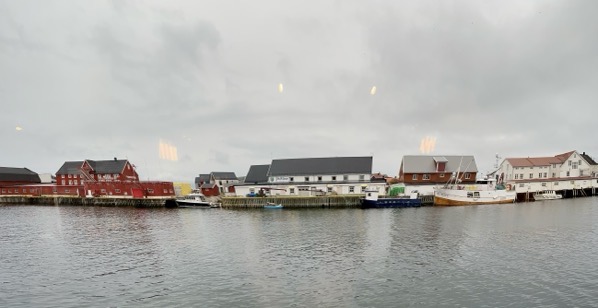
The Norwegians seem to delight in brightly painted houses with no fear that the colors will somehow clash.

Henningsvær is an important artist colony. Many of Norway’s most prominent artists live here for at least part of the year. And this is not a new development. Even in the nineteenth century, it was center for much plein-air painting. We stopped at a small museum there displaying some of the work of local artists, old and new. There were lots of landscapes
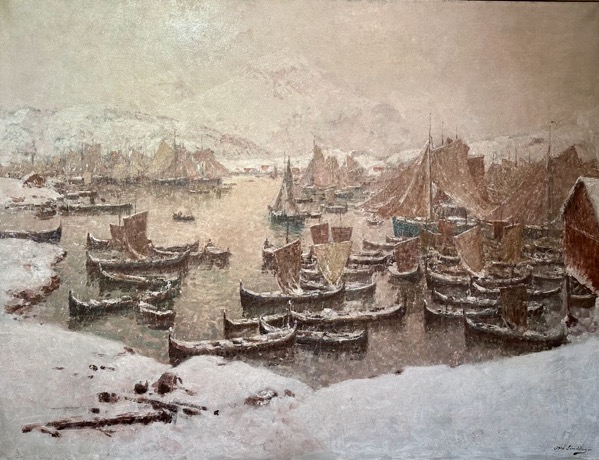

and a few of those disaster canvases so beloved by many nineteenth-century painters.
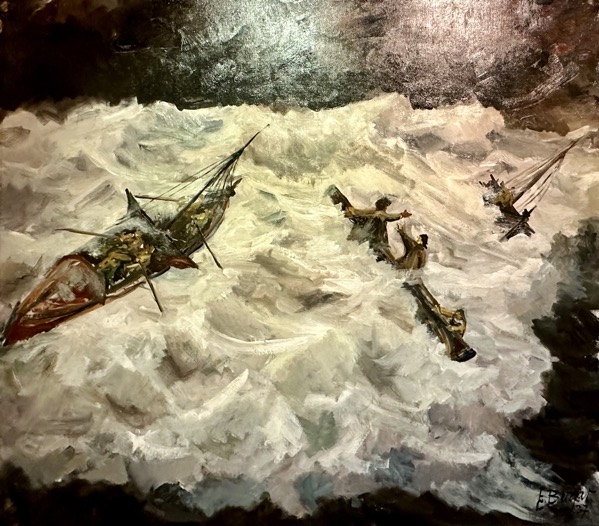
There was apparently an extensive collection of modern art on the second floor, but that was accessible only by stairs so we skipped it. Instead we walked about the town.
The drizzle had let up for a bit, but these birds seemed determined to hold on to their dry spot.

Back on the bus, we pushed on towards Svolvær. The scenery continued to be dramatic.

Just outside of Svolvær, we saw enormous racks for drying cod.

There is still a fishing industry here, and an enormous market for salted cod in Brazil and parts of Europe. Having tried to cook salted cod a couple times, I find this inexplicable.
There’s not much to see in Svolvær. Like Leknes, it is a commercial and transportation hub. But having come this far I suppose they had to have us do something, so we were given admission to some tourist trap called Magic Ice. When you enter, you are wrapped in some kind of Harry Potter style cape.

You walk after this into a giant freezer with all kinds of ice sculptures and carvings.
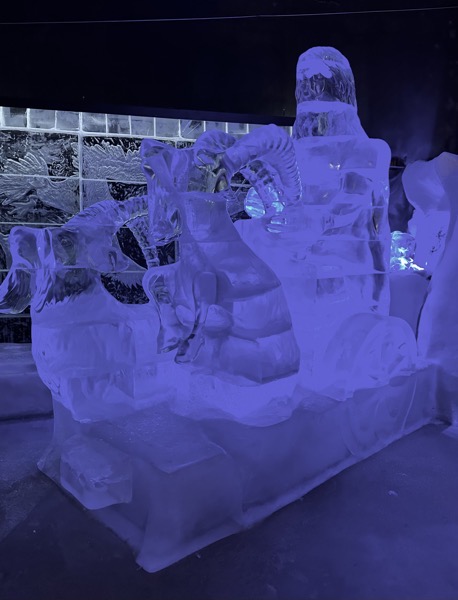
There’s lots of cheesy lighting effects.

Things are frozen in ice.

There’s a whole ice frieze. I don’t know if the word play works in Norwegian.
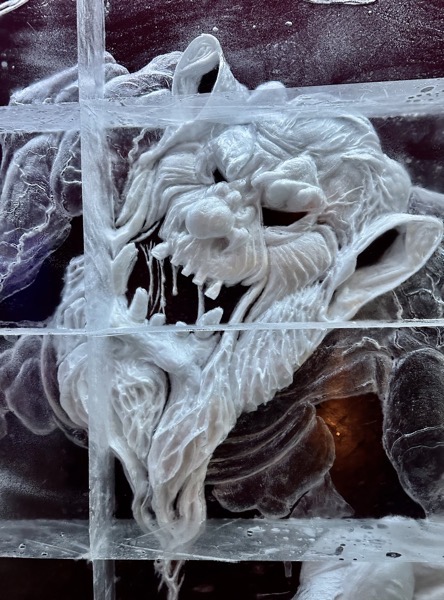
John HATED it. I think he was out in 30 seconds. I stayed a little longer to take these pictures, but I did not bother to stand in line to get a drink from a glass made of ice. We went outside. John posed with a happy Viking troll.

We looked a bit at the harbor area here.

John was ready to get back on the bus where it was warm.
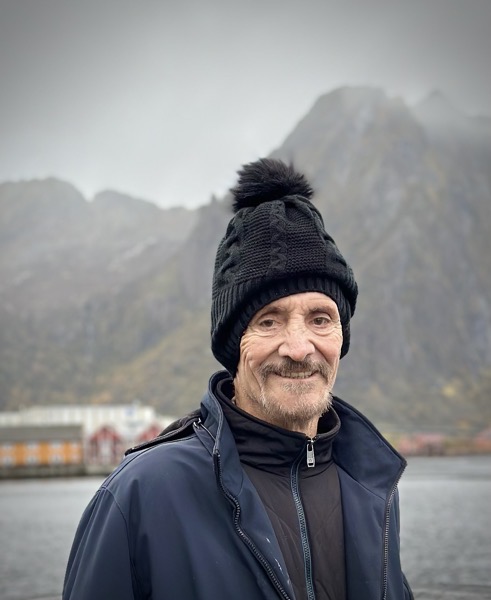
It took us about 90 minutes to get back to the Caribbean Princess. We went back to the cabin and cranked up the heat, happy to have had a chance to visit these exquisitely beautiful islands. But if I have a chance to come back, I think I’ll do it in July!
 Traveling Johns
I love the brightly colored buildings. They make you want to see what is inside. It is a little sad that the tourism has taken over their industry there. I understand the money attraction for the people who live there. When I travel I want to see how other people live without any monetary value when ever possible. Not that I have had the opportunity to do much. I do travel through others. Enjoy the remainder of your trip. Life at home will still be here and dull as can be.
LikeLike